
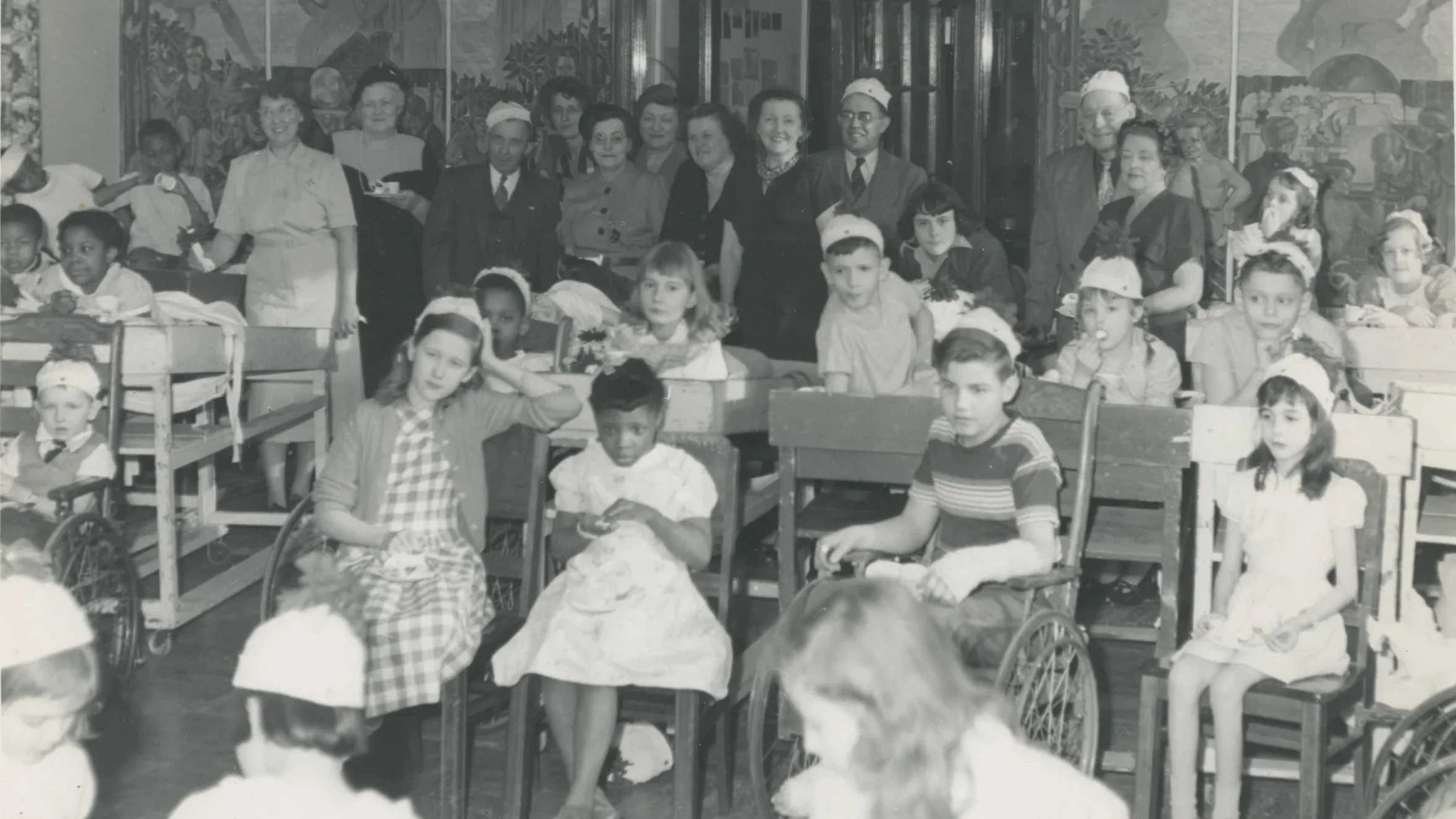
While perusing a Grand Rapids, Michigan, antique store, I stumbled across this photograph of the Michigan Hospital for Crippled Children. At five dollars, and because of my recent appointment to the Farmington Hills Historical Commission, it was a no-brainer to pick it up.
The photograph shows a large group of children, many in wheelchairs, gathered in a room. Most are wearing what appear to be paper party hats. Behind them stands a group of smiling adults, some also wearing hats, in front of an interesting mural-covered wall.
The note on the back reads:
Red Arrow Unit Party
February 2, 1952
Crippled Children's Hospital
Farmington
A separate note on the protective sleeve identifies it as a party at the Crippled Children's Hospital in Farmington Hills in 1952.
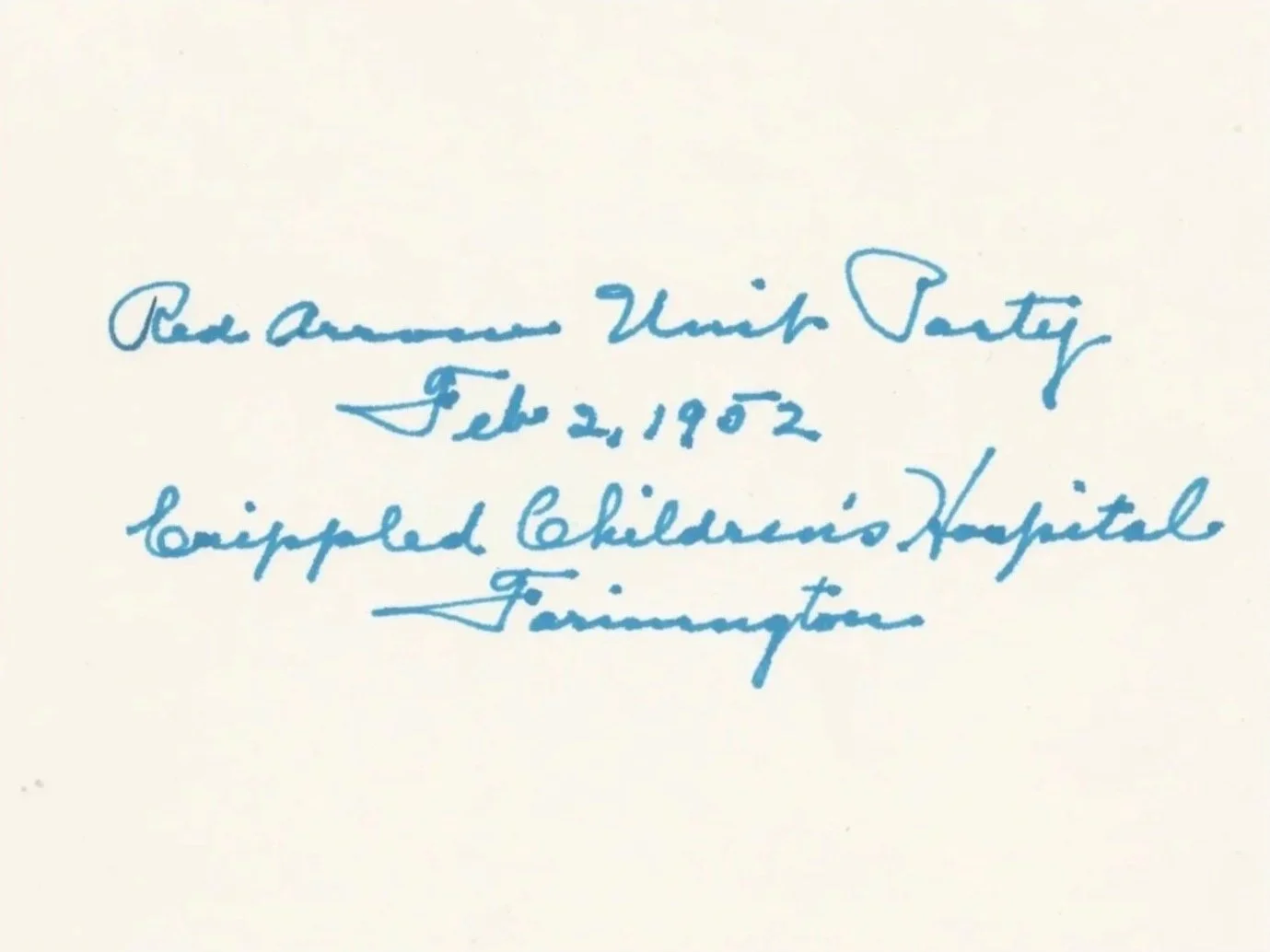
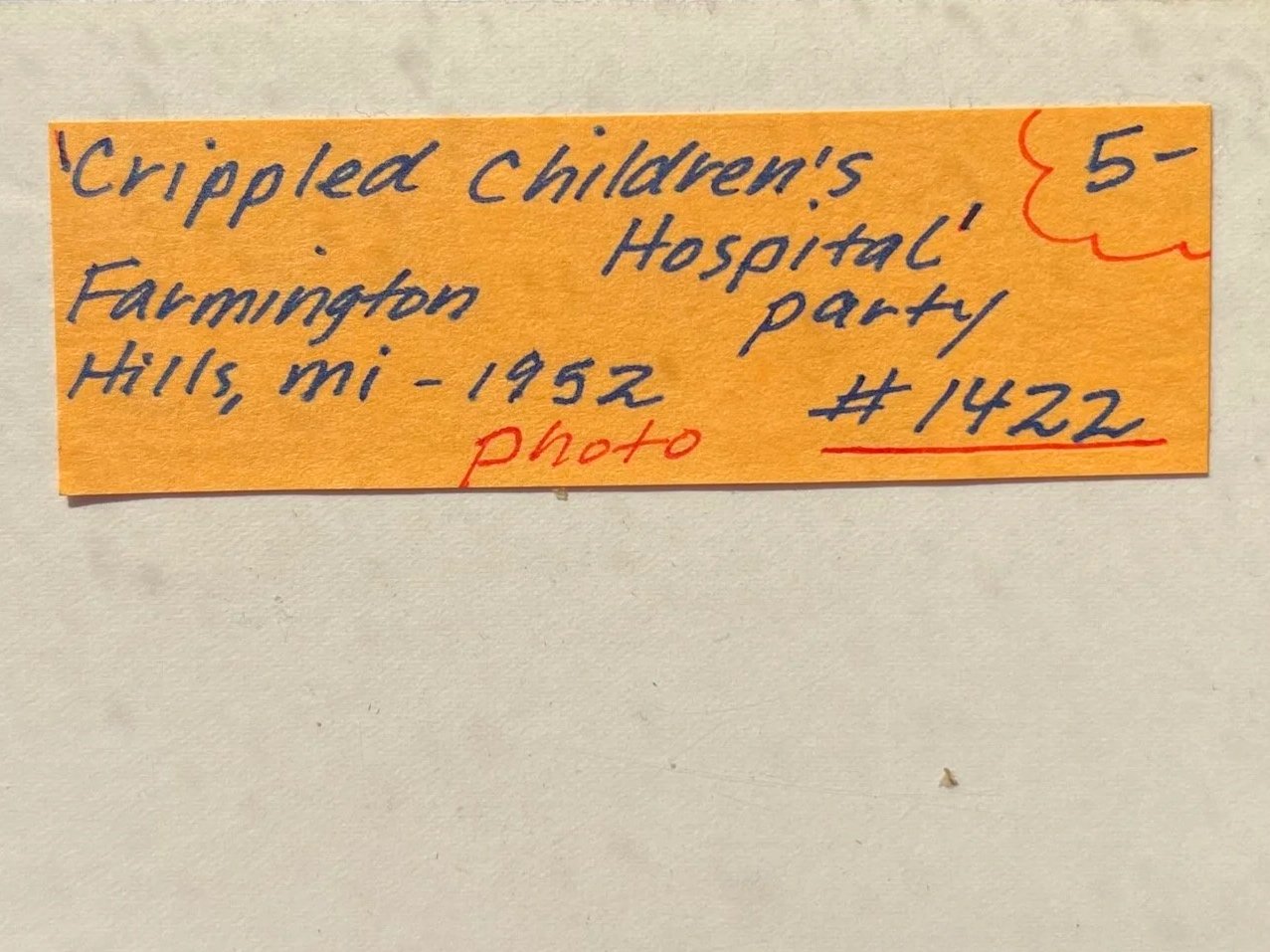
The name "Red Arrow Unit" may refer to Michigan's famed Red Arrow Division, although I haven't been able to establish a connection. Whatever the occasion, the photograph offers a glimpse of a more festive moment in the lives of the children and staff.
I brought the photograph to one of my first meetings of the Farmington Hills Historical Commission, where members quickly identified the location as the former hospital campus, now home to Brookside Commons, a continuing care retirement community at 21440 Archwood Circle in Farmington Hills.
A Brief History of the Hospital
The Michigan Hospital School for Crippled Children was already operating near Grand River Avenue and Tuck Road in Farmington in 1919, when Detroit Mayor James J. Couzens announced a substantial charitable gift to expand the institution. The gift, which included $450,000 for a new hospital annex and $650,000 for an endowment, was reportedly made at the request of his wife, who had asked for the annex as a birthday present.
The front page of the December 23, 1919, Detroit News announced the gift and included what appears to be an architectural rendering of the proposed hospital, although the illustration does not seem to match the buildings eventually constructed.

In 1922, the Michigan Hospital School merged with Children's Free Hospital in Detroit to form Children's Hospital of Michigan, although both facilities continued operating. A March 1922 article in the Detroit News traced the Farmington school's earlier history to several organizations devoted to caring for children with disabilities, including the Van Leuven-Browne Hospital School.
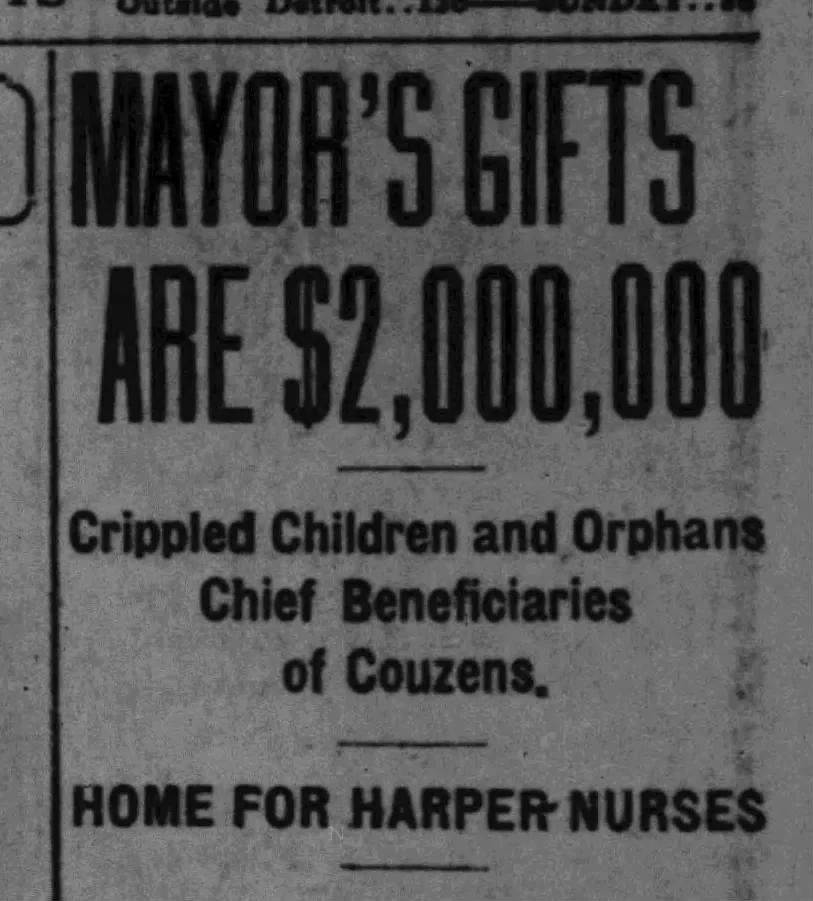
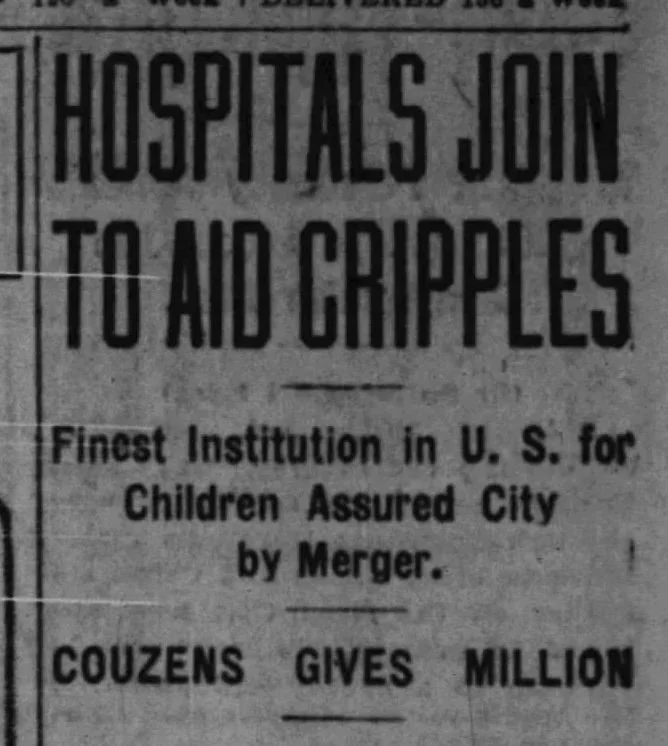
Over the years, the Farmington institution appeared in newspaper accounts under several names, including the Michigan Hospital School for Crippled Children, Michigan Crippled Children's Hospital, and Children's Convalescent Center, making its history somewhat difficult to trace.
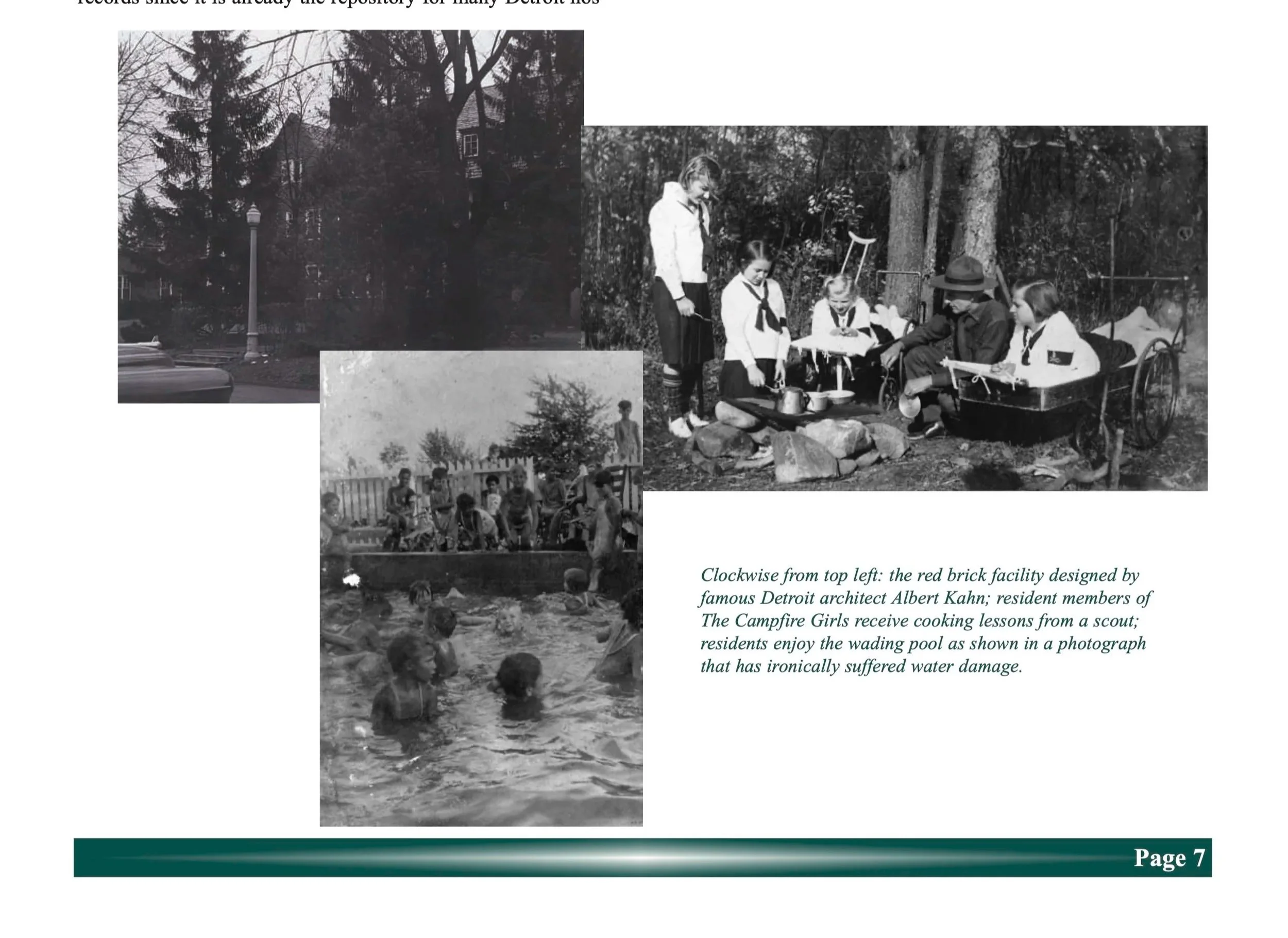
The new buildings were designed by famed Detroit architect Albert Kahn and opened in 1923 and 1926. They included some characteristic architectural details, including Pewabic tilework and decorative limestone reliefs depicting children at play.
A 1927 photographic feature in the Detroit Free Press Gravure Supplement shows the hospital in its early years of operation. On June 17 of that year, the Ladies of Mecca, a Masonic women's organization, hosted their annual picnic for the children. Among the highlights were Ellerie Dahmer, described as "a clever, diminutive reader," a trained Boston bulldog named Sobig, and Dorothy Bronson, the hospital's only grade-school graduate that year.
The hospital provided medical treatment, education, and residential care for children with orthopedic conditions, including those affected by polio. Children sometimes remained at the institution for extended periods, making education and recreation important parts of their daily lives.
A March 3, 1929, feature in The Detroit News, titled "Where Hope Blooms for Children," offers another look inside the hospital. The article includes photographs of the Farmington facility, including its classrooms and other interior spaces, alongside images from Children's Hospital in Detroit.
A September 21, 1930, Detroit Free Press feature, titled "Where Childish Laughter Smothers Pain," offers another glimpse of life at the hospital. The photographs show children in braces and wheelchairs, enjoying the hospital's swimming pool, and participating in outdoor activities.
A December 15, 1939, article in The Detroit News tells the delightful story of Silver, a ten-year-old pony who was donated to the hospital after Goldie, another pony who had entertained the children for a decade, died on Thanksgiving Day. Silver was led through the hospital corridors and into the playroom, where children confined to beds and stretchers could meet and pet their new friend.
Another interesting source is the Fall 2009 newsletter of the Walter P. Reuther Library at Wayne State University. It documents the preservation of a collection of historical photographs from the hospital, including images of children receiving outdoor cooking lessons and enjoying a wading pool on the hospital grounds.
Although I haven't found any specific newspaper references to the "Red Arrow Unit" party depicted in my photograph, other newspaper accounts document continued charitable involvement with the hospital, including fundraising by the Ladies of Mecca into the early 1950s.
The timing of my photograph is particularly interesting. February 1952 was near the height of the polio epidemic in the United States, and an effective vaccine was not yet available to the public. Jonas Salk and his colleagues were developing their vaccine that year, but it wasn't until April 12, 1955, that it was officially declared safe and effective.
The success of the vaccine dramatically reduced the number of new polio cases in the United States. Around this same period, the hospital's original program came to an end. Beginning in 1956, the buildings were used for state programs serving children with psychological and emotional difficulties.
In 1969, the property became the Farmington Nursing Home. It later operated under several names, including Botsford Continuing Health Center and Beaumont Commons, before becoming Brookside Commons. Throughout these later transitions, the property has continued to serve as a residential care facility.
Finding the Hospital Today
Curious to see what remained of the original hospital, I drove to the present-day Brookside Commons campus and walked around the grounds. The complex is quite large with several buildings. The original red-brick architecture remains recognizable throughout.
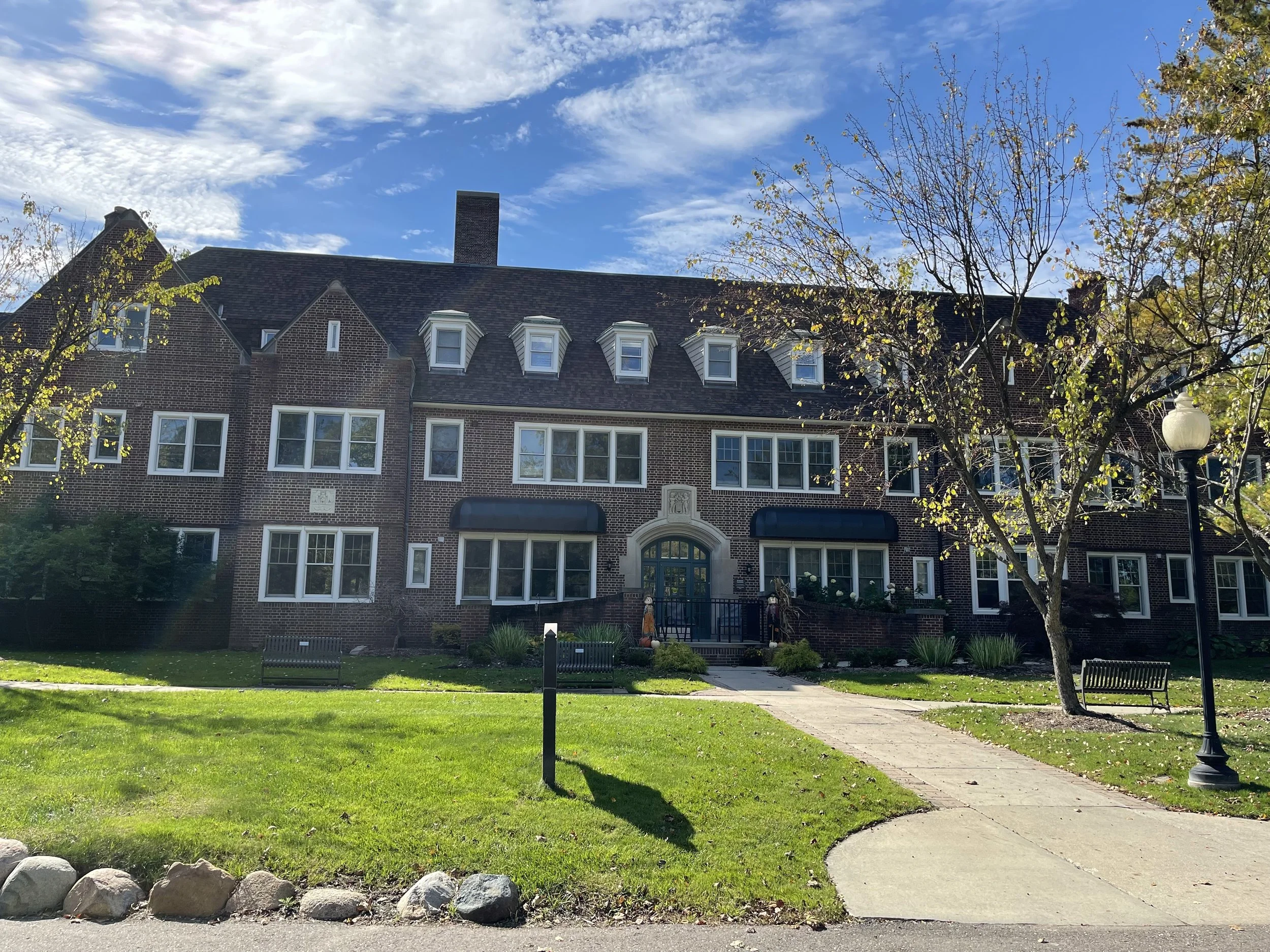
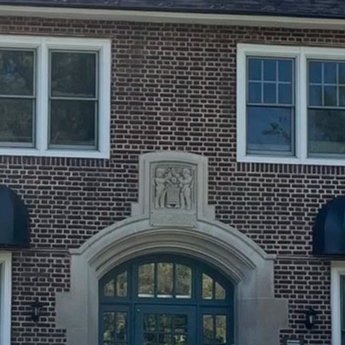
Among the surviving architectural details are several limestone reliefs depicting children at play, including one above the main entrance dated 1926.
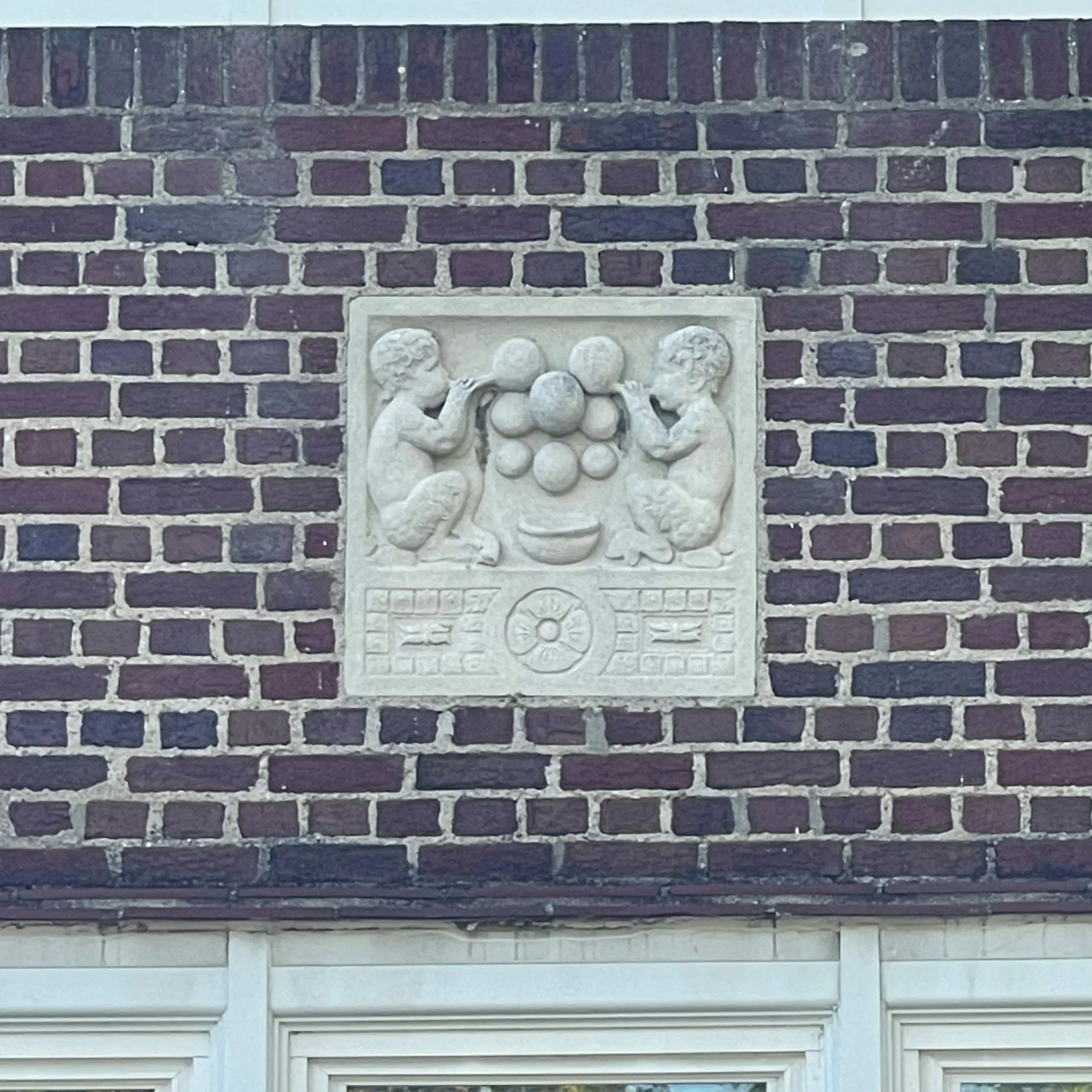
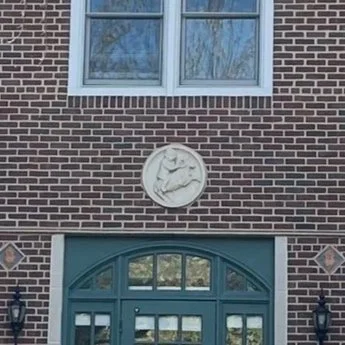
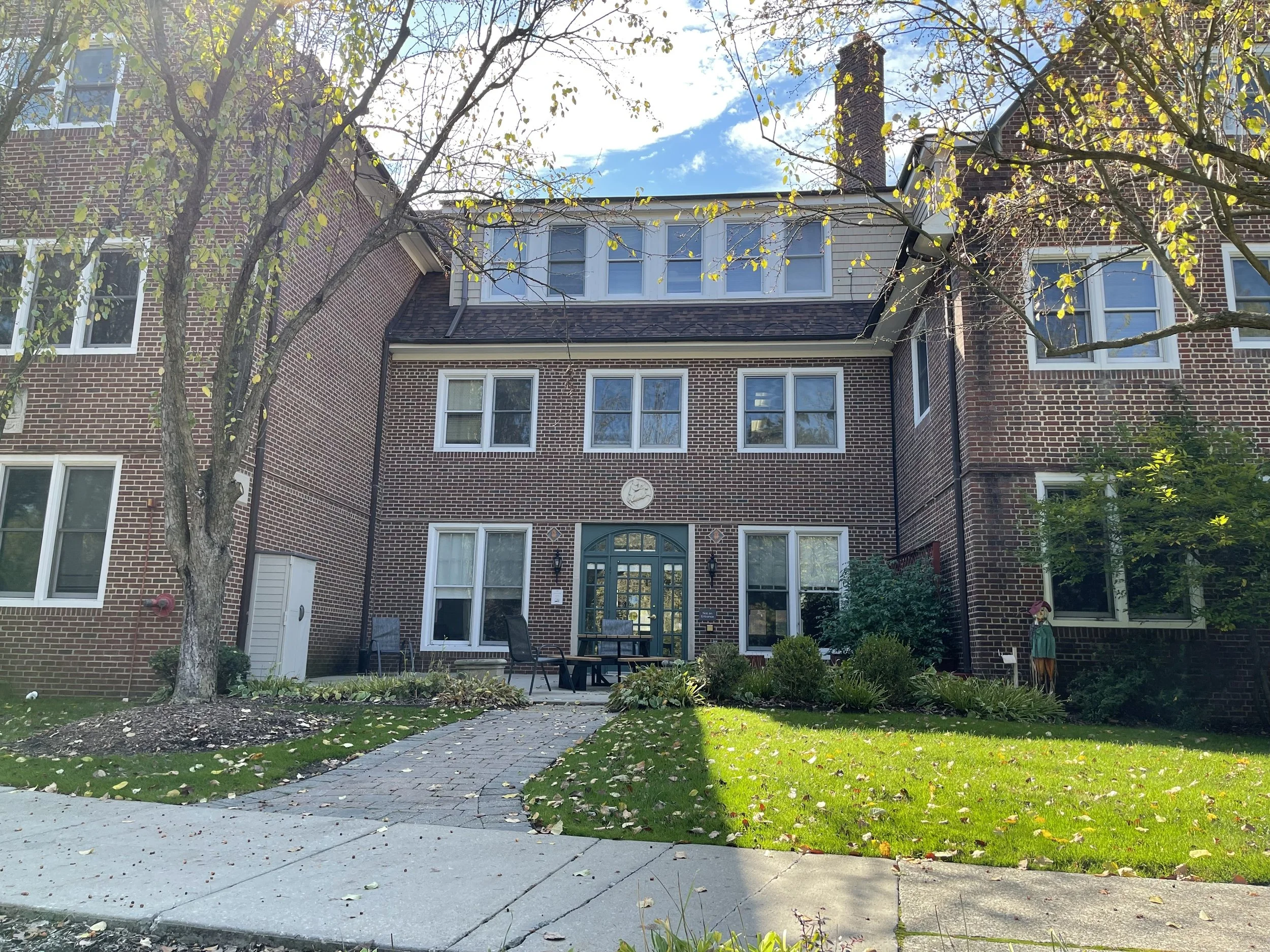
I stopped at one of the buildings and asked about the property's history. A staff member kindly provided a historical handout prepared in 2007, which offered additional information about the hospital and its subsequent uses.
Among the more interesting architectural details described in the handout were fireplaces decorated with Pewabic tiles, windows with lowered ledges so children could look outside from their beds, and rooftop porches where they could enjoy fresh air.
I've since been in contact with someone at Brookside Commons who has kindly offered to show me around the buildings, and I hope to arrange a visit.
I also plan to donate the original photograph to the Heritage and History Center in Farmington Hills, where it can become part of the city's historical collection.
I suspect that decades of interior renovations may have left little from the hospital as it appeared in 1952. Still, I hold out some hope that the room in my photograph, or perhaps a remnant of that interesting mural, might survive somewhere inside.
I'd love to know its story. And the stories of the children pictured in that photograph.