
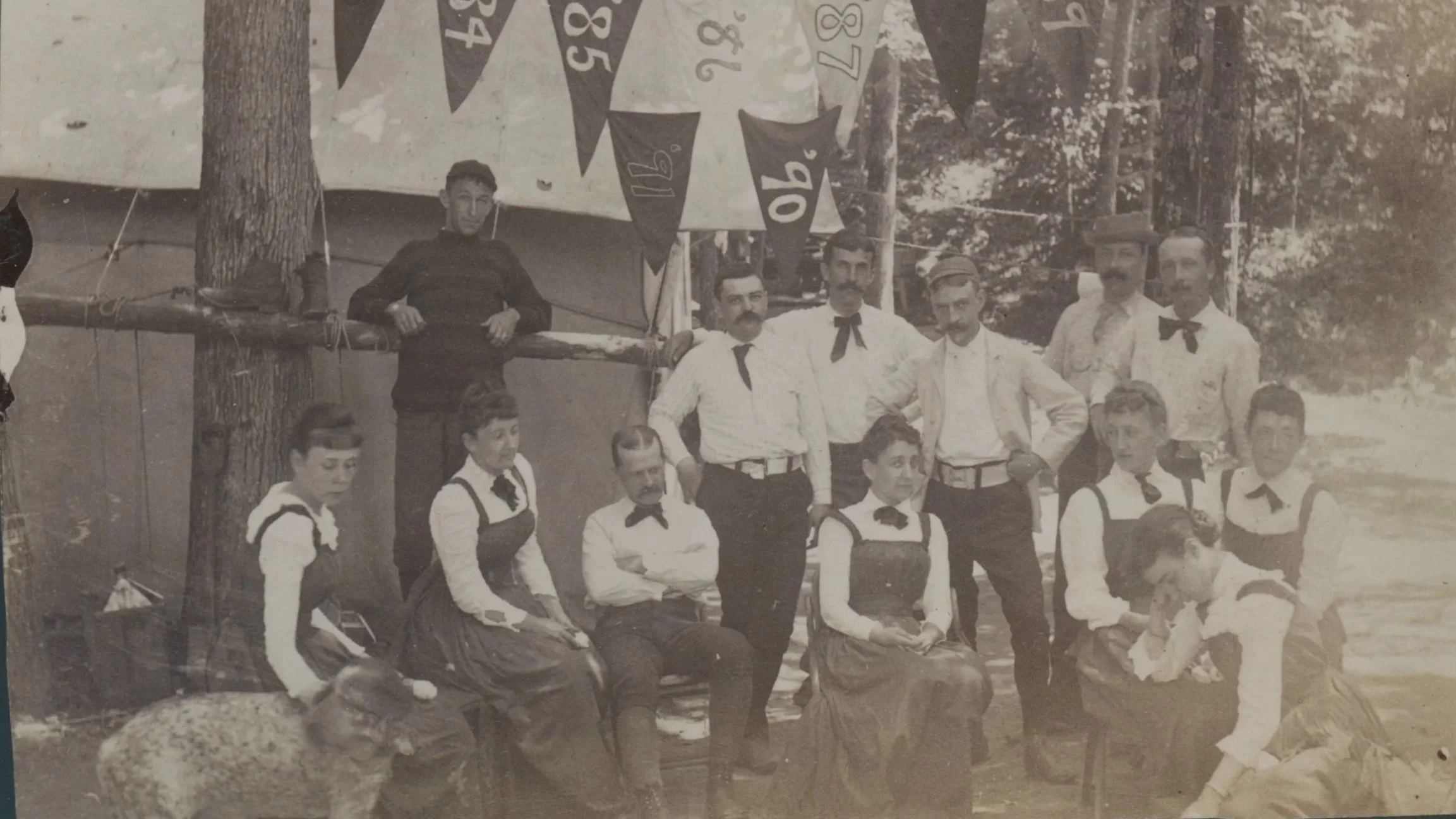
I have continually been impressed by the shared kindness, passion, and generosity of the genealogy, history, and photo-collecting circles I run in. It is how this magical 1891 photo album came into my possession.
Here’s the story. A few years ago, during one of my antique-store trips, I came across a photograph that eventually became the subject of this blog post: Pelham High School, New York, 1916. It was inexpensive, $5 if I remember correctly, and fairly nondescript. With some research I was able to identify the building and eventually contacted Pelham Town Historian Arthur L. Scinta.
It felt like the photograph belonged in Pelham, so I donated it.
In gratitude, Arthur asked me about an old photograph album that had been donated to his museum with other material. He had determined that it had nothing to do with Pelham, but he wasn’t quite sure what to do with it. Knowing my interest in old photographs and history, he offered it to me.
And here we are.
Structurally, the album is in rough shape. Some of its heavy board pages are warped, there is evidence of water damage, and the binding is slowly disintegrating. The photographs inside, however, are wonderful.
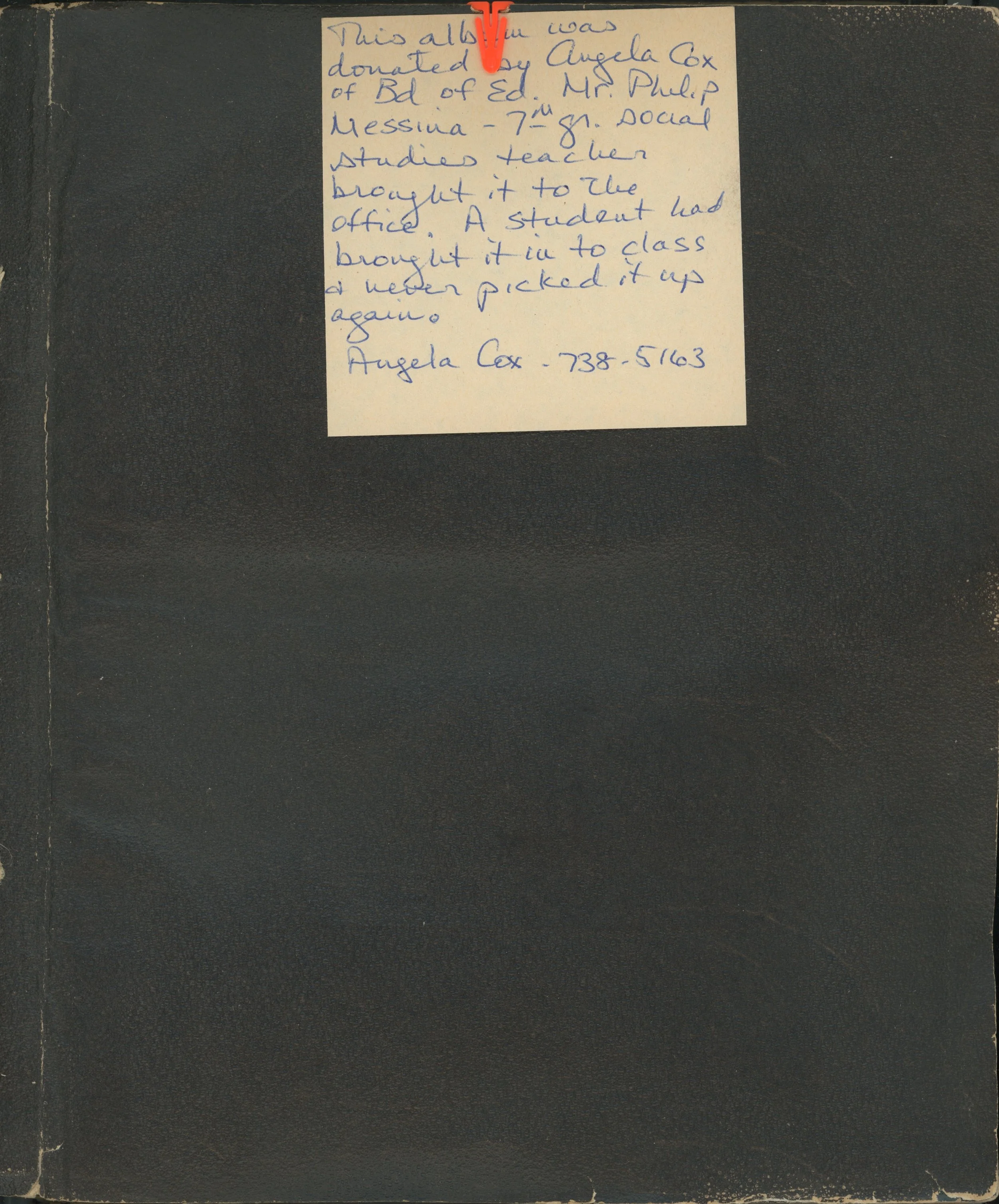
The album begins with a little mystery.
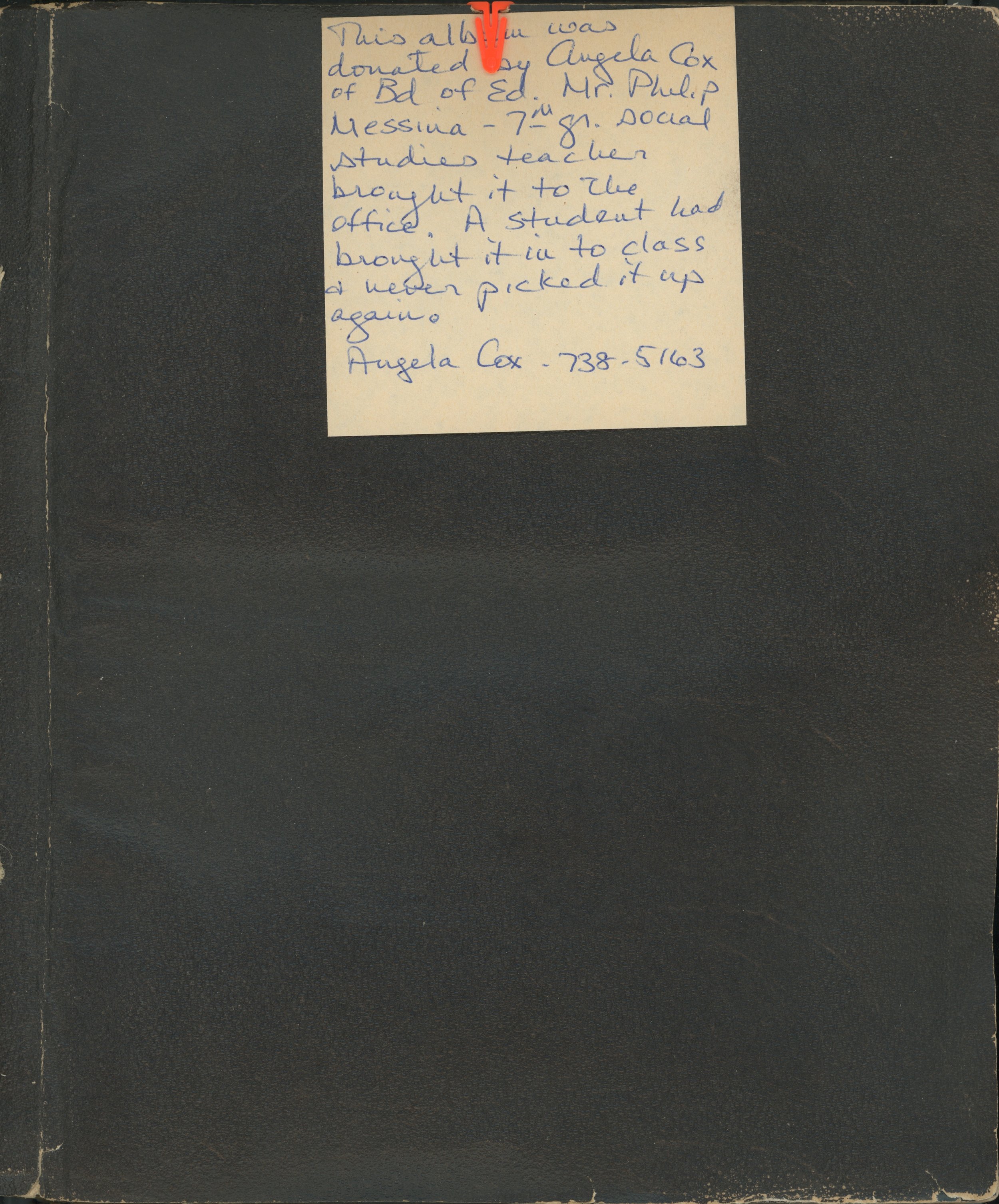
Paper-clipped to the first blank page is a handwritten note apparently left by someone who examined the album before me. It contains a possible identification and some speculation about where the album might have originated. Like so many clues attached to old photographs, it raises almost as many questions as it answers.
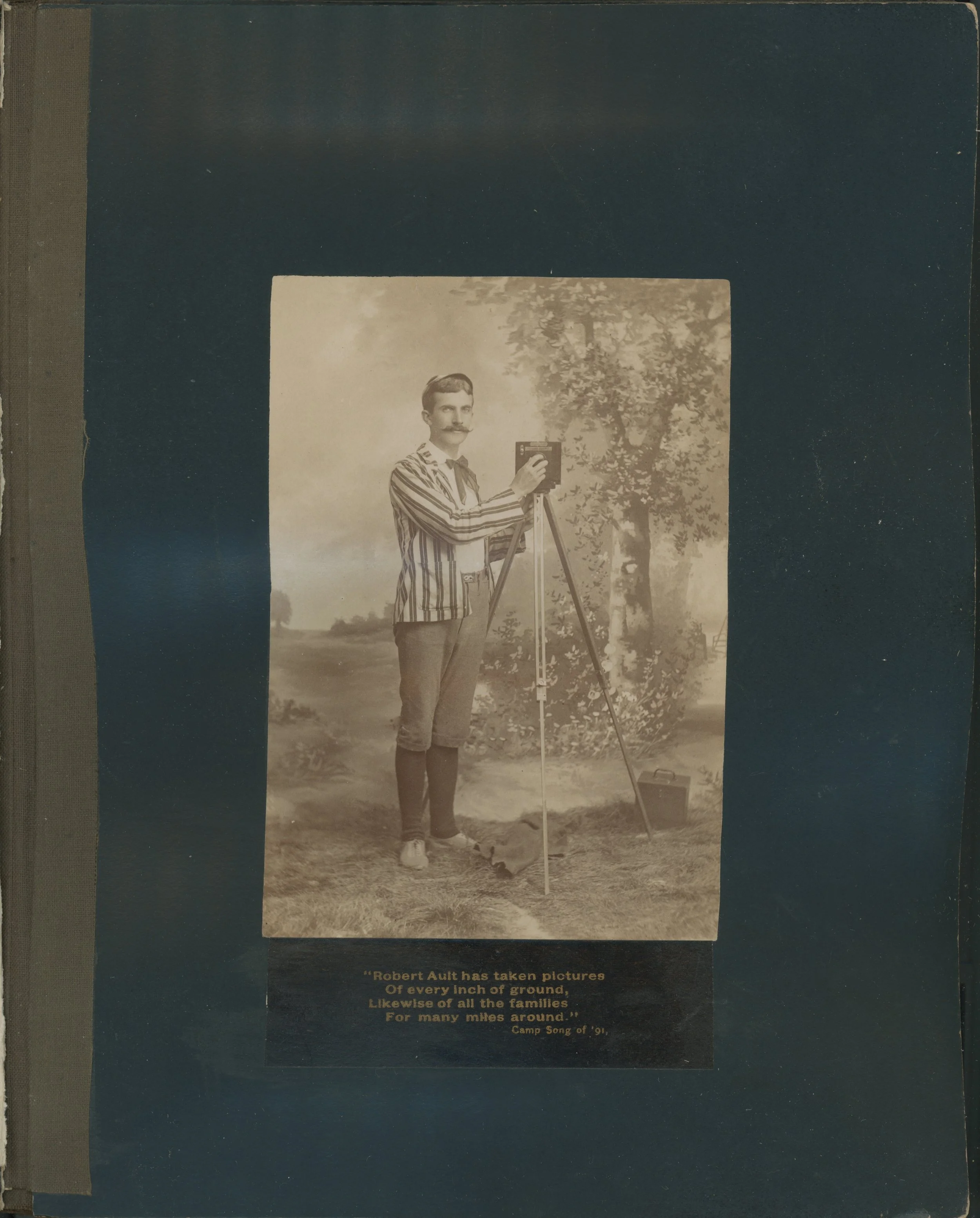
The first photograph in the album is striking: a portrait of Robert A. G. Ault, the man apparently responsible for the photographs that follow. I wonder who took the photograph of the photographer.
Beneath it is a handwritten verse identified as the “Camp Song of ’91”:
Robert Ault has taken pictures
Of every inch of ground,
Likewise of all the families
For many miles around.
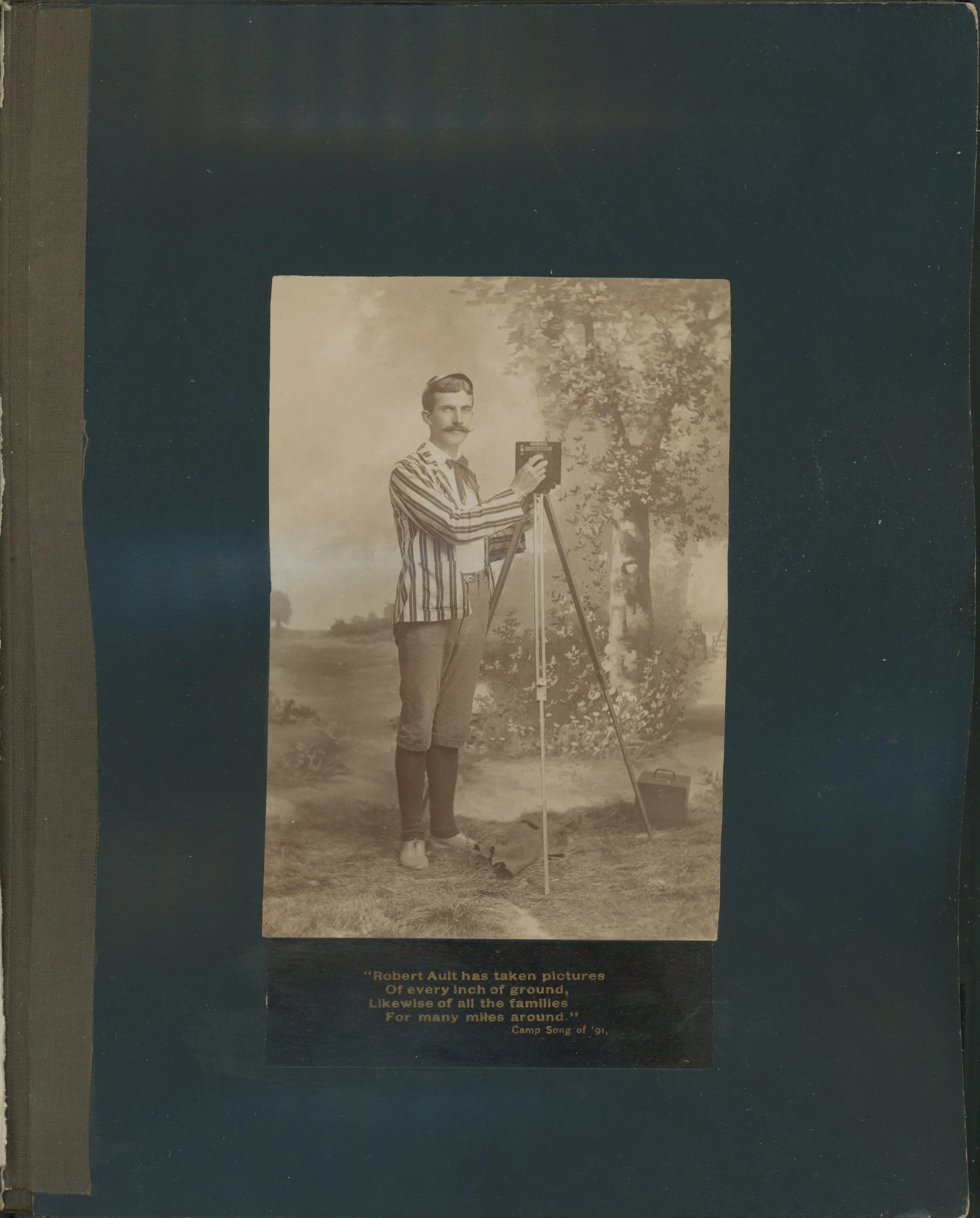
I have found no evidence that photography was Robert A. G. Ault’s profession. Ault spent much of his adult life in York’s industrial and civic circles and was general manager of the Schmidt-Ault Paper Company at the time of his death in 1921. More importantly, there is evidence connecting him directly to Camp-Out-Awhile. In 1893, two years after this album was made, a newspaper listed “R. A. G. Ault” among the “Camp-Out-Awhiles” leaving for their old grounds on the Conewago. Ault may simply have been a talented amateur photographer who brought his camera along to camp. If so, these photographs were made not by an outsider documenting the group, but by someone who was part of it.
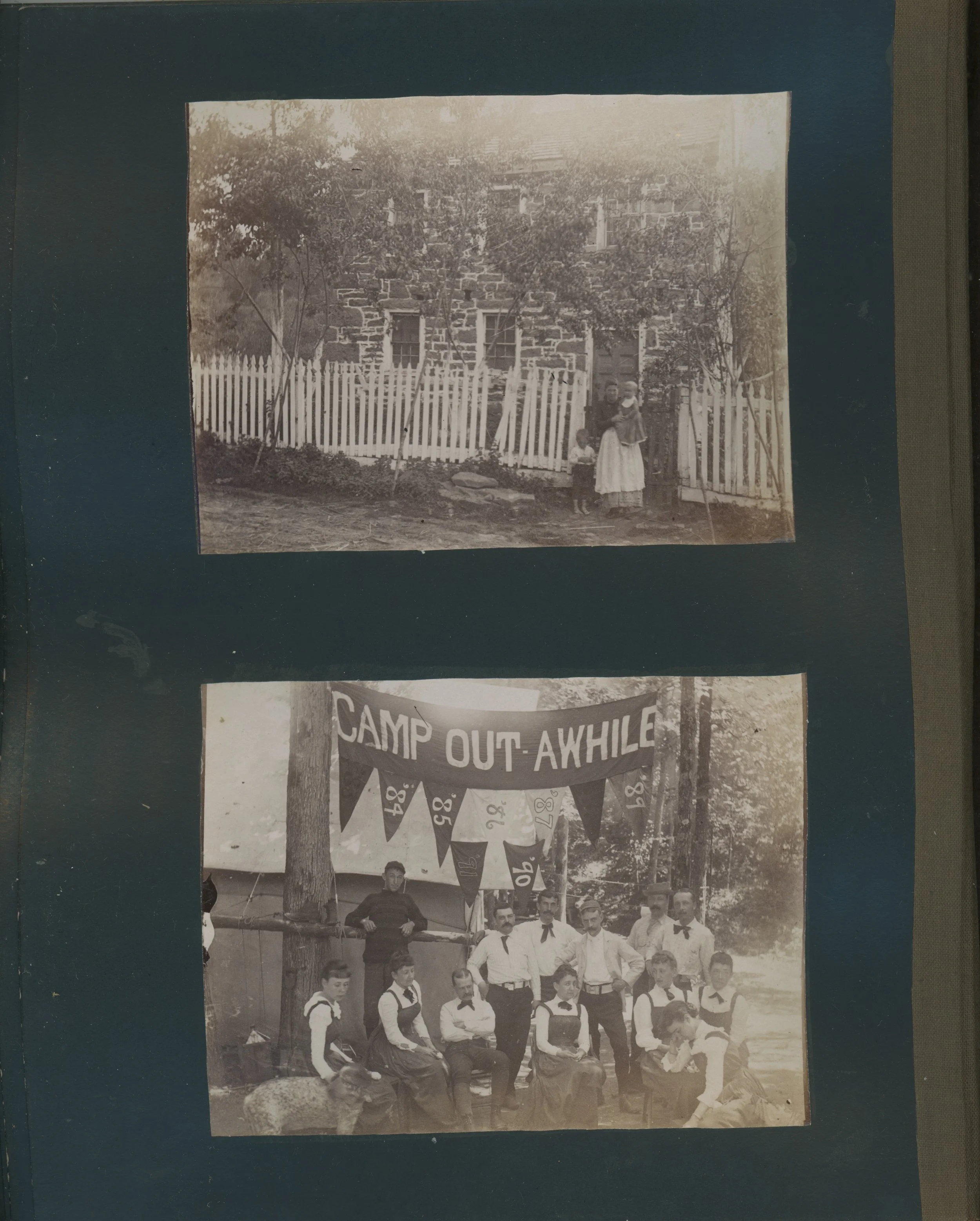
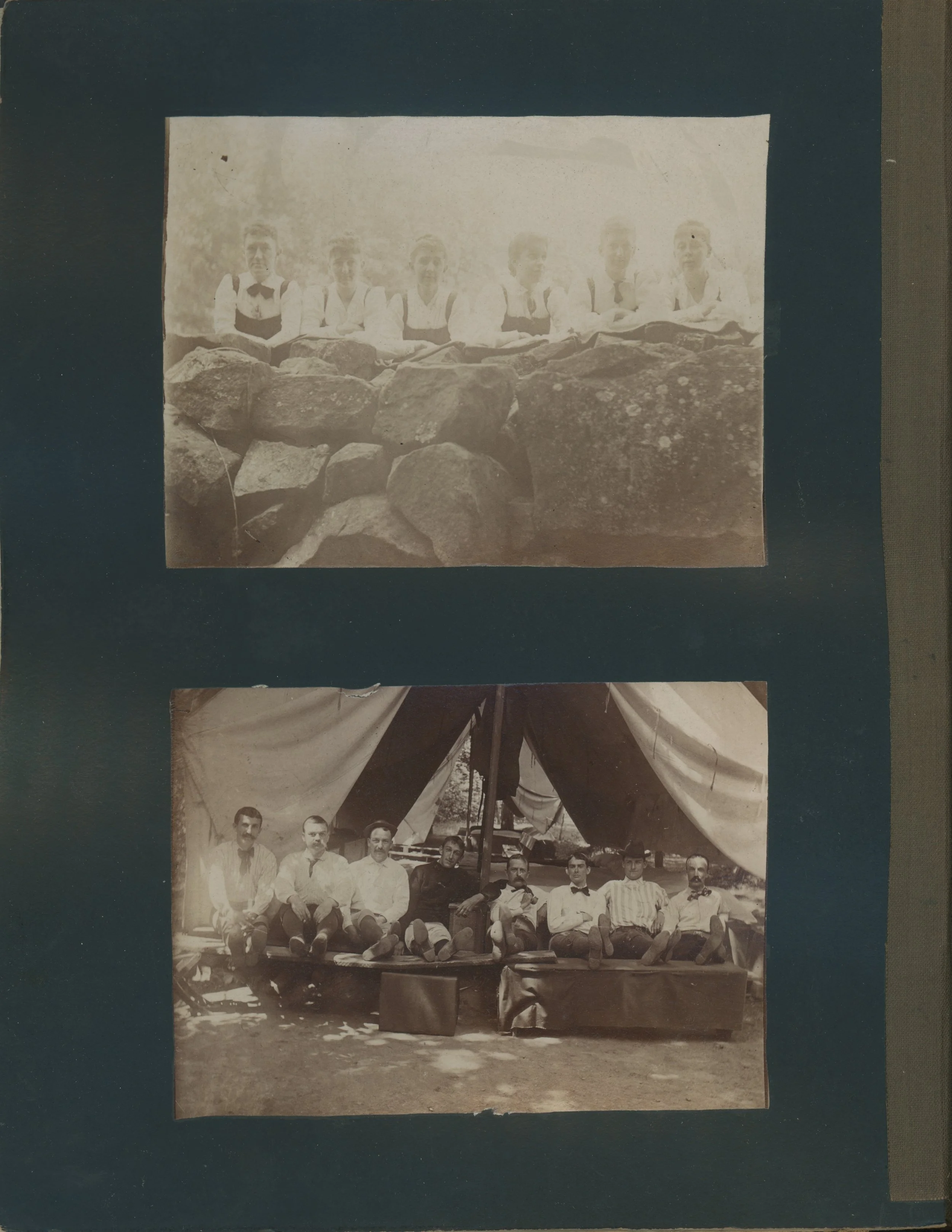
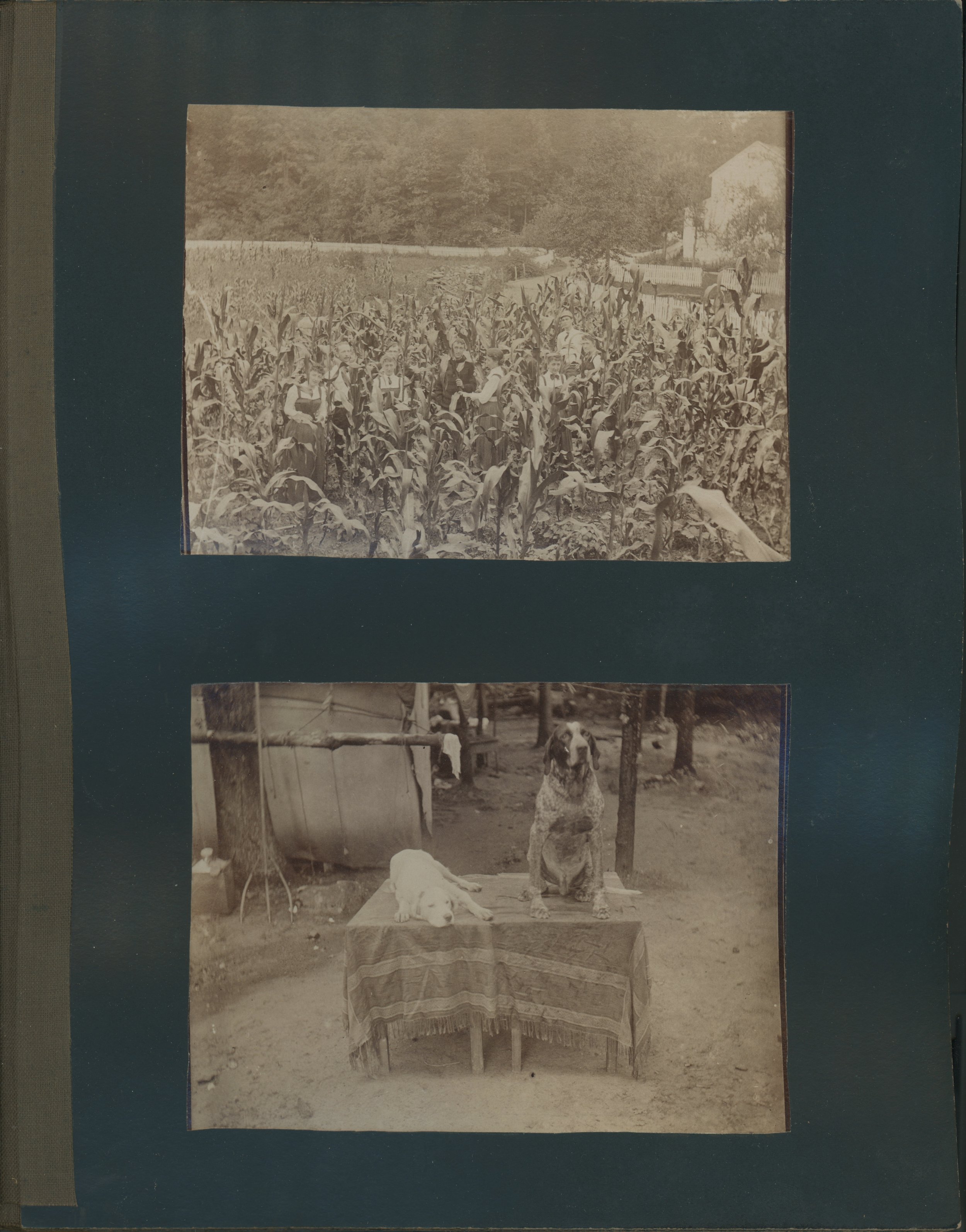
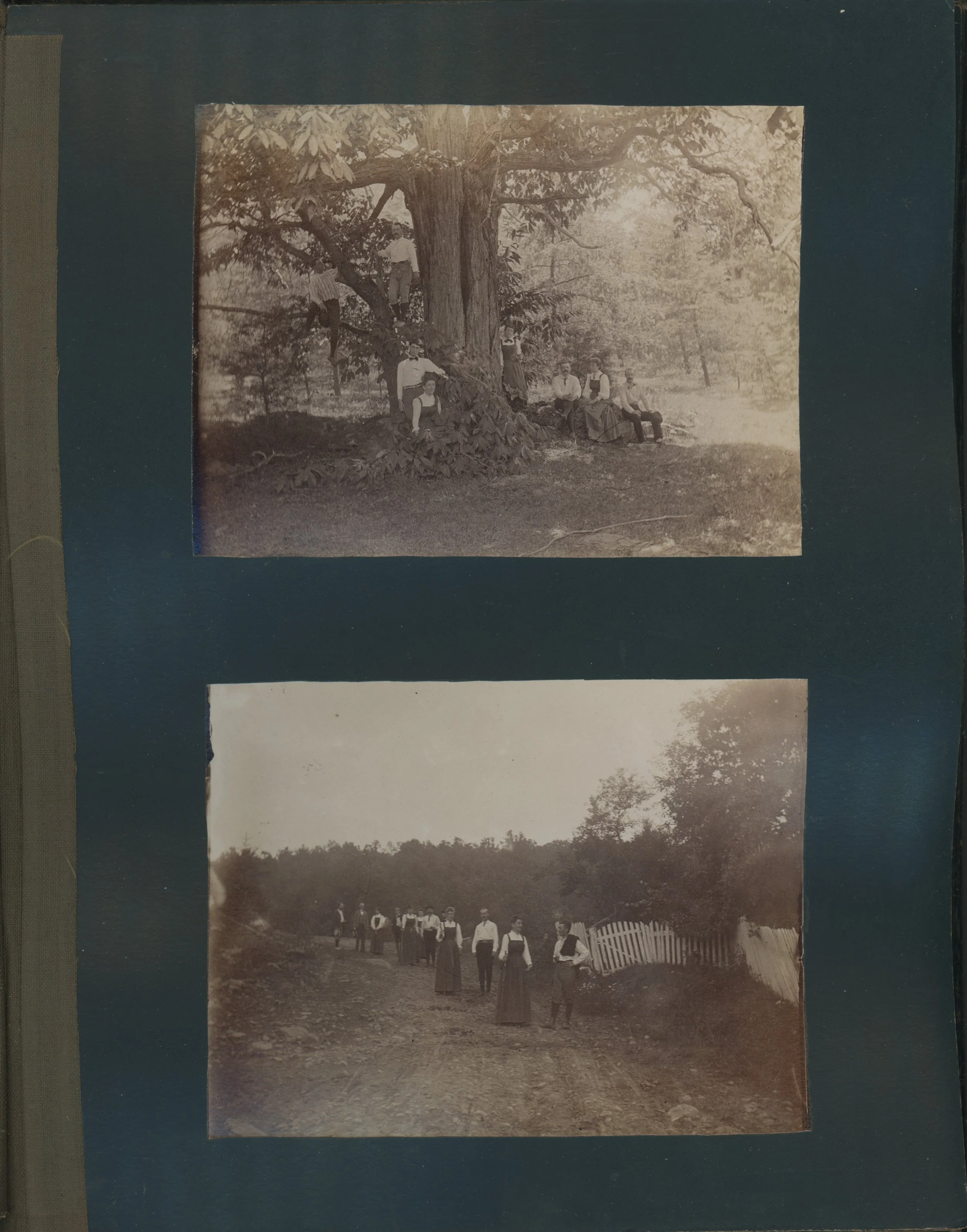
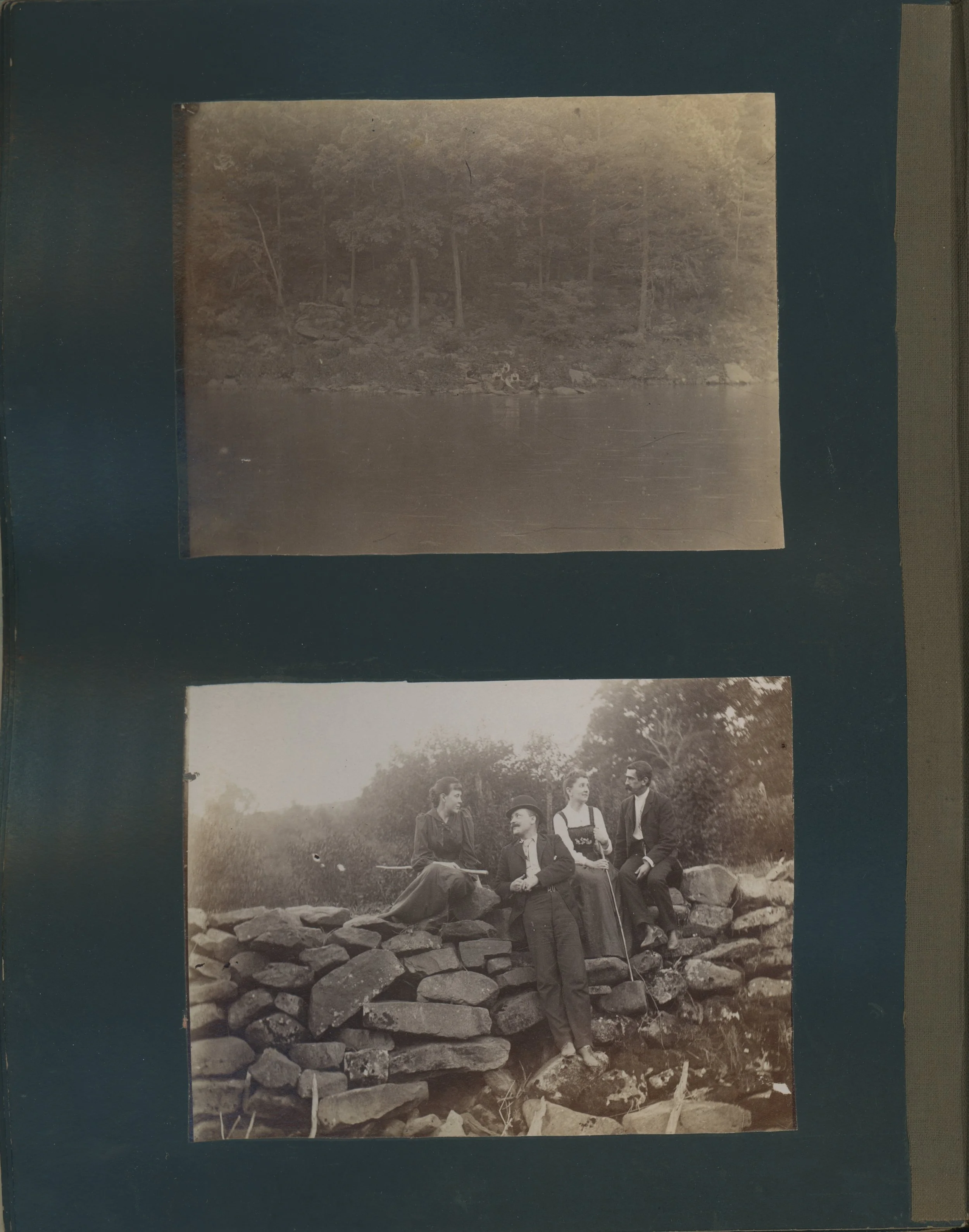
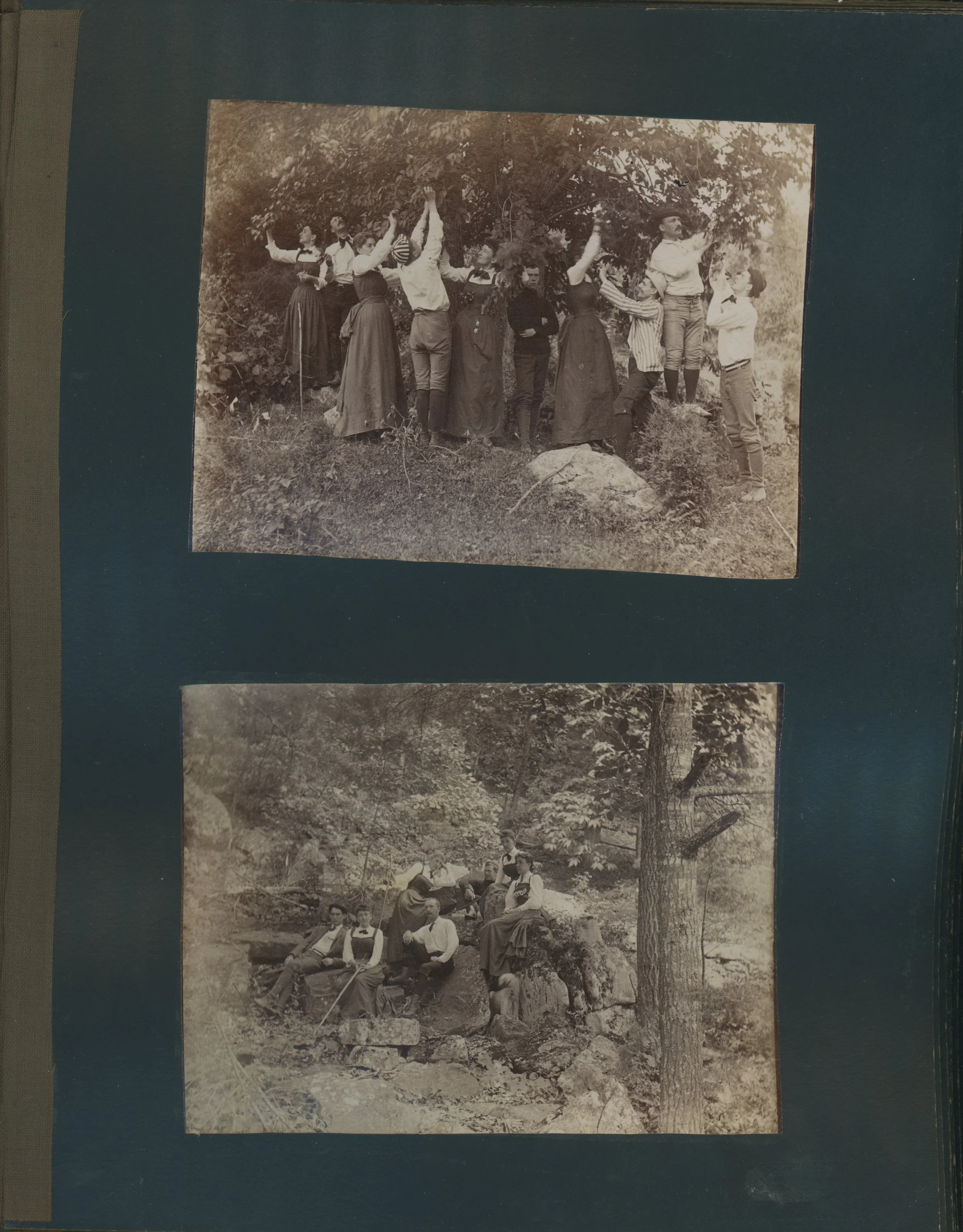
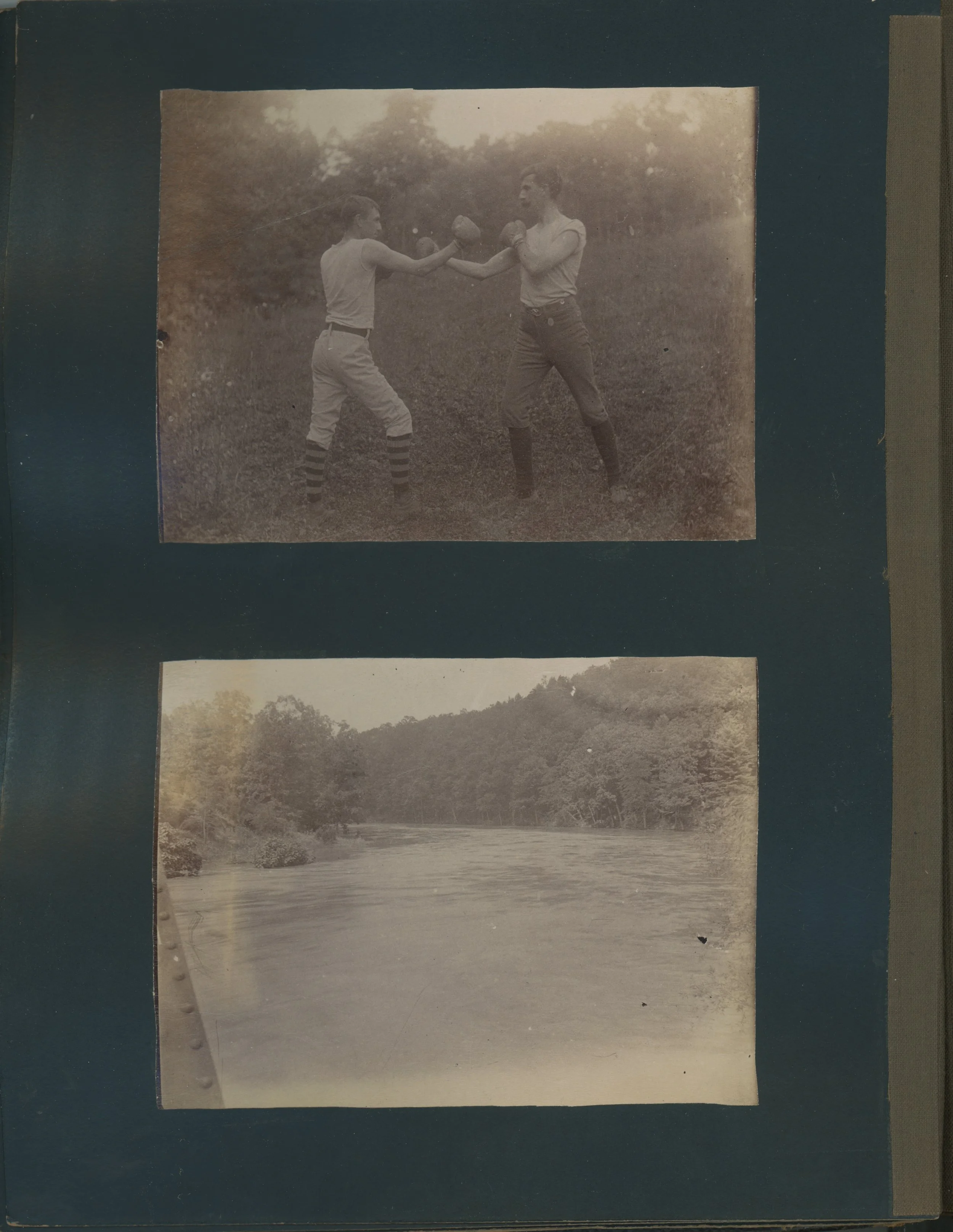
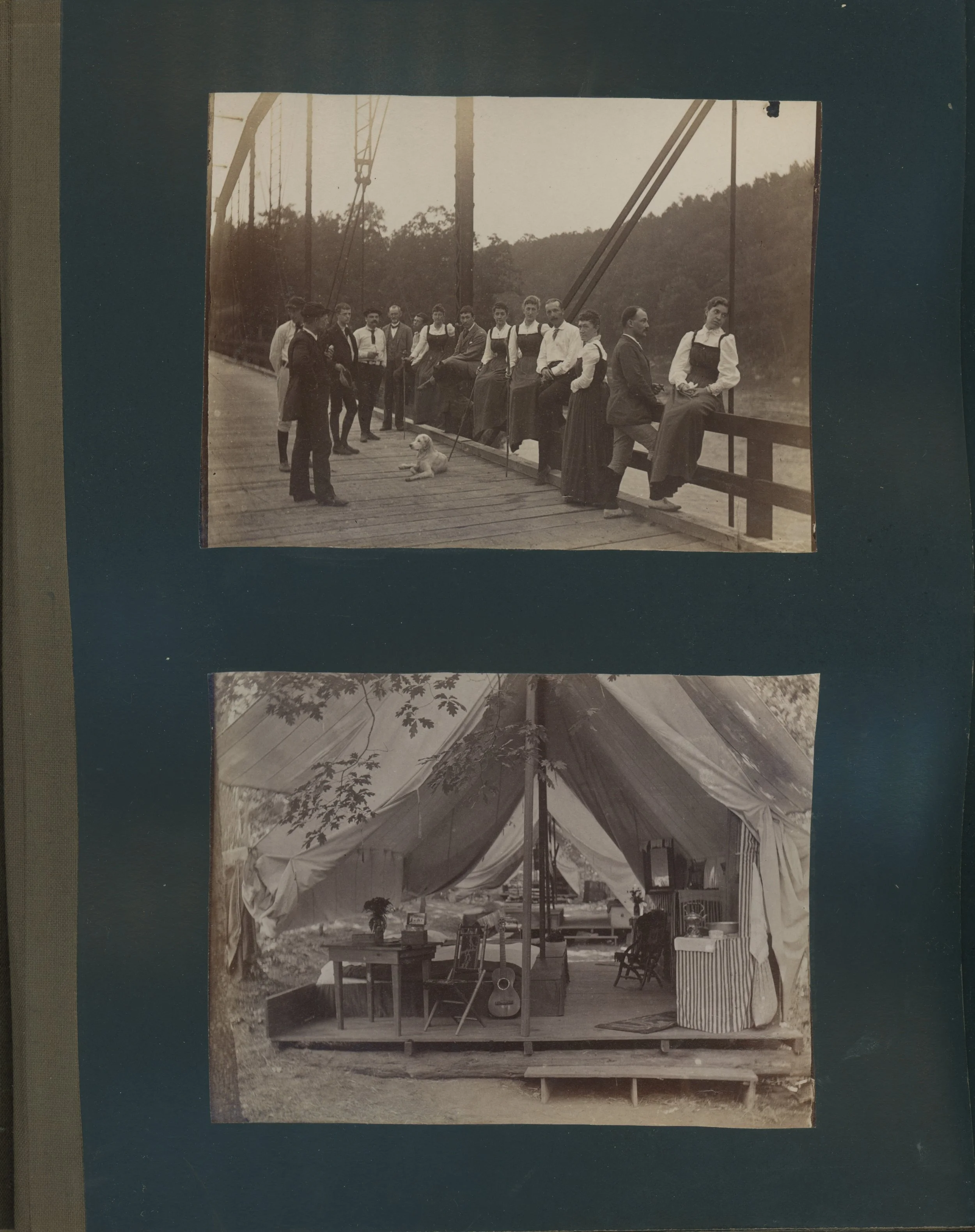
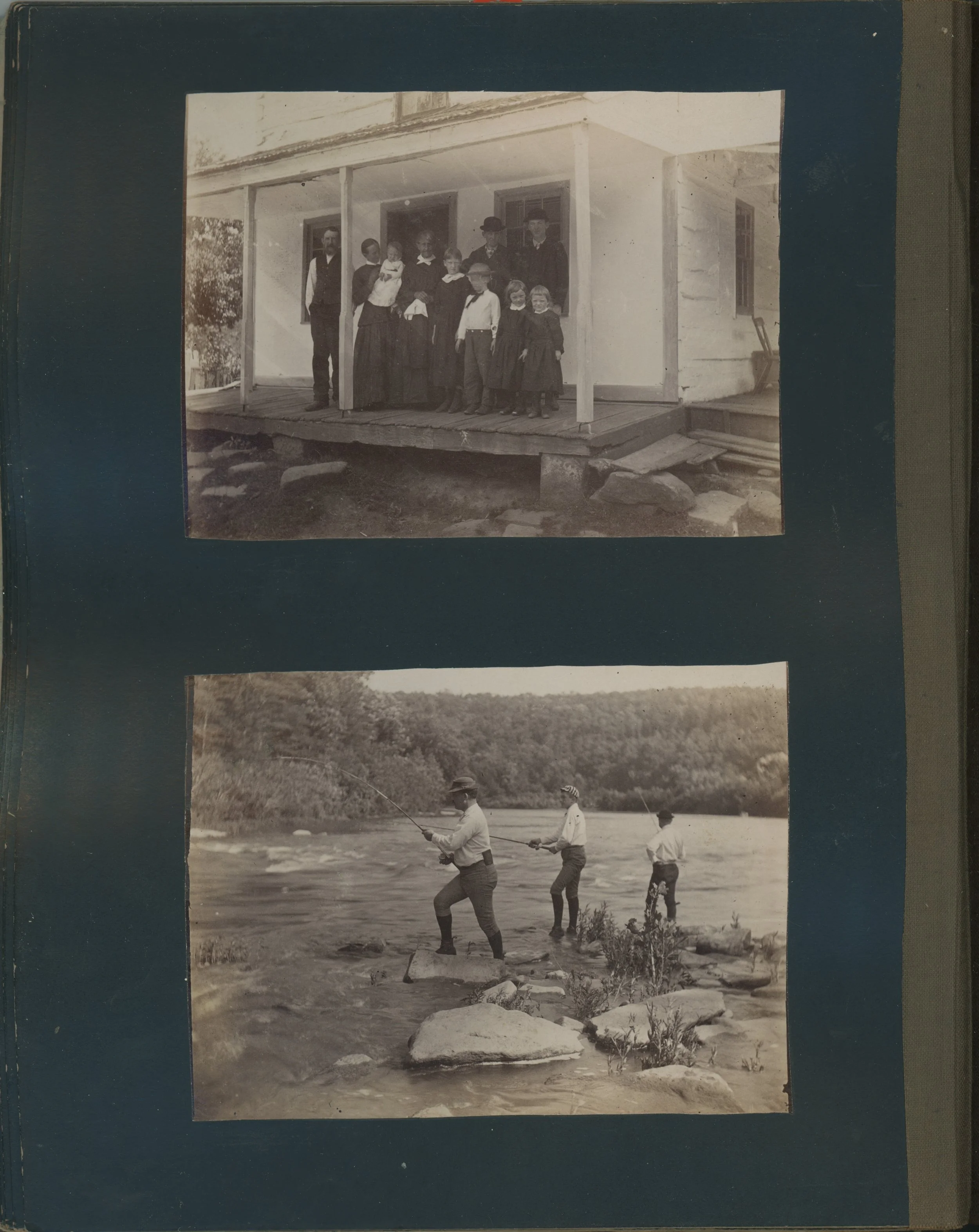
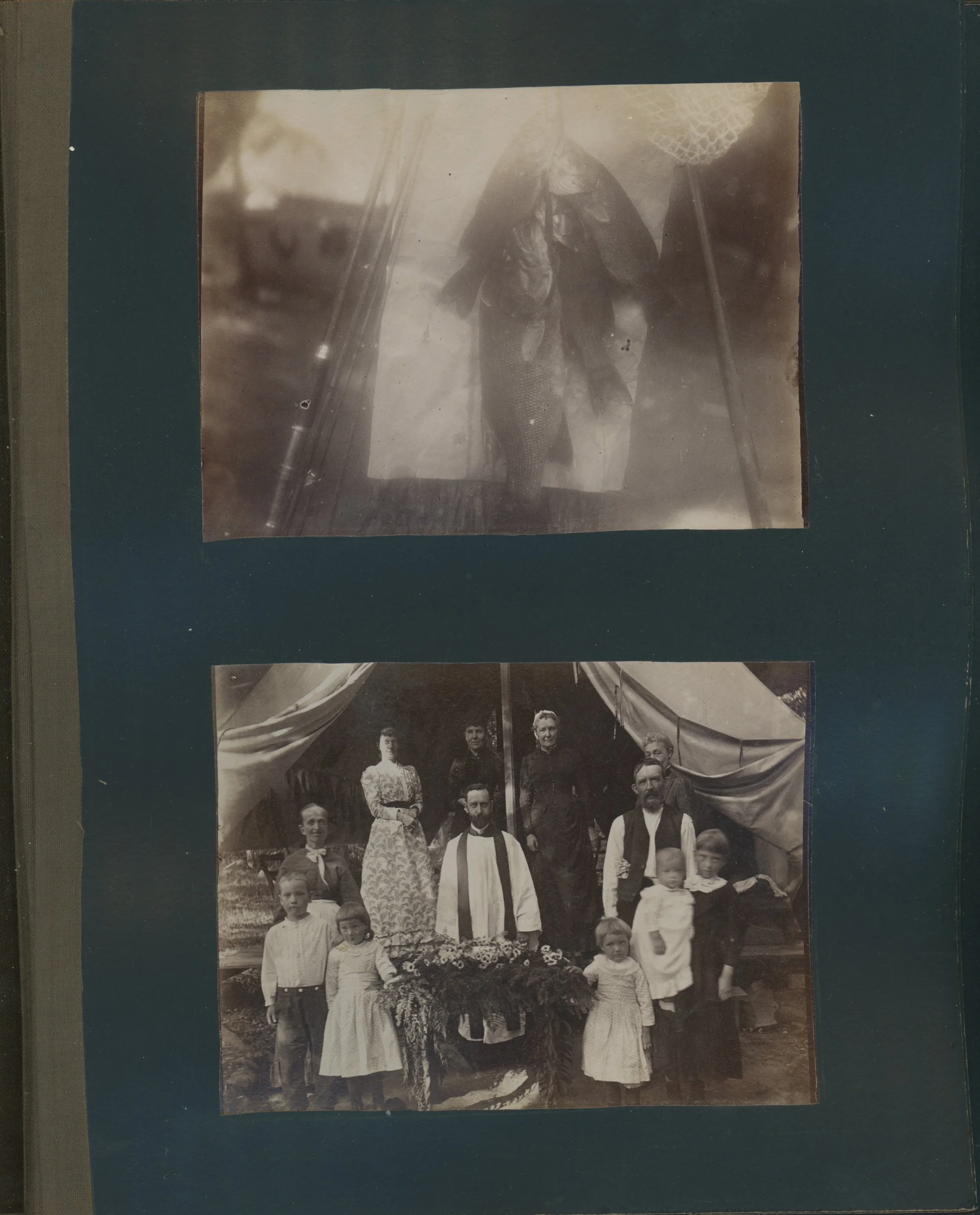
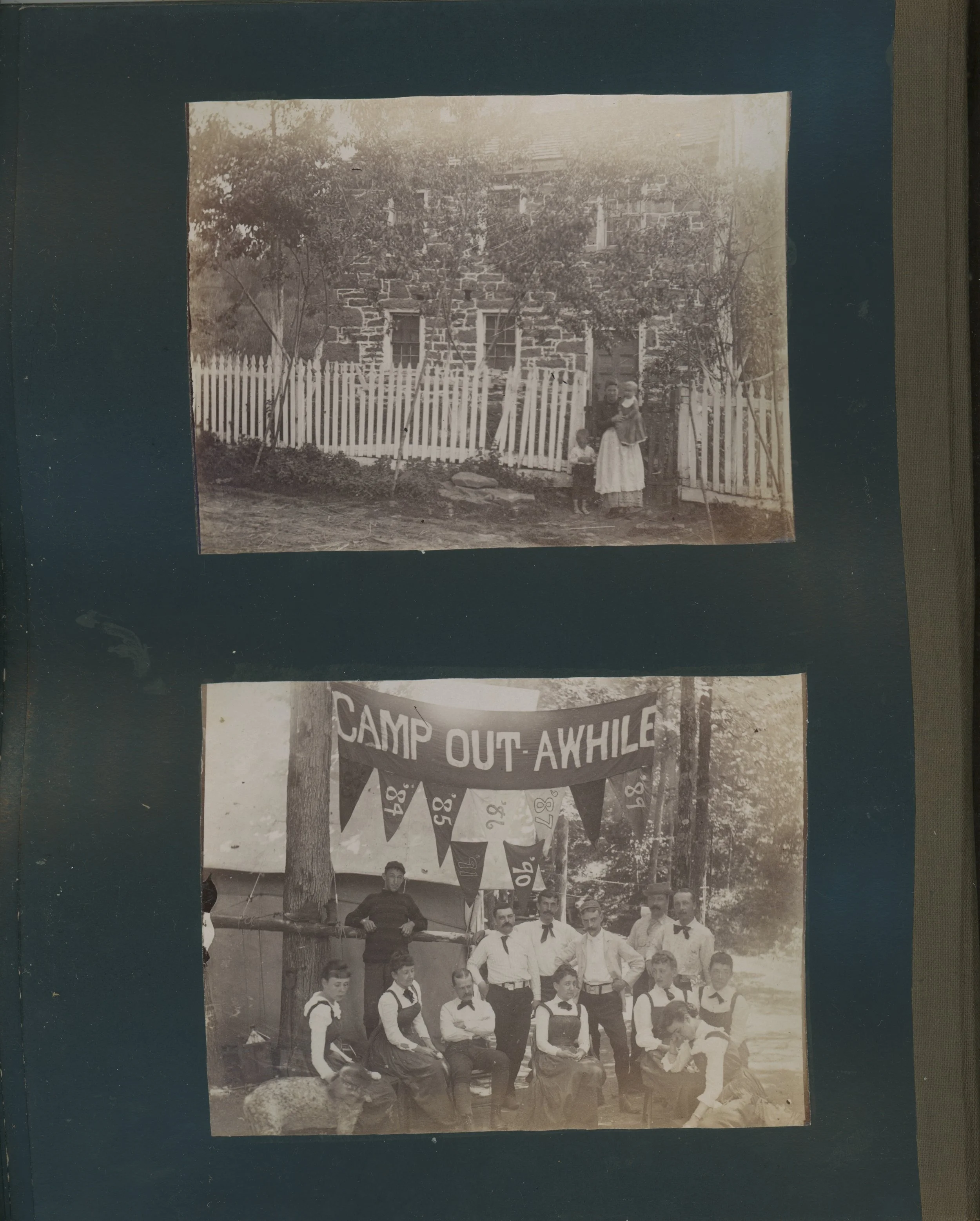
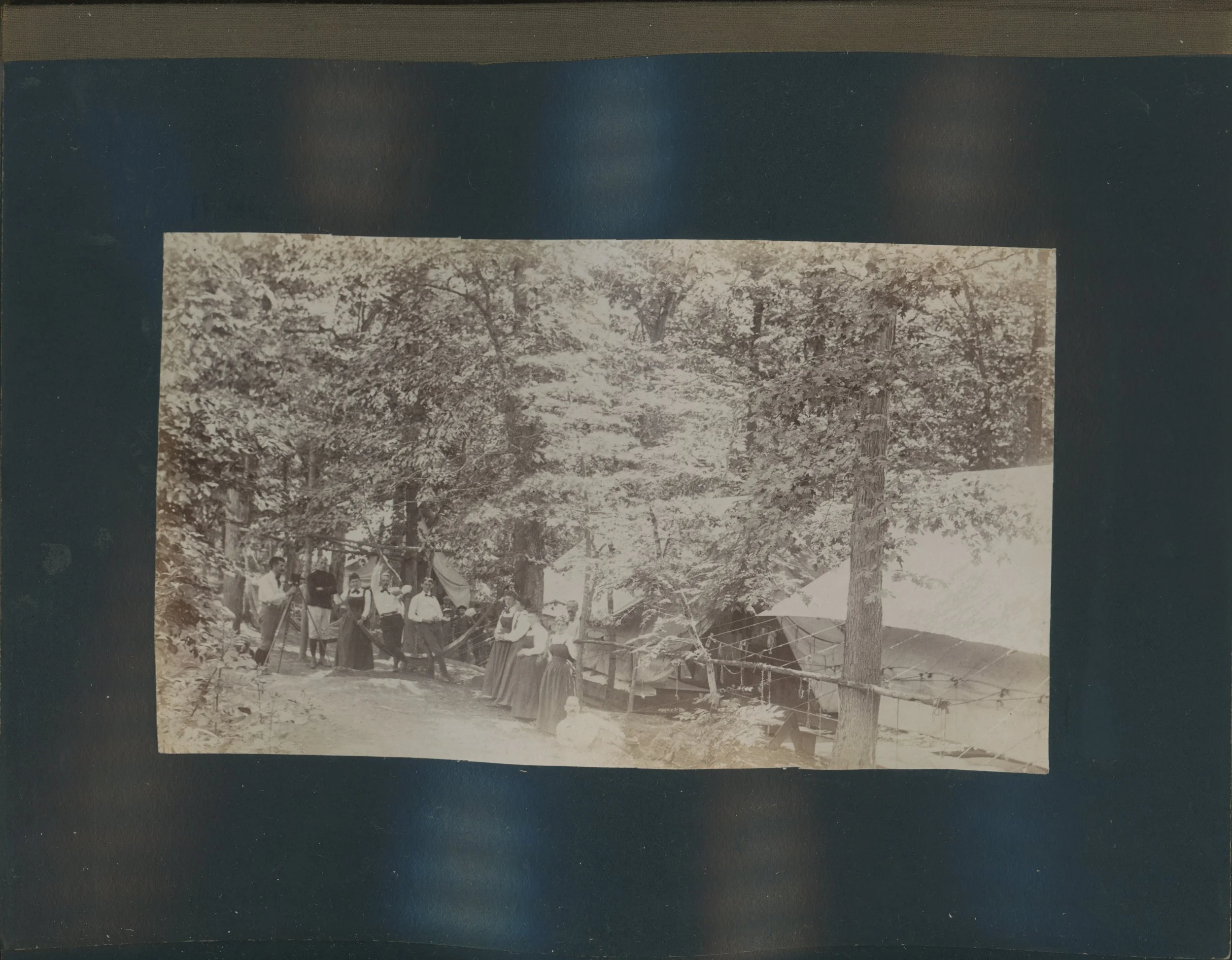
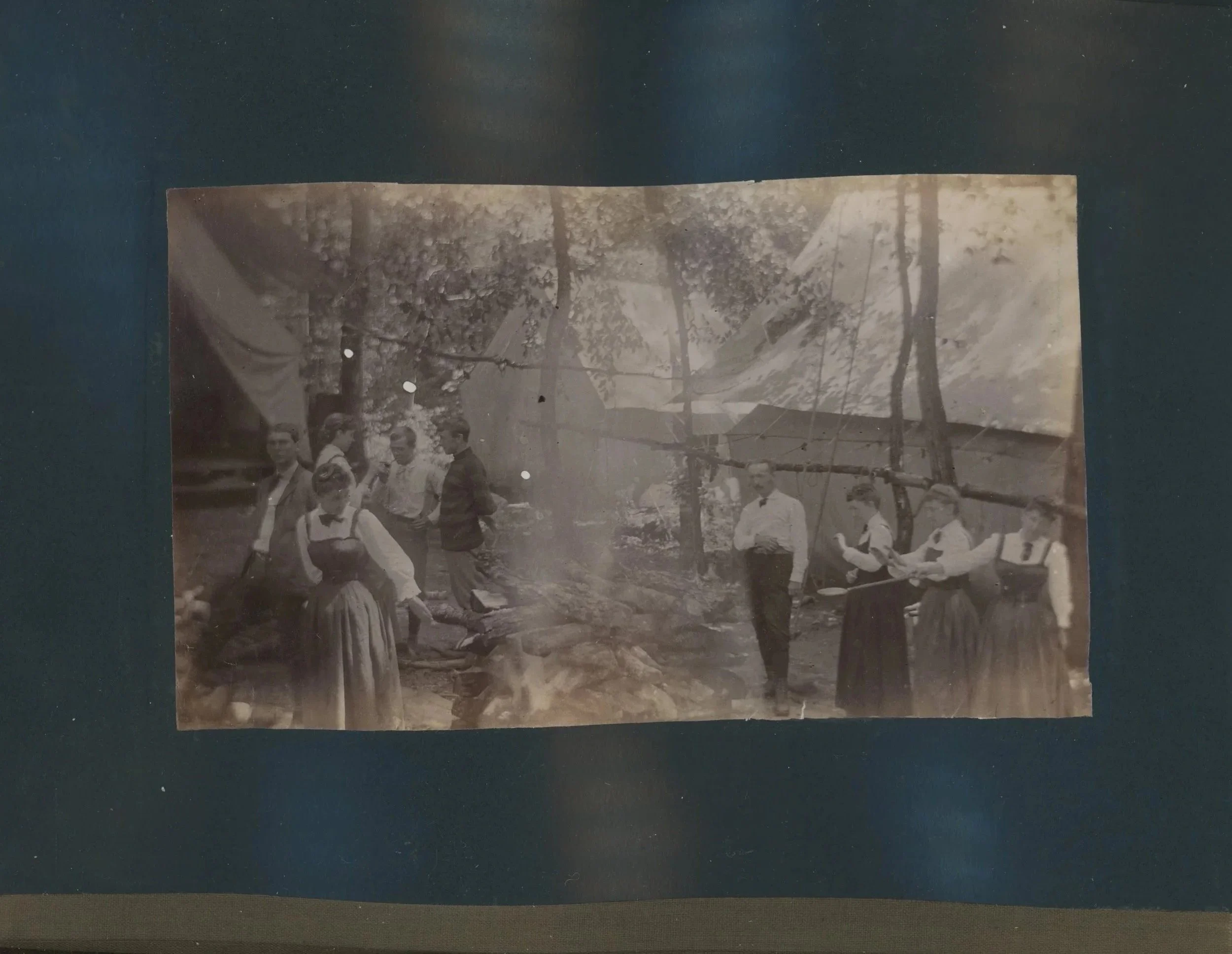
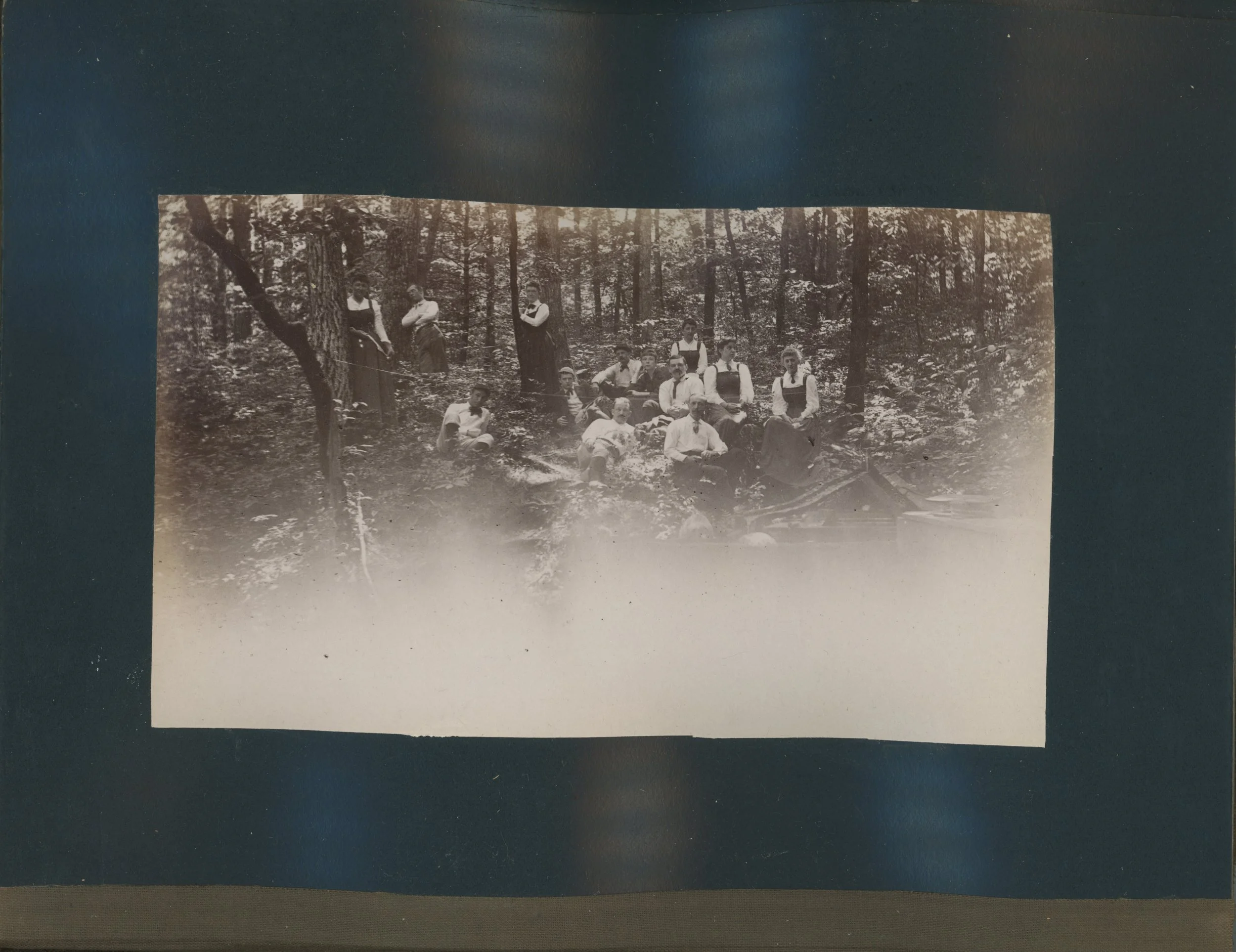
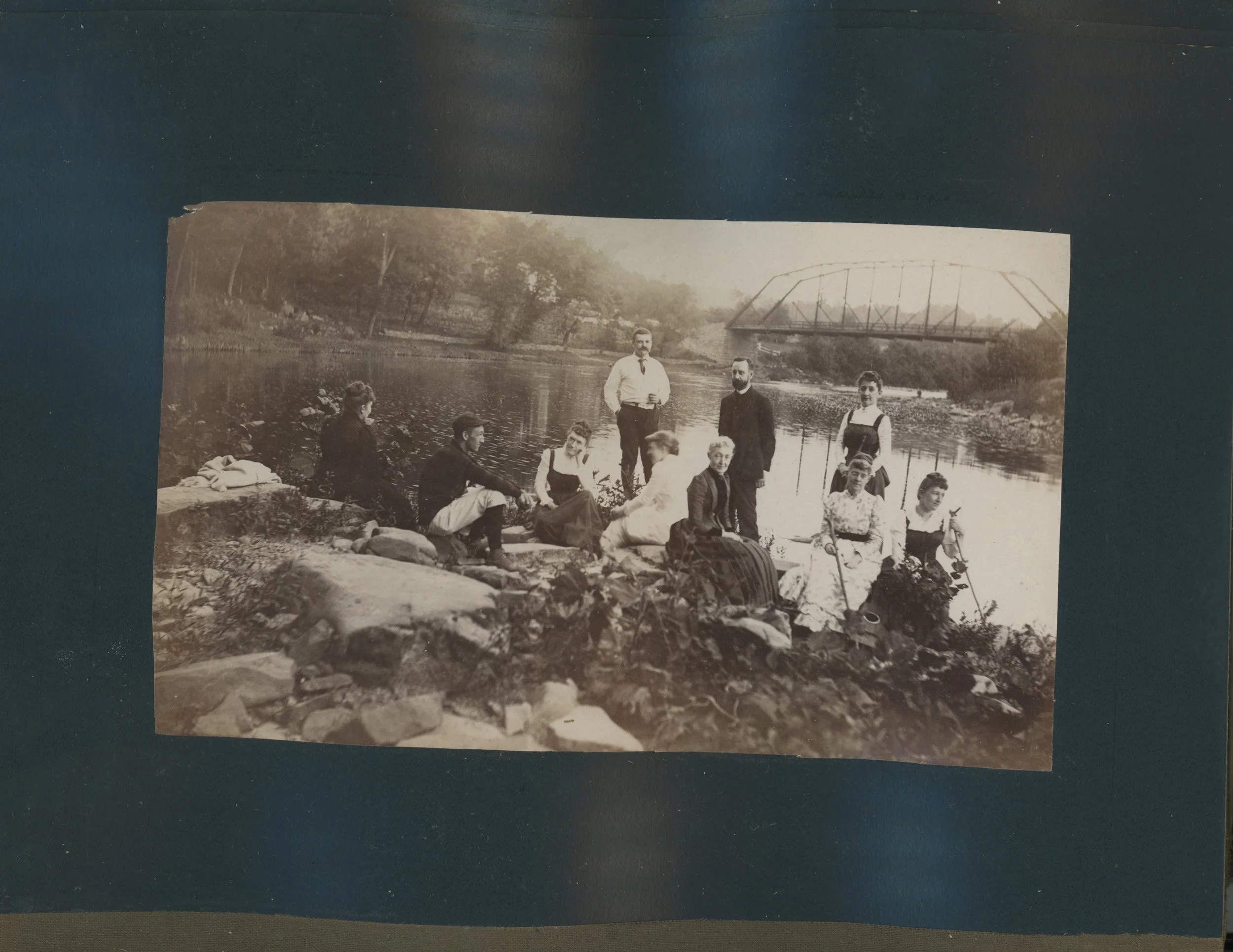
The album contains roughly 30 stiff-board pages, usually with two photographs mounted to each. Together they document what appears to have been several weeks of summer camp life in 1891.
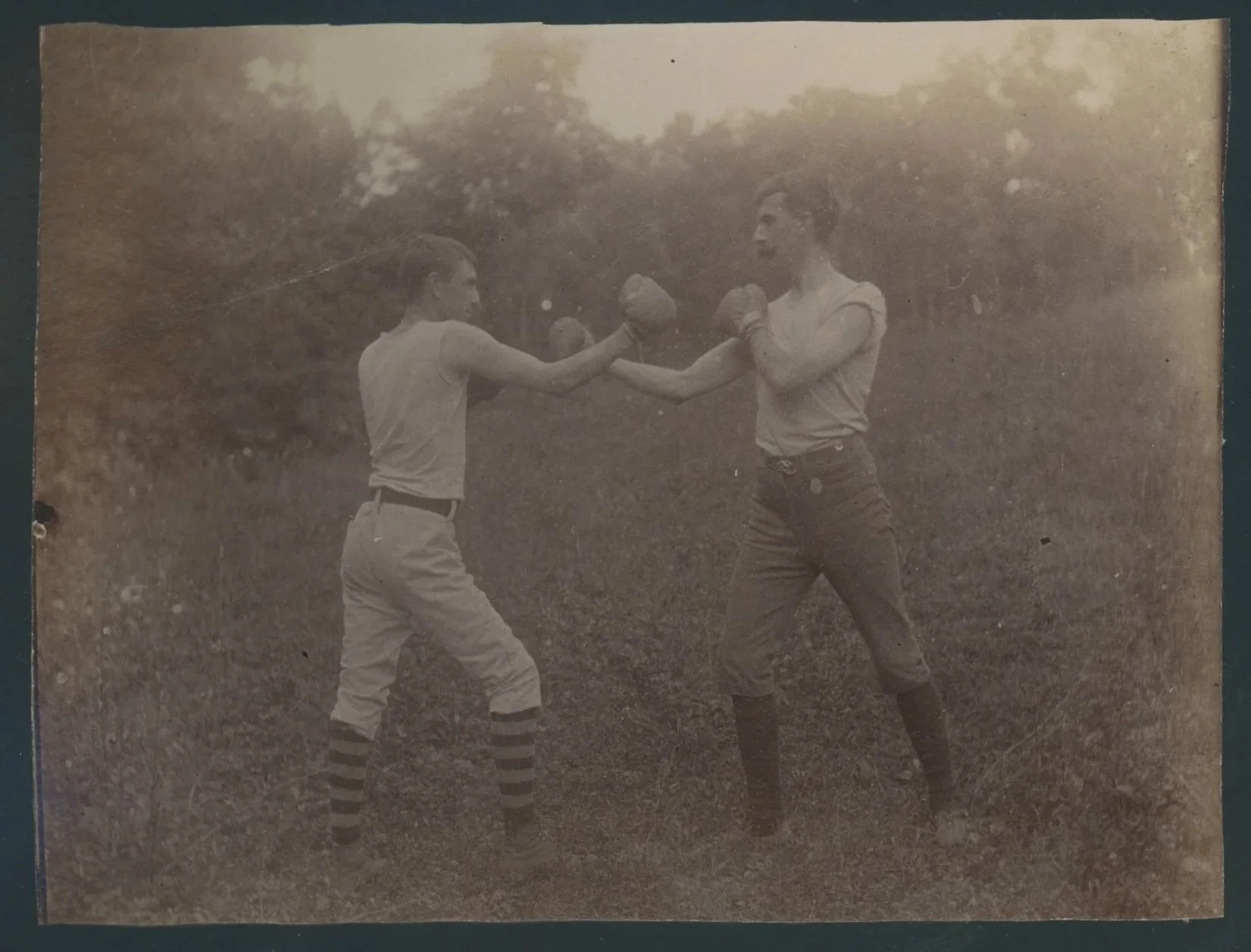
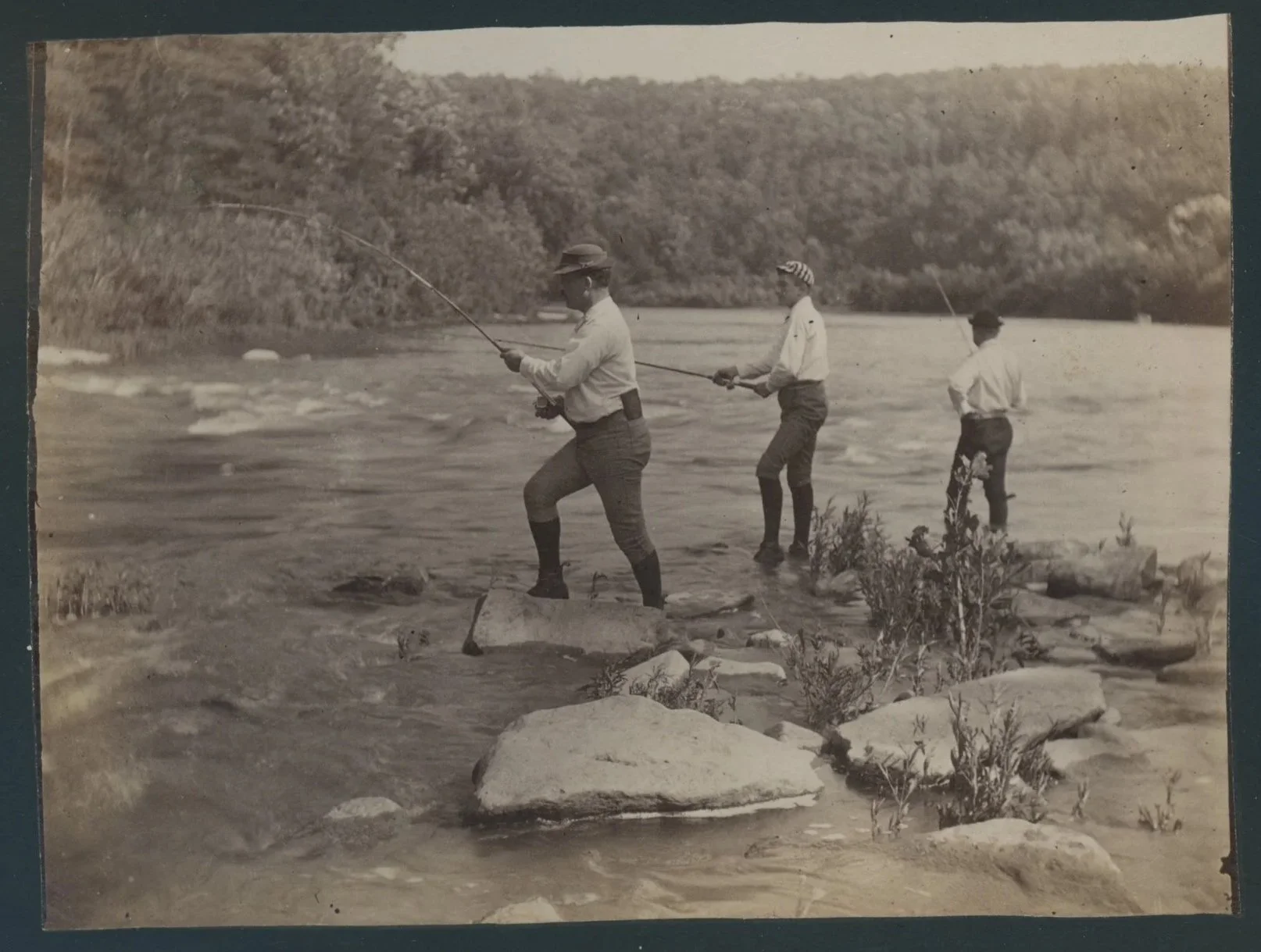
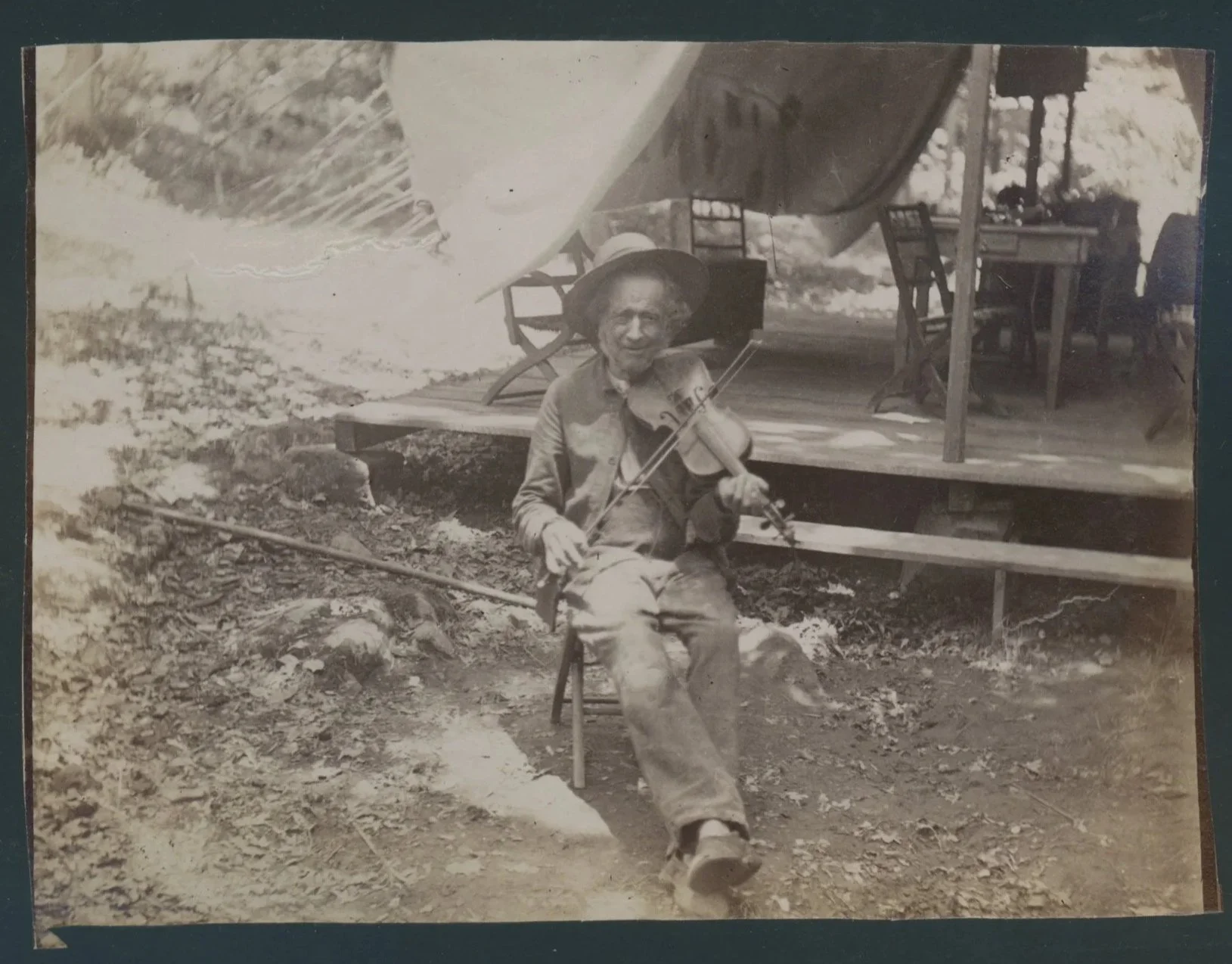
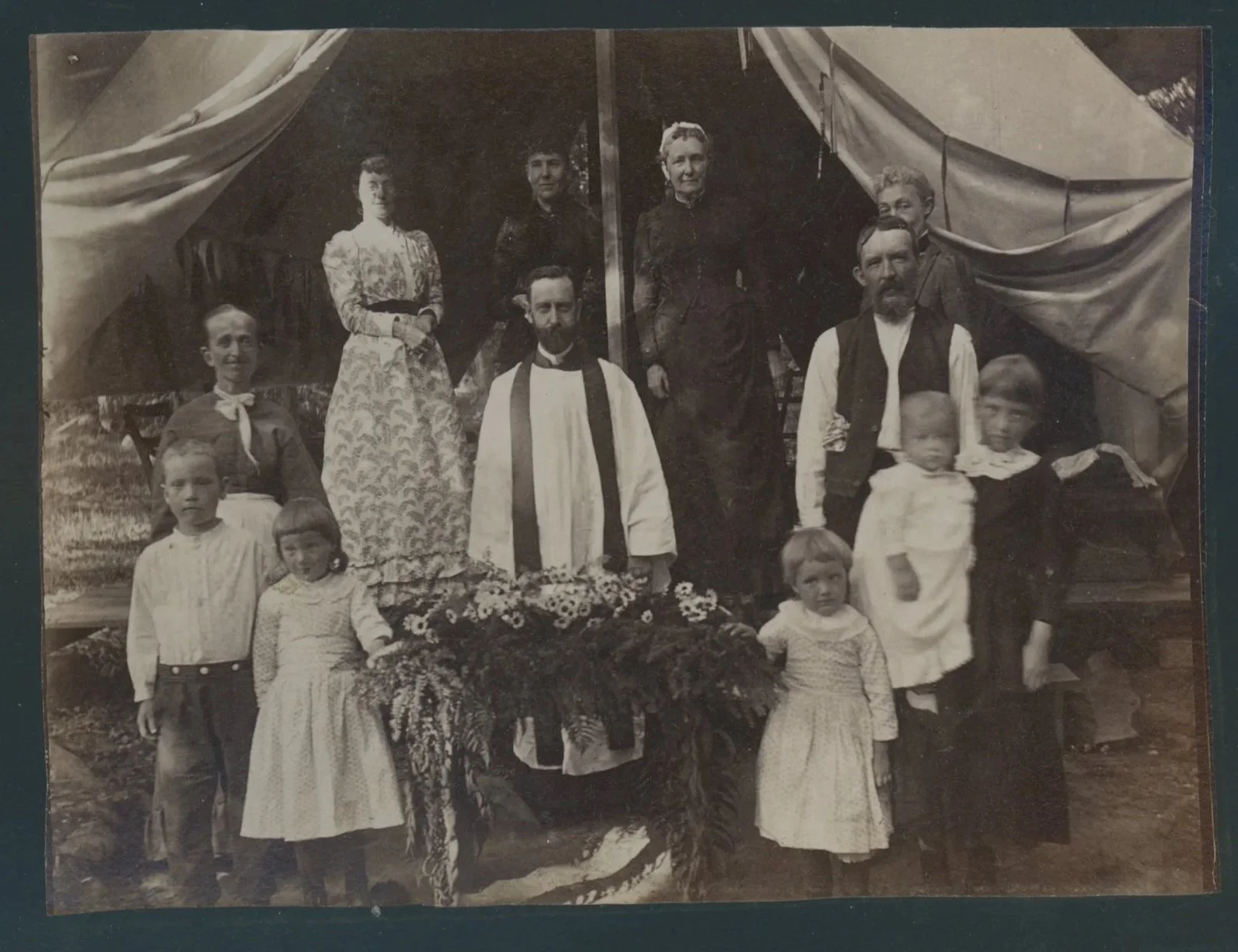
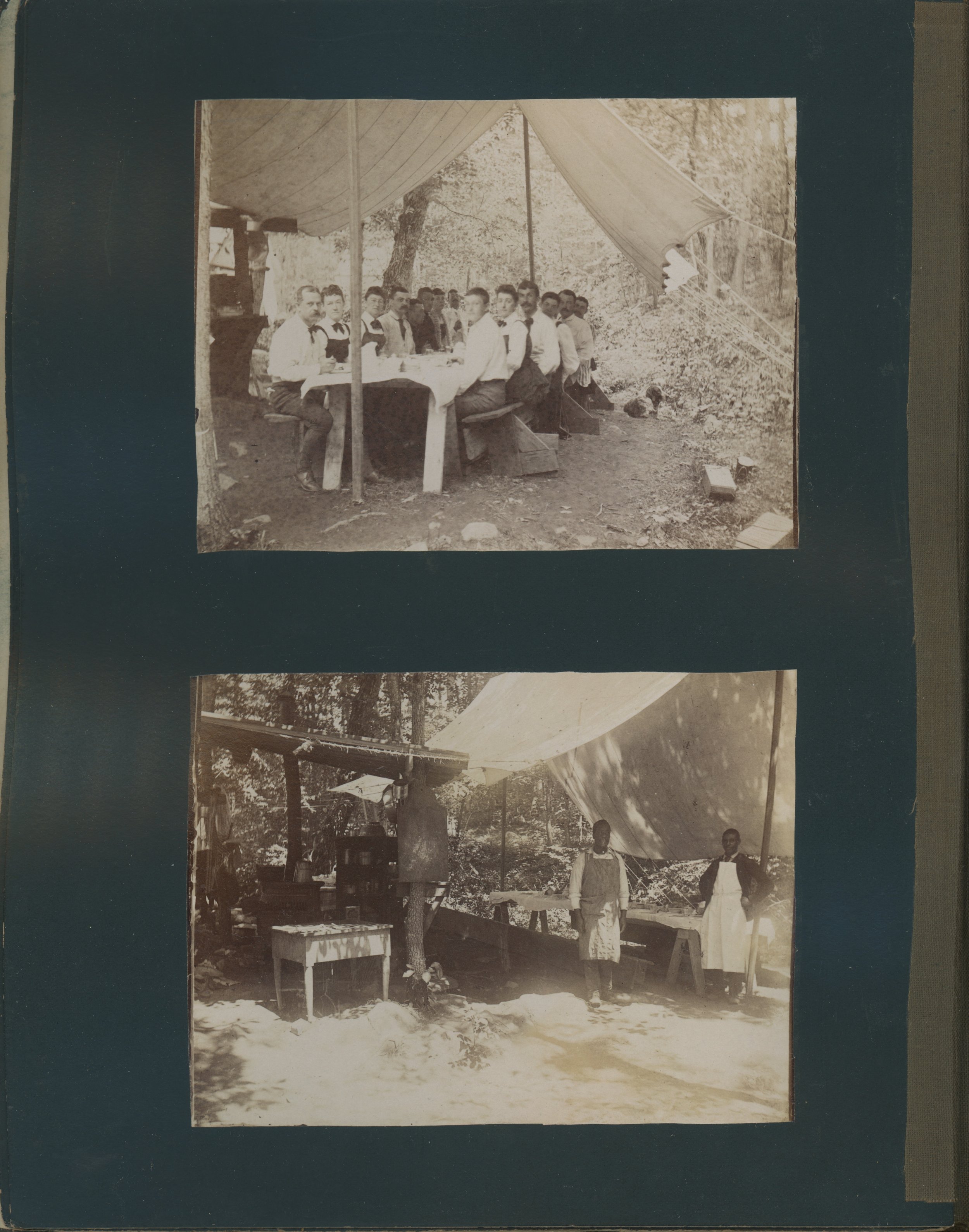
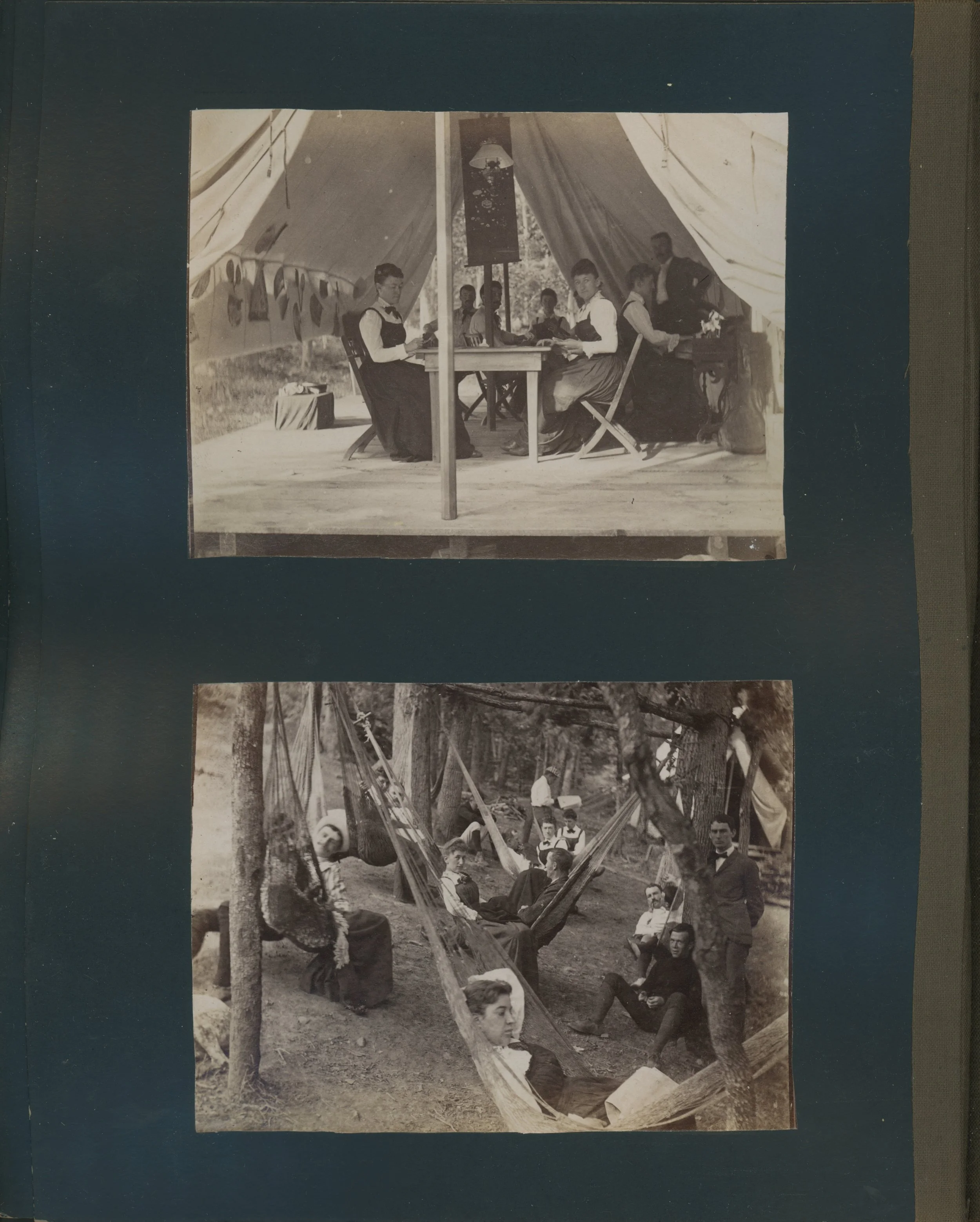
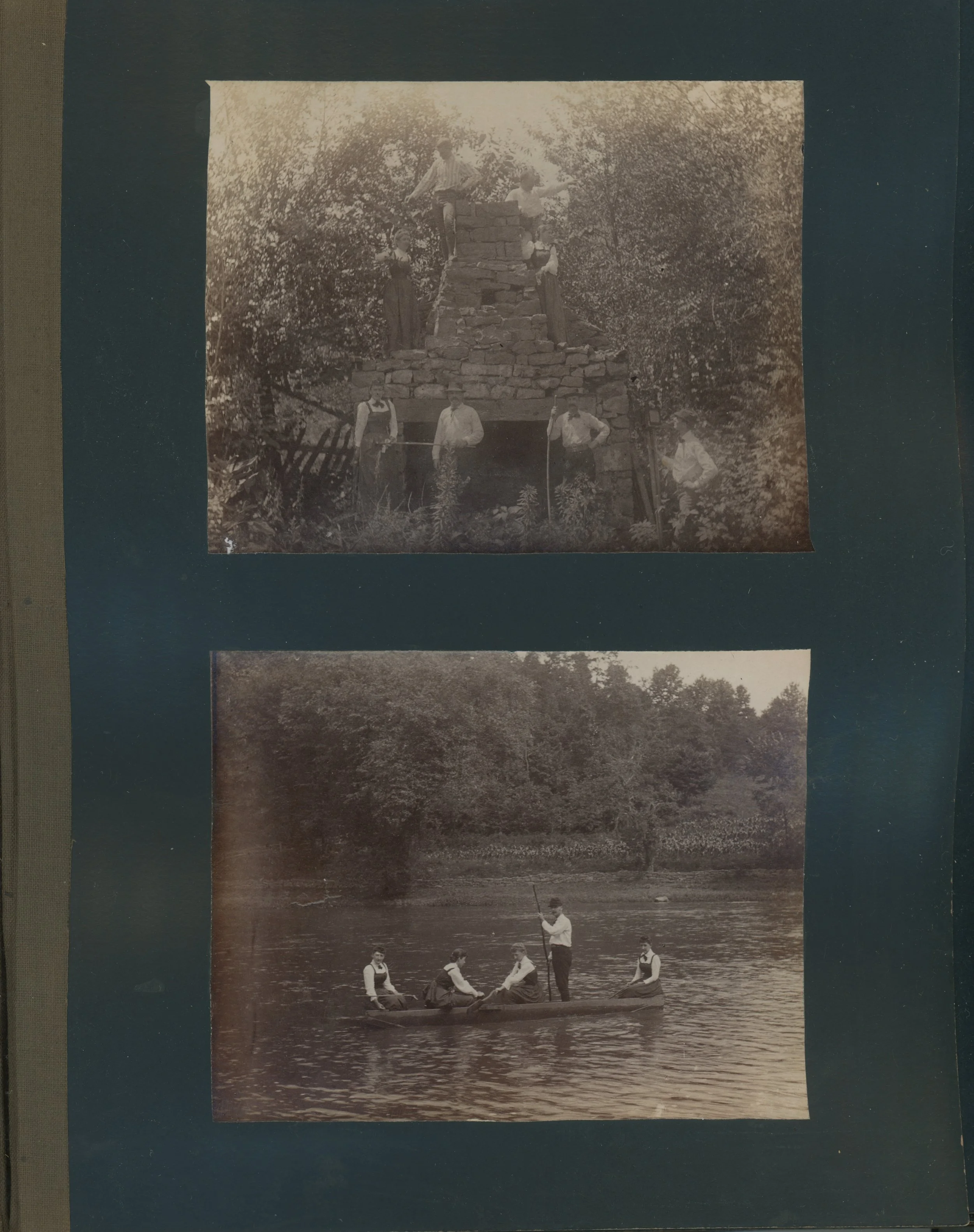
Fishing. Tents. Dogs. Cooking and dining. Men and women lounging beside the river. Boxing. Music. Religious services. Canoeing. Hiking. Hammocks.
And posing.
Lots of posing.
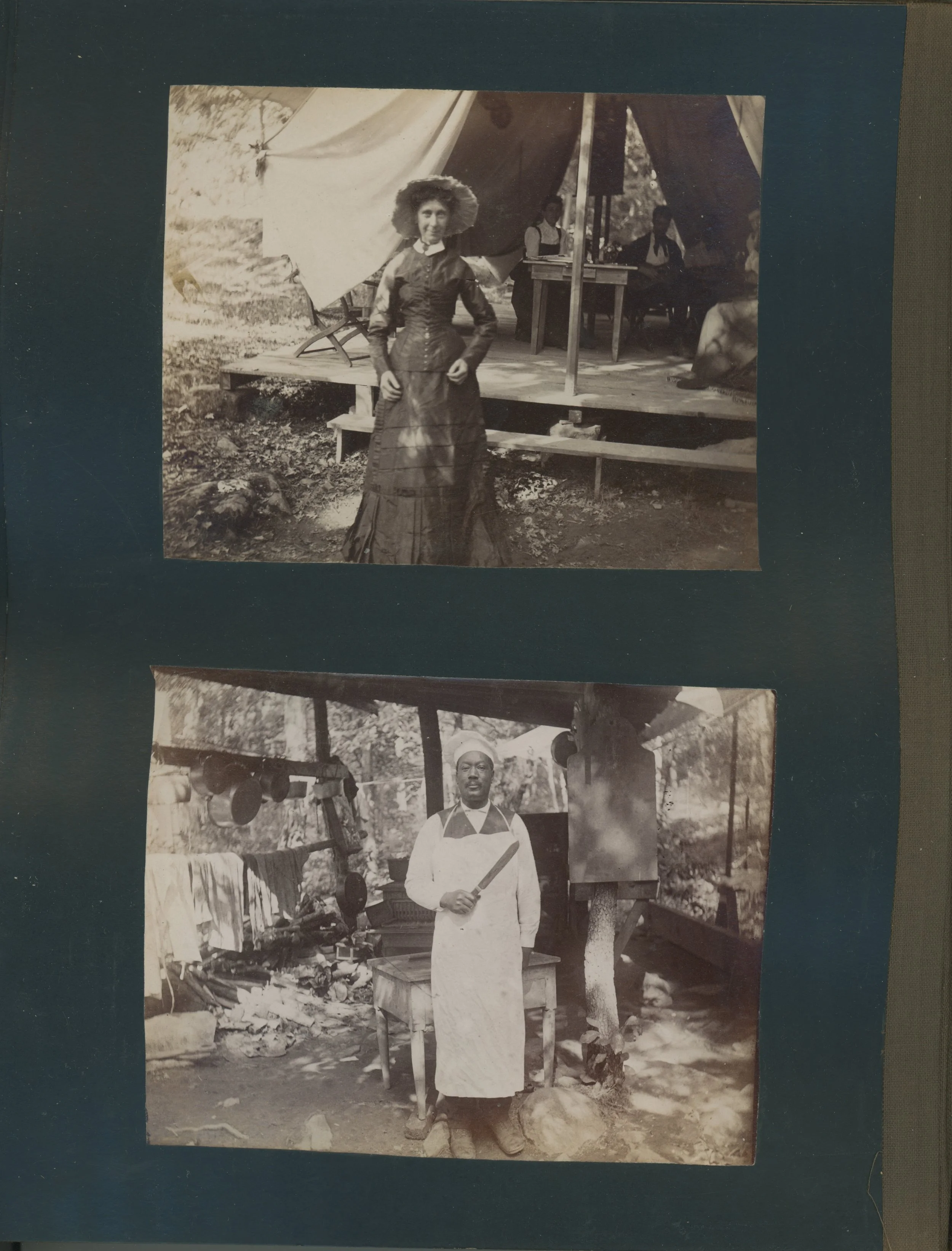
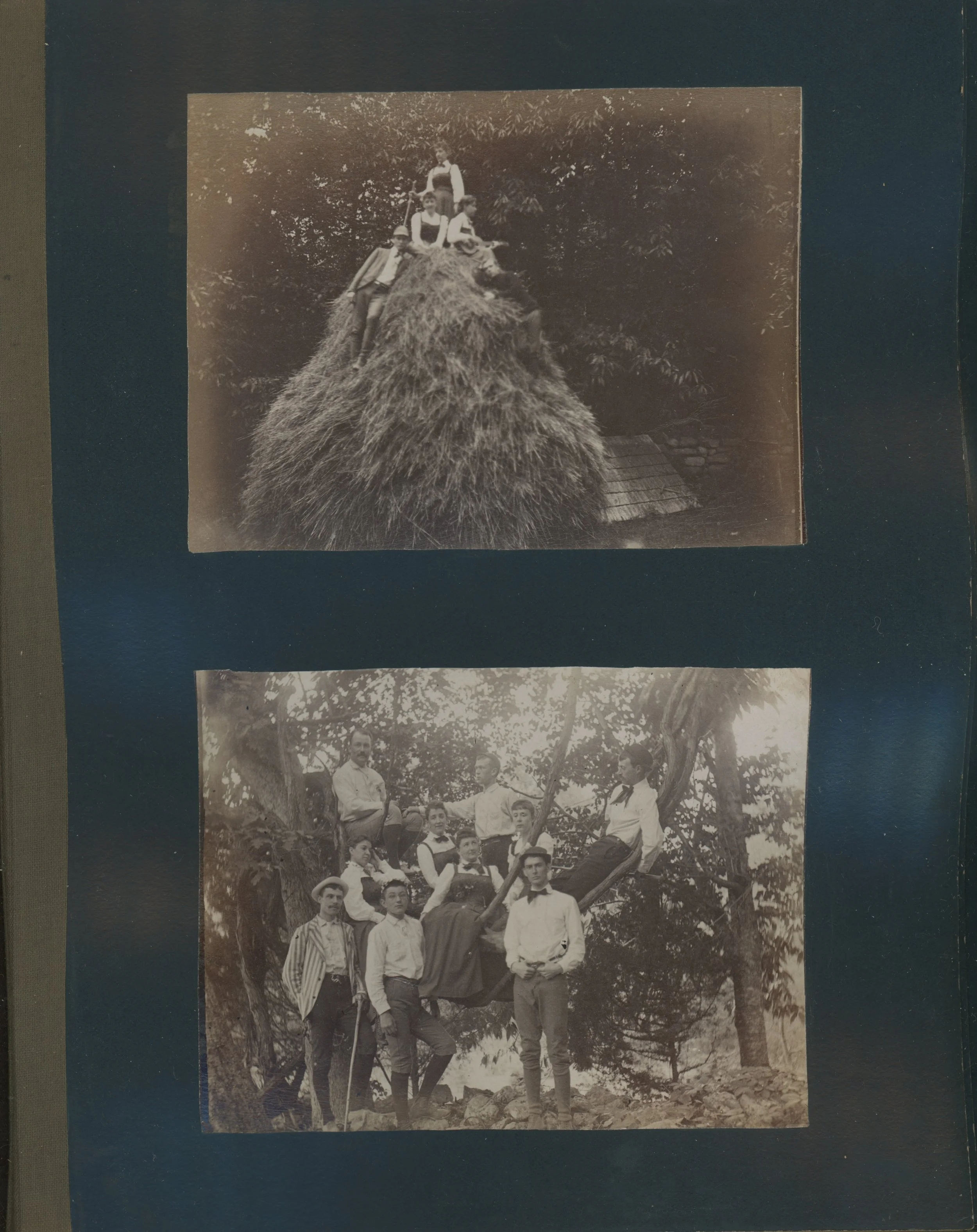
What struck me almost immediately is how carefully composed many of these photographs are. Ault seems to have understood exactly where to put people in the frame. Groups are arranged naturally without looking entirely accidental. People stand on rocks, sit beside tents, lean against trees, gather around tables, and position themselves along the water in ways that turn ordinary camp life into something surprisingly cinematic.
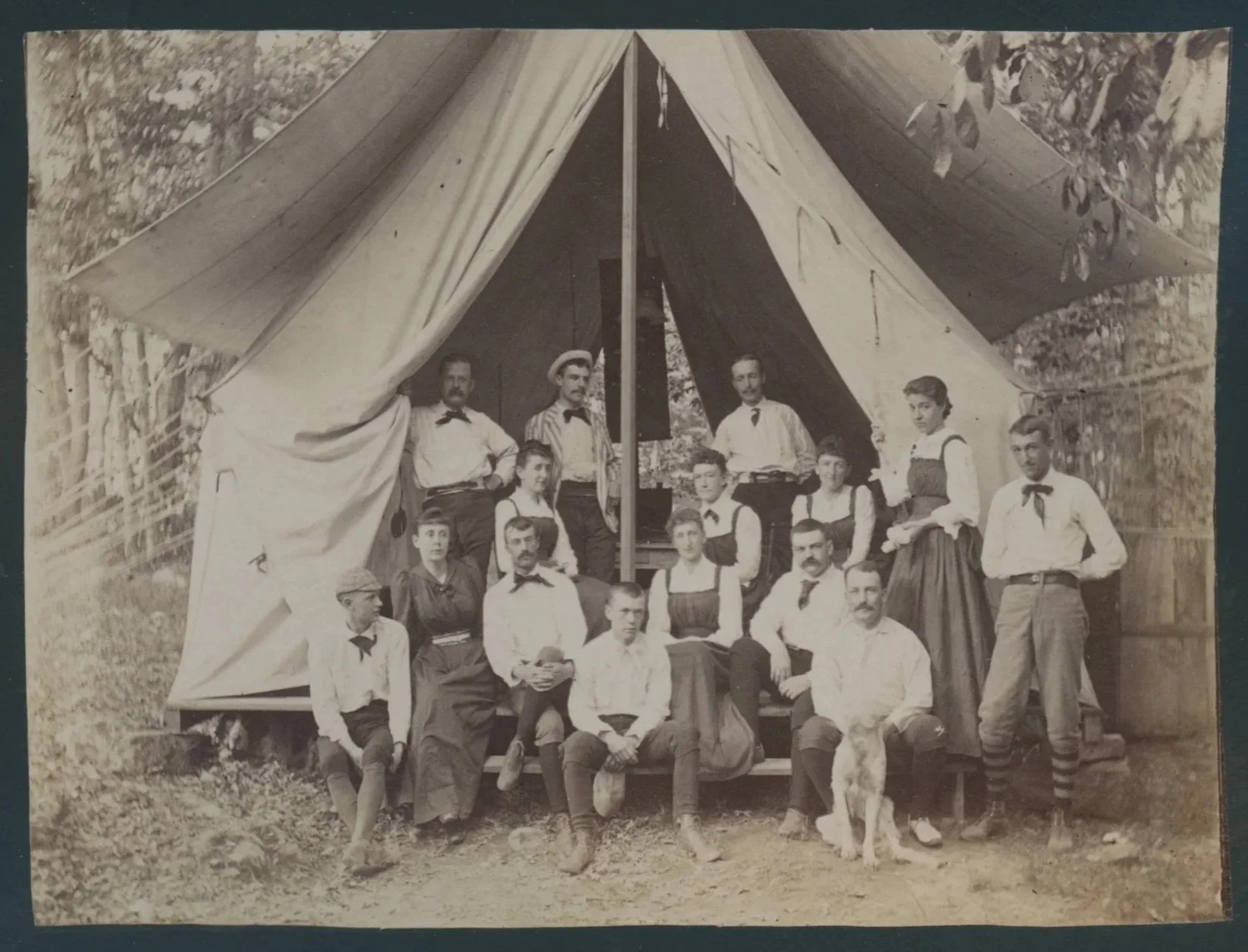
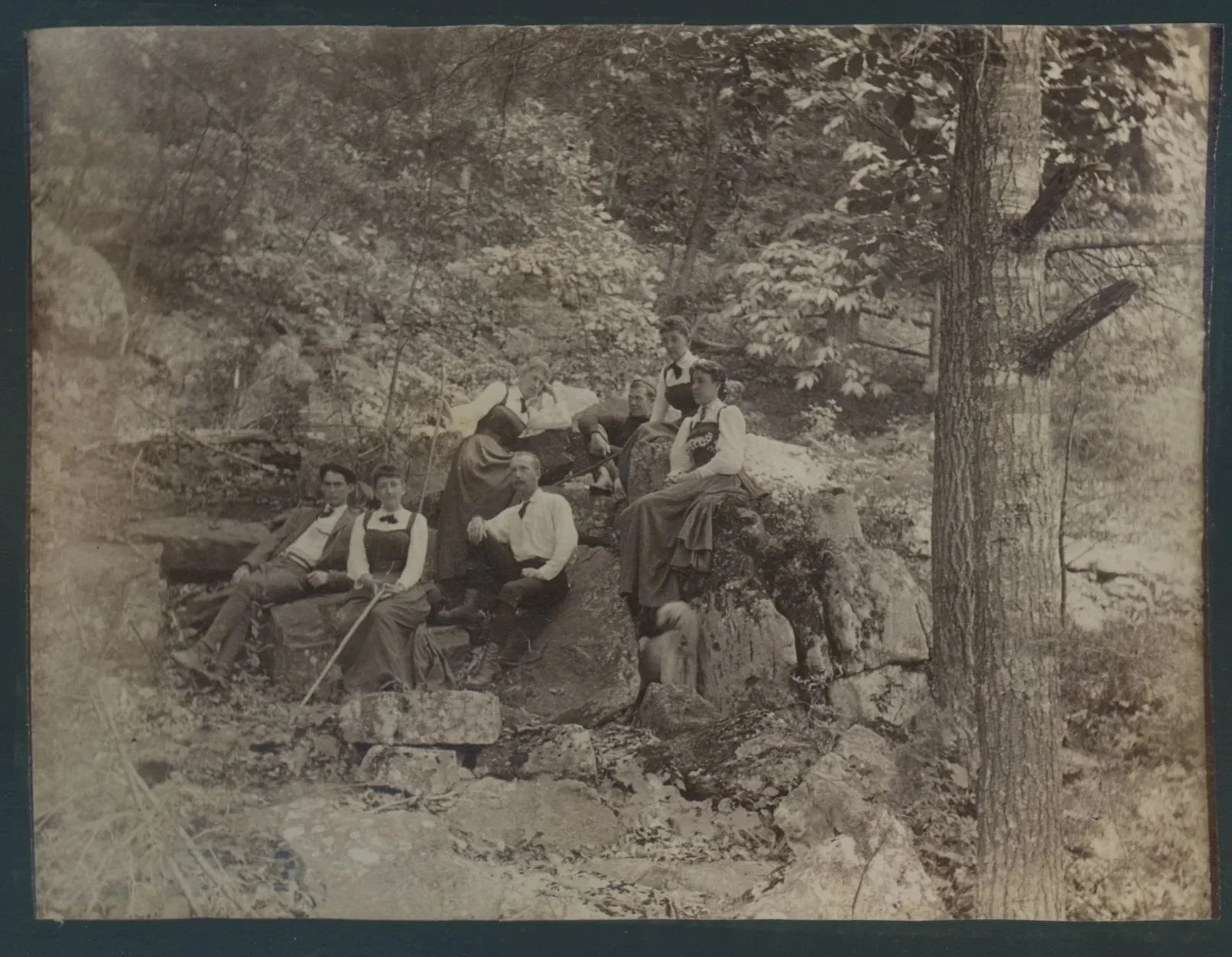
At first, I knew almost nothing about what “Camp Out a While” actually was. The album itself clearly treated the phrase as a proper name, but was it the name of a place? A particular camp? A family gathering?
Newspaper research gradually answered that question.
Camp-Out-Awhile was a York, Pennsylvania-area camping club whose members spent several weeks each summer in the Conewago region, near Livingstone’s Spring. Contemporary newspaper references indicate that the group began its annual encampments in 1883. A June 1889 article called that summer’s gathering the club’s seventh annual camp; in 1893, another article called it the eleventh. Both point neatly back to 1883.
The newspaper accounts also make clear that Camp-Out-Awhile referred primarily to the group itself. Reporters called them the “Camp-Out-Awhile Club,” the “Camp-Out-Awhile Camping Club,” and, charmingly, simply the “Camp-Out-Awhiles.”
By 1891, when this album was assembled, they had already been doing this for nearly a decade.
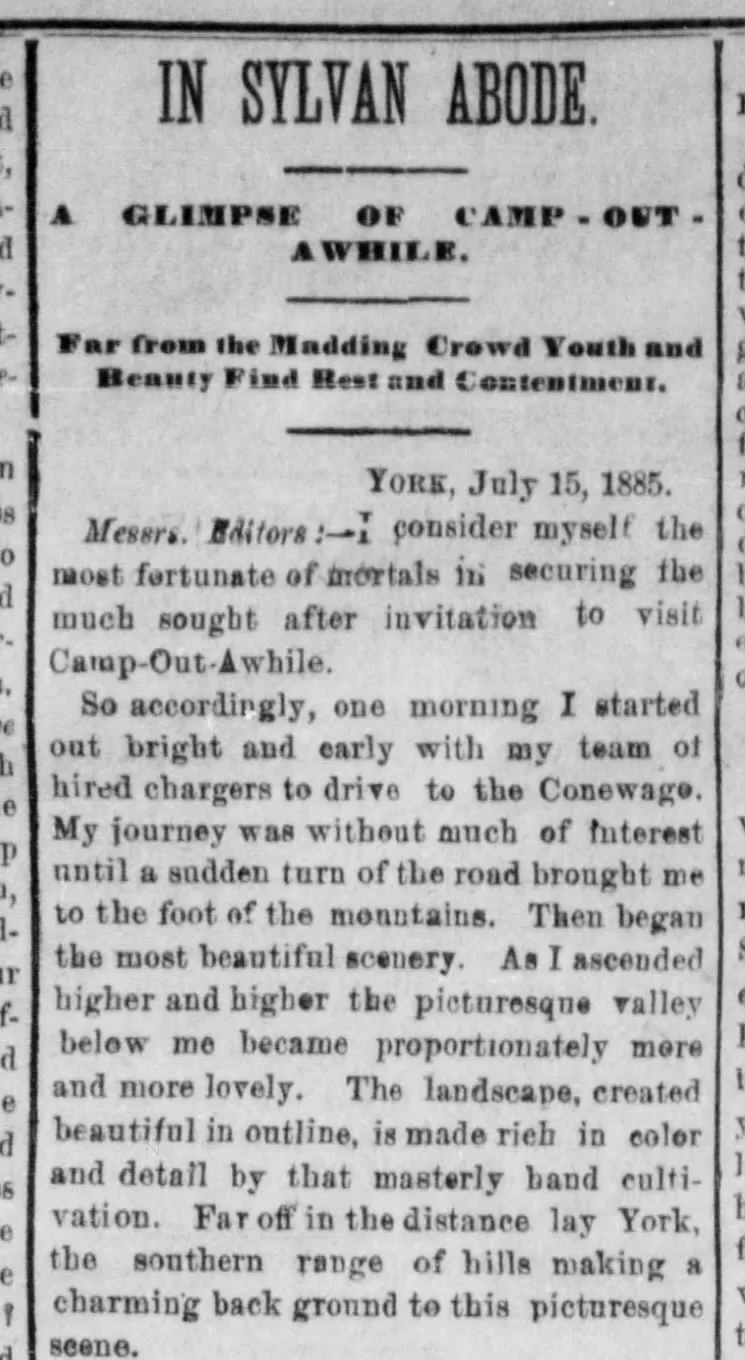
The York Daily (York, PA) - July 17, 1885
One of the richest descriptions I found appeared in The York Daily on July 17, 1885. The writer begins:
“I consider myself the most fortunate of mortals in securing the much sought after invitation to visit Camp-Out-Awhile.”
What follows is a long, affectionate account of a day at the encampment along the Conewago. The writer describes the people, the setting, the food, the camp cook, Cyrillus Johnson, and even a hammock — one of those wonderful little details that suddenly makes the newspaper account and the photographs feel as though they belong to the same world.
The full article is worth reading, but a few passages are especially evocative, particularly when read alongside Ault's photographs from six years later.
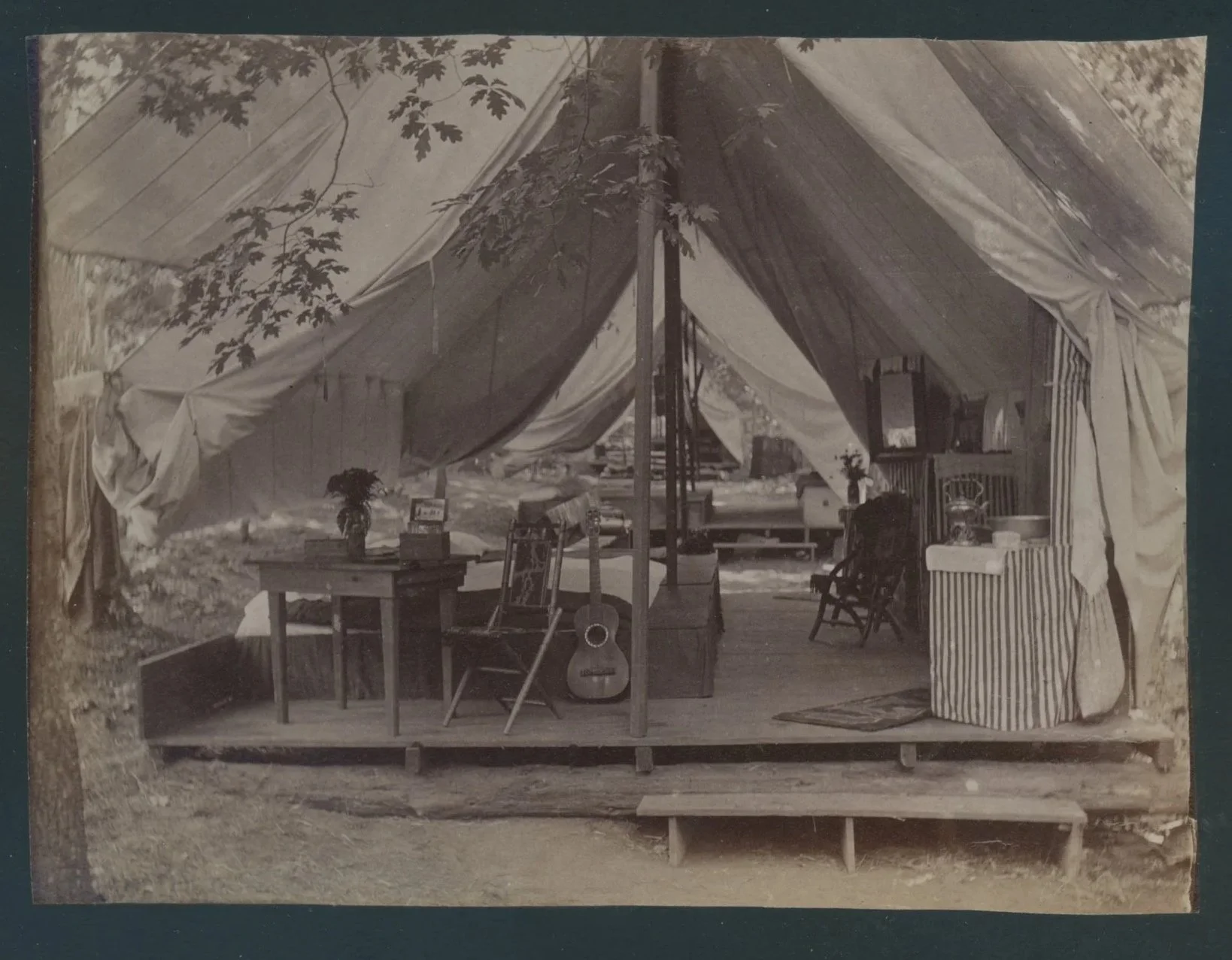
“Suddenly a scene long to be remembered burst upon me. The bright red dresses of the ladies, the knickerbockers of their cavaliers, aided by white tents and green trees, would have been a fitting scene to occupy a place in ‘The Romany Rye.’…
It would be impossible to imagine a more charming afternoon. A hammock, a pure Havana and charming society lifted me into Elysian fields. The shades of evening now began to gather about us. The camp fire burns in front of the tents … The Flickering light gave a wierd and romantic aspect to all things. All gathered around the fire and evening was spent in offering libations to the goddess of music.”
He ends by writing that he returned home feeling he would always look back on his visit to Camp-Out-Awhile as “one of the brightest days of my life.”
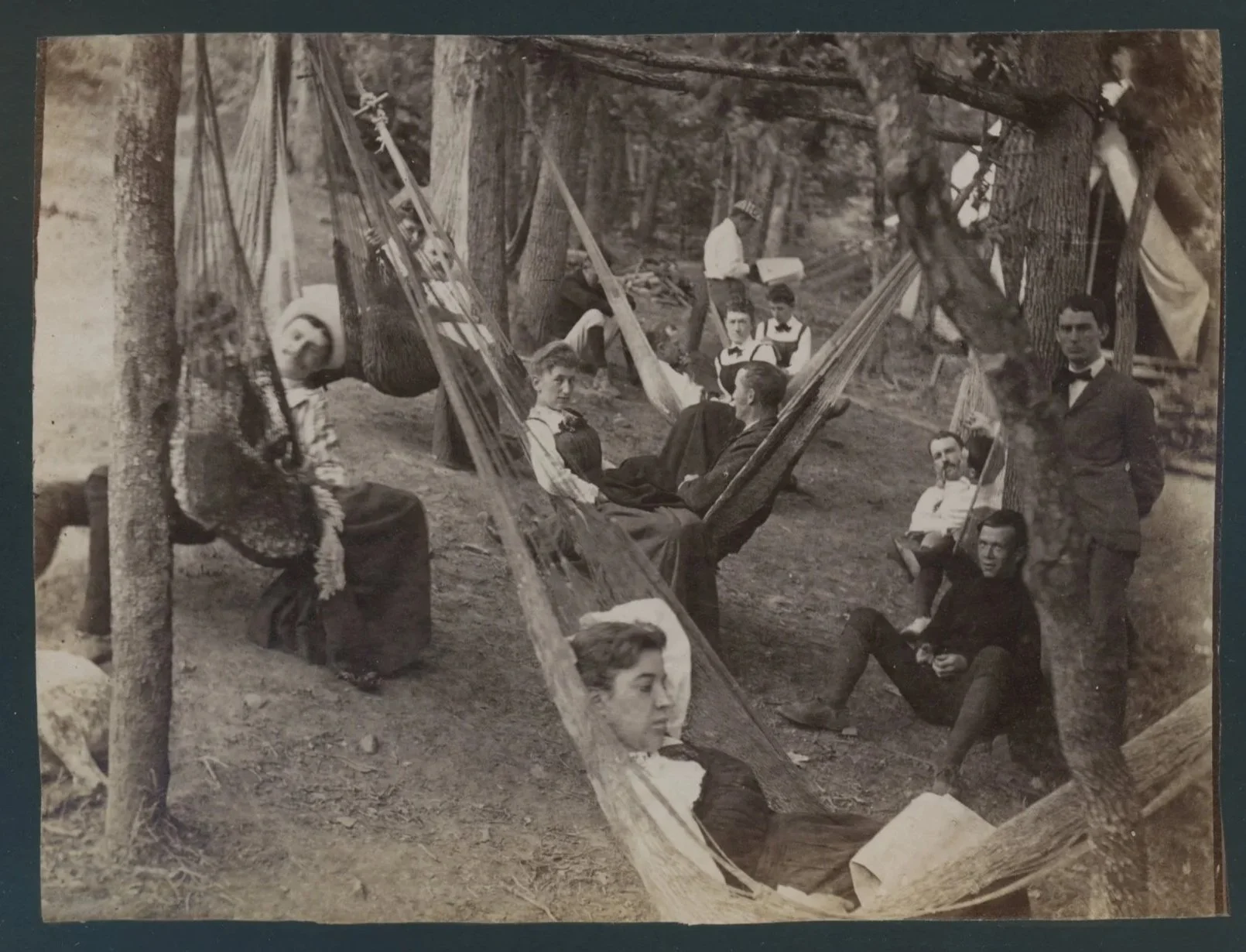
Two years later, another York Daily reporter visited the group after its members had once again “pitched their tents in the beautiful woods near Livingstone’s Spring.” The July 15, 1887 article identifies several campers by name and describes the reporter wandering through the “Conewago forests.”
“When dark night brooded over the tents, the campfire was lighted and served both to dispel the gloom and as footlight for the rustic stage.
By tens, by twenties, the natives came and soon no standing room was left. Fathers, mothers, children, and even babes in the arms and little dogs were brought to see this novel show. The orchestra consisted of a banjo, accordeon, piccolo, zither, and two guitars…”
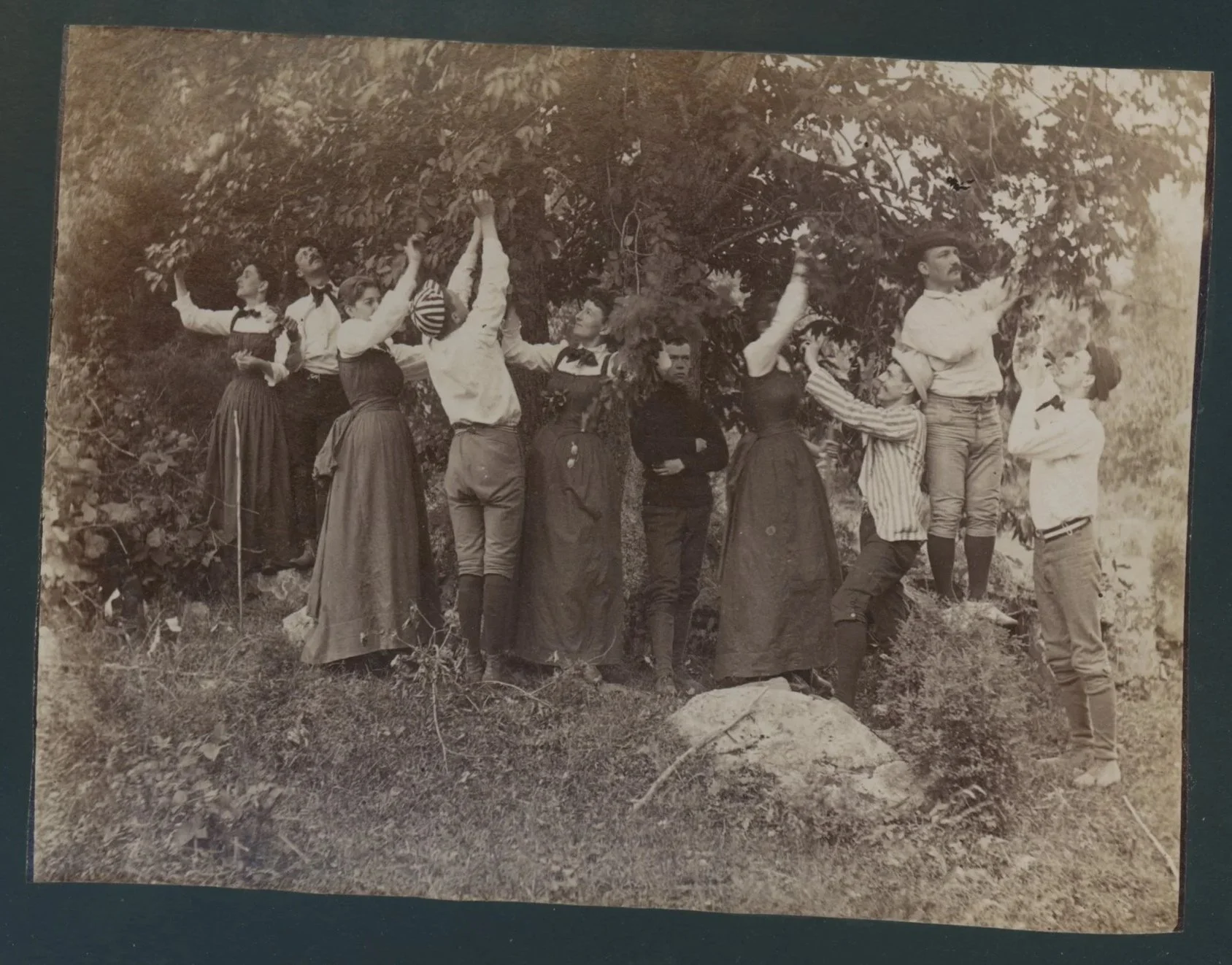
The same 1887 account mentions one particularly curious feature of the camp: an “egg-tree,” which supposedly “furnishes eggs for the especial delectation of the campers.” Four years later, Ault photographed a group of campers gathered beneath a tree, several reaching into its branches. Is this the famous egg-tree? There is no way to know, but it is hard not to wonder.
The full July 15, 1887 account can be read here.
The newspapers make Camp-Out-Awhile sound remarkably like the world preserved in Ault’s photographs.
In 1888 there was a religious service at the camp in the Conewago Mountains. In 1889 the club occupied its familiar site at Livingstone’s Spring for what the newspaper called its seventh annual camp. That summer they stayed for four weeks. When they returned to York, the Dispatch reported that their “tanned skins, and healthy appearance” left little doubt that they had made good use of their time outdoors.
One of my favorite small newspaper finds comes from September 1892:
“The Camp-Out-Awhile party will break camp to-day, and the bronzed, happy and reinvigorated campers will return this evening. The few remaining fish in the Big Conewago will also be happy.”
That little joke sounds remarkably modern.
There are similar references throughout the early 1890s. In 1893 the “Camp-Out-Awhiles” returned to their “old grounds in the Conewago” for what the paper identified as their eleventh encampment. Another newspaper simply reported that they were “up on the Conewago, having a genuine good time.”
One article that year noted that Cy Johnson, the club’s chef, had also proved to be its champion fisherman, landing a 2¼-pound bass. This appears to be the same Cyrillus Johnson singled out as the camp cook in the wonderful 1885 account eight years earlier. Ault’s 1891 album includes a photograph of the camp cook, who seems a strong candidate for Johnson himself.
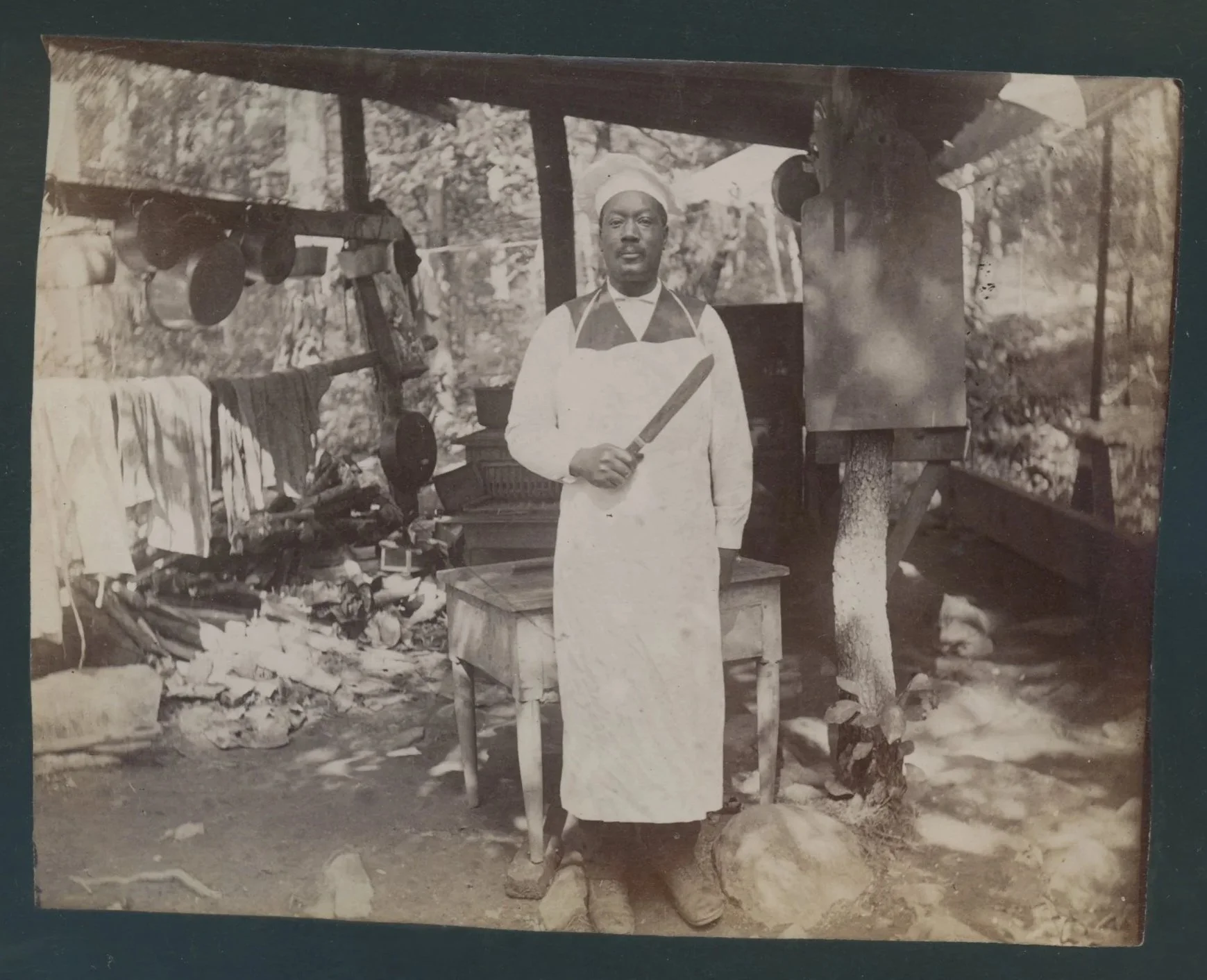
The Camp-Out-Awhile cook, possibly Cyrillus “Cy” Johnson, 1891.
That continuity is one of the things I find most appealing. These were not strangers who happened to spend a weekend together. The newspaper record suggests a group that returned to the same general place year after year, developing traditions, roles, friendships, jokes, and memories of its own.
By 1896, however, something seems to have changed. A March newspaper item reported that the Camp-Out-Awhile party, which had camped in the Conewagoes for the previous ten or twelve years, would not go out that summer. Later that July, former members returned instead for a picnic at the site of their “former pleasures.”
The club itself may not have disappeared. In 1899, a “Camp Out Awhile camping club” was preparing for a ten-day outing at Falls View, suggesting that at least some version of the group continued under the old name at another location. References in 1909 and 1910 place people calling themselves Camp Out A-While along the Big Conewago near Dick’s Dam. Whether this was an uninterrupted continuation of the original club, a revived version, or simply the survival of the name remains less certain.
When it comes to the identity of this album, however, the evidence feels much stronger.
It is dated 1891. It identifies itself as Camp Out a While. Robert Ault is named as its photographer. Its photographs show exactly the sorts of activities described in contemporary newspaper accounts of the York group: fishing, cooking, religious activity, hammocks, tents, outdoor meals, excursions, and weeks spent along the water.
I can't yet identify every person or every precise location pictured here, and there is still research to be done. But taken together, the evidence leaves little doubt that this album documents the York, Pennsylvania-area Camp-Out-Awhile Club during its 1891 encampment along the Conewago.
And what an extraordinary little survival it is.
More than 130 years later, we can still watch these people fishing, boxing, eating, singing, lounging in hammocks, standing beside their tents, and carefully arranging themselves for Robert Ault’s camera.
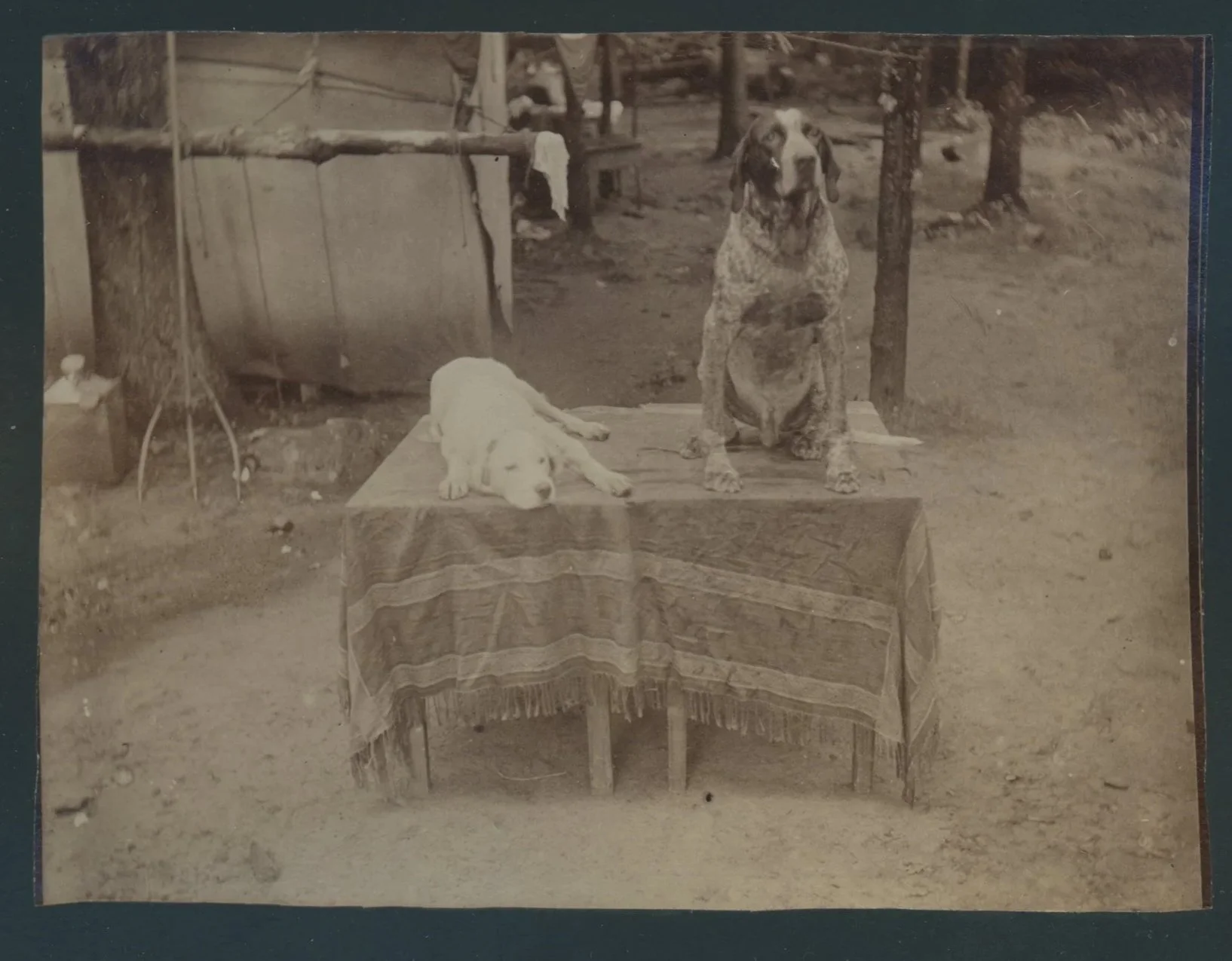
Below is the album in its entirety, presented in its original page order. Click any page to enlarge it and move through the album.
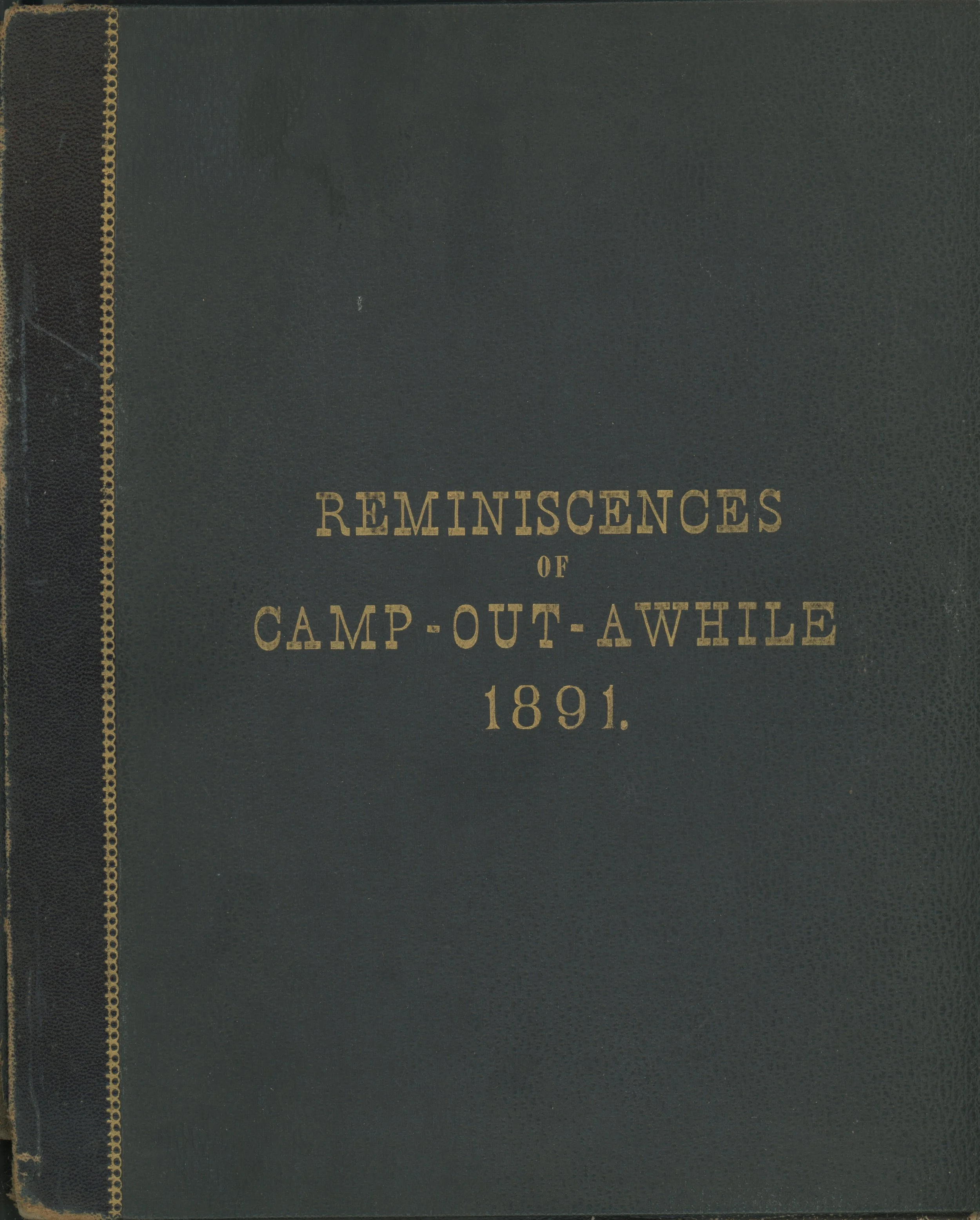

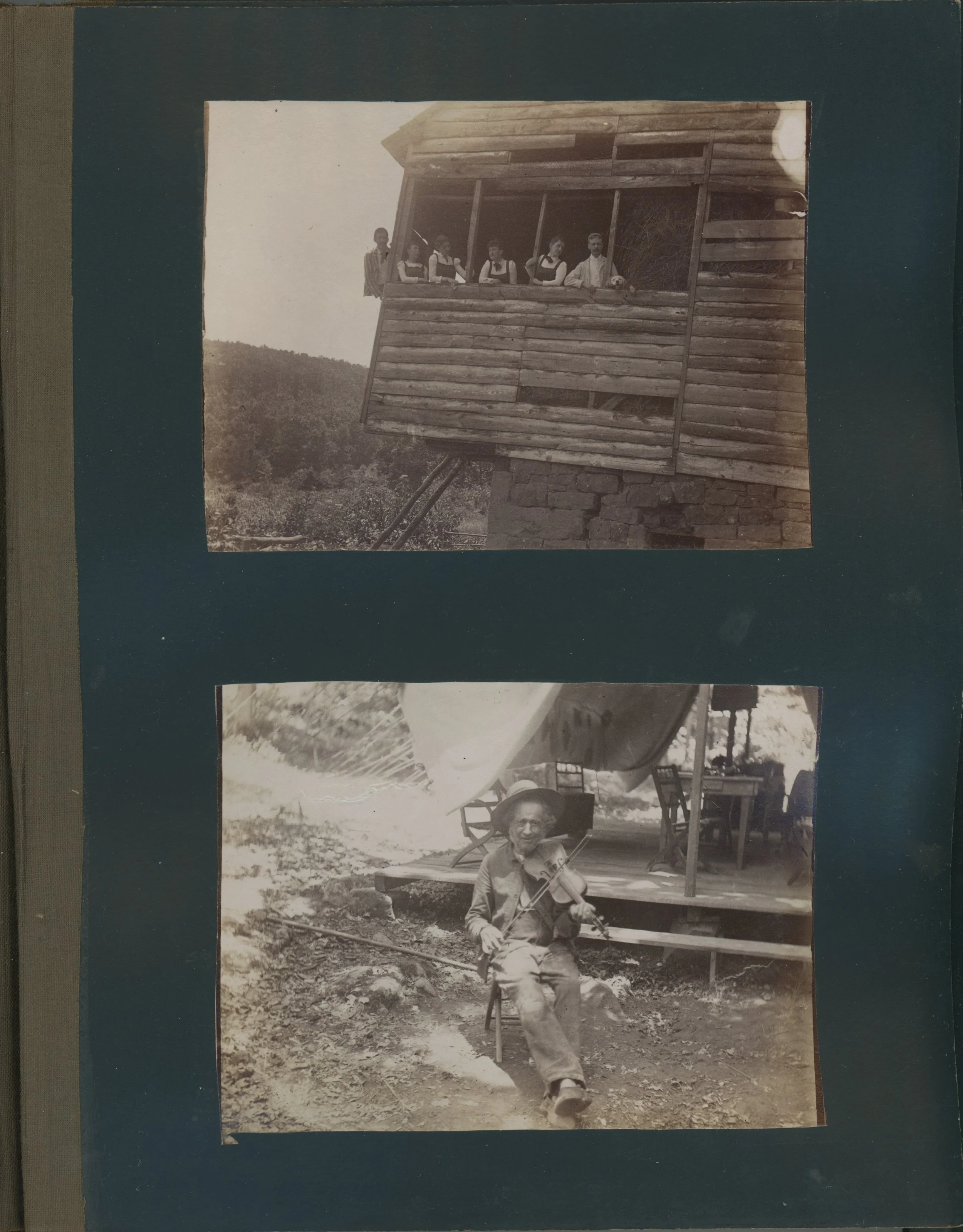
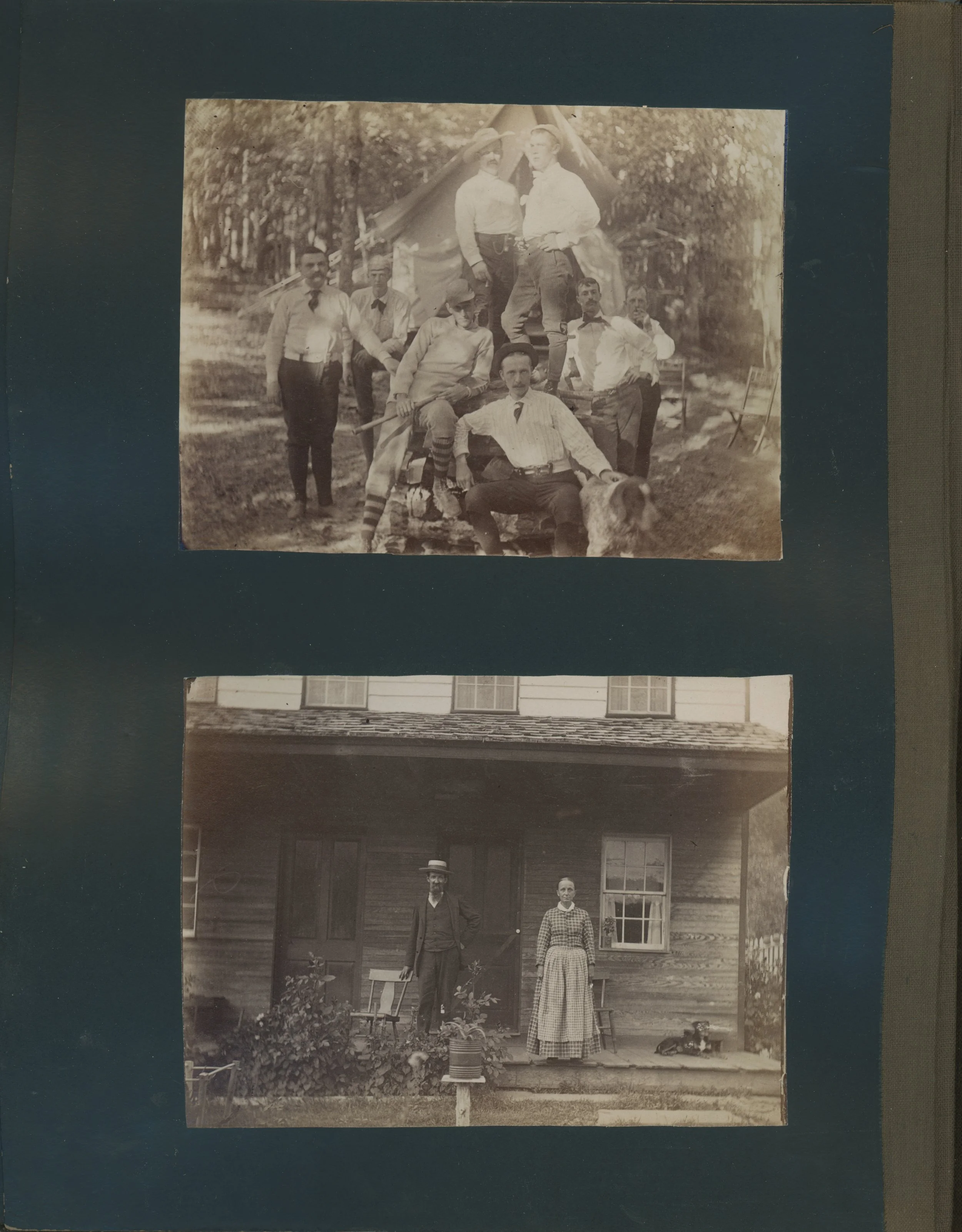
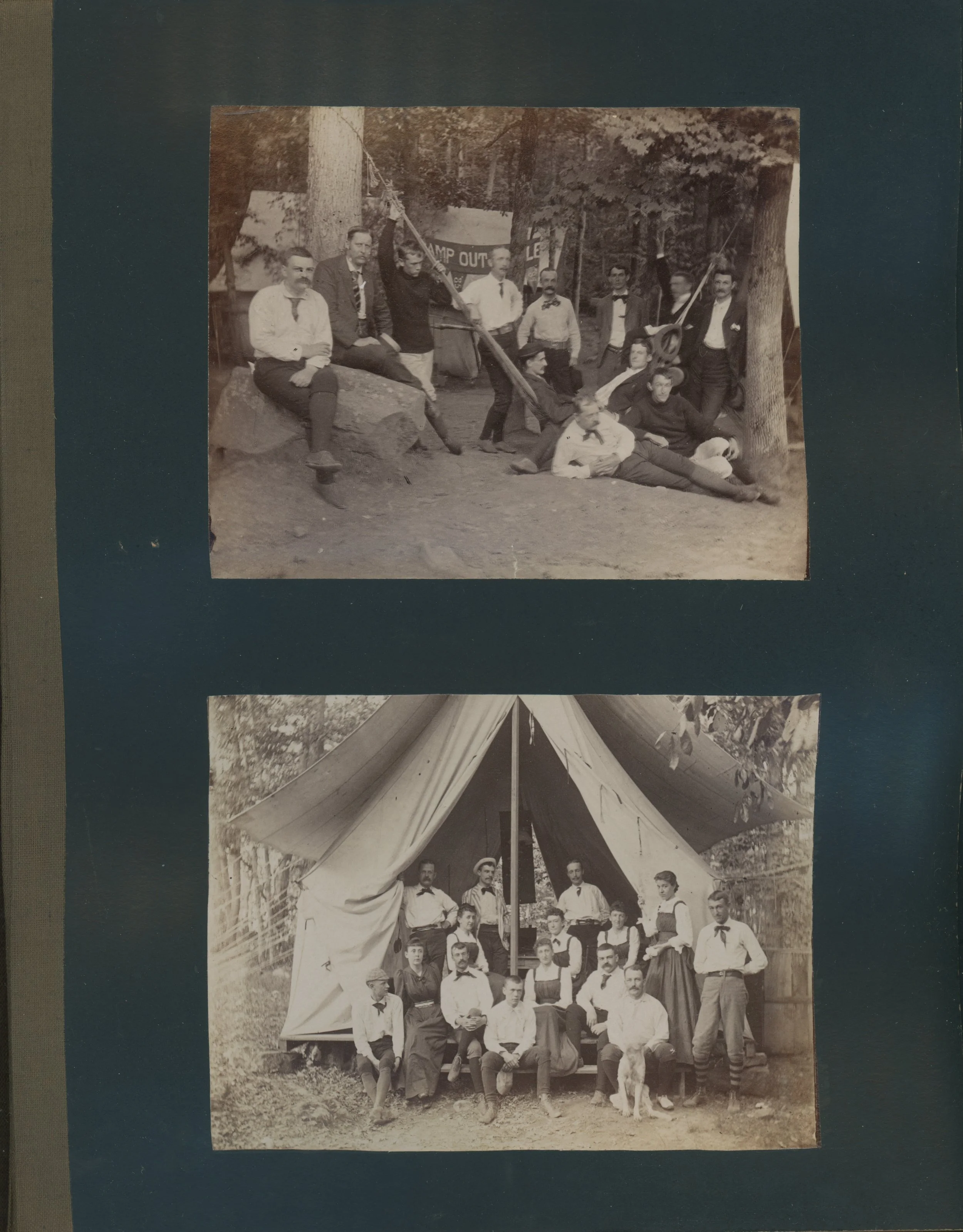
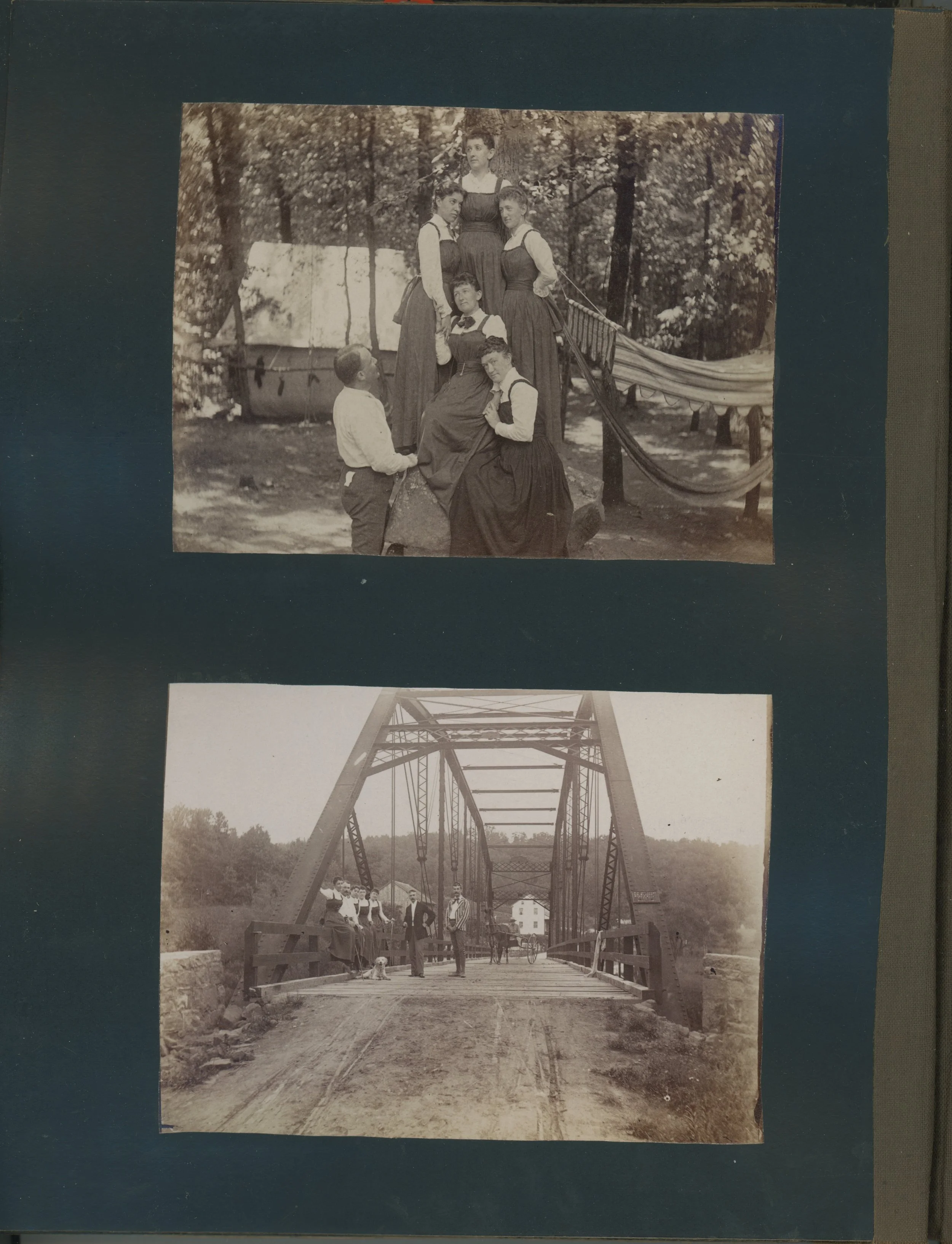
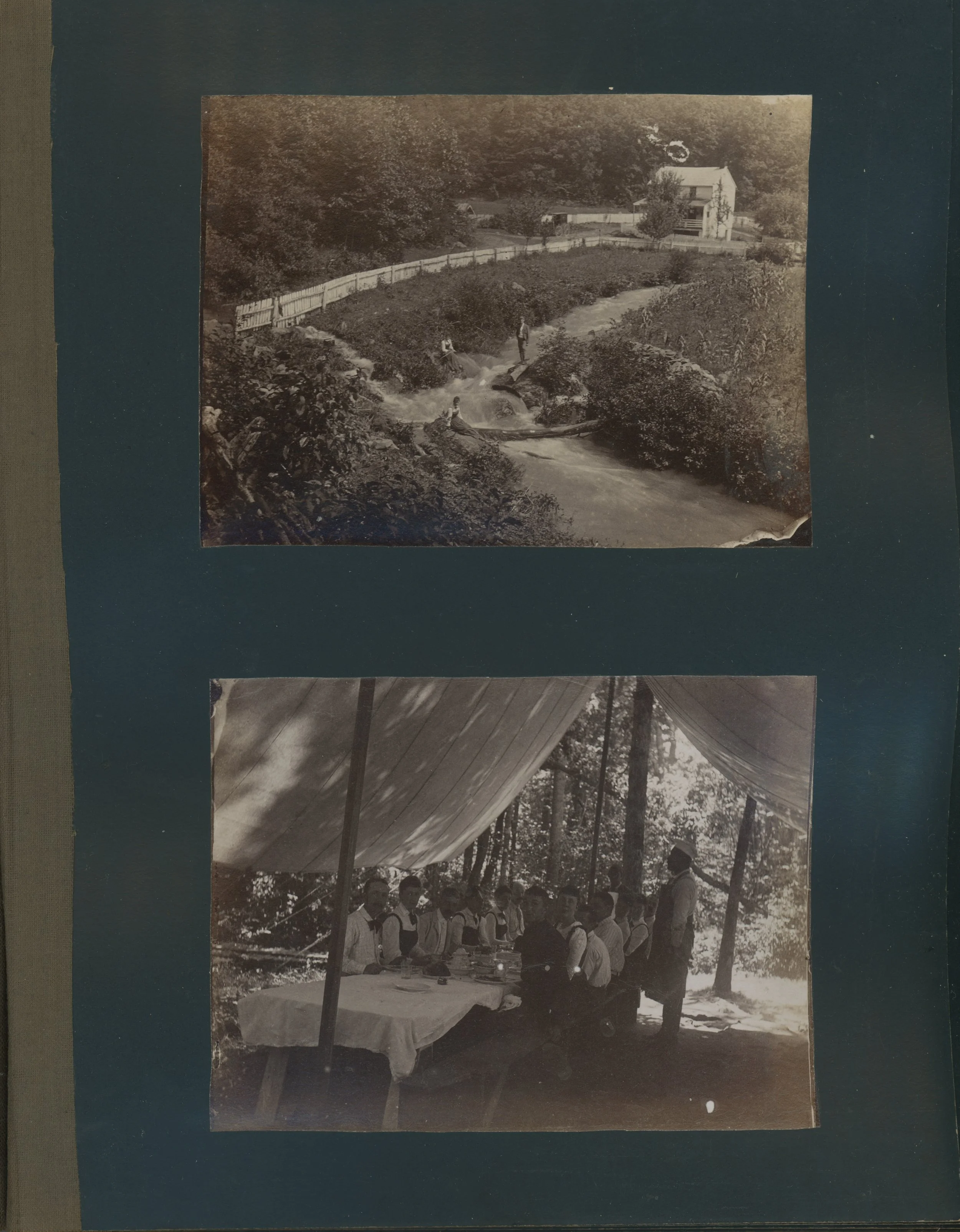
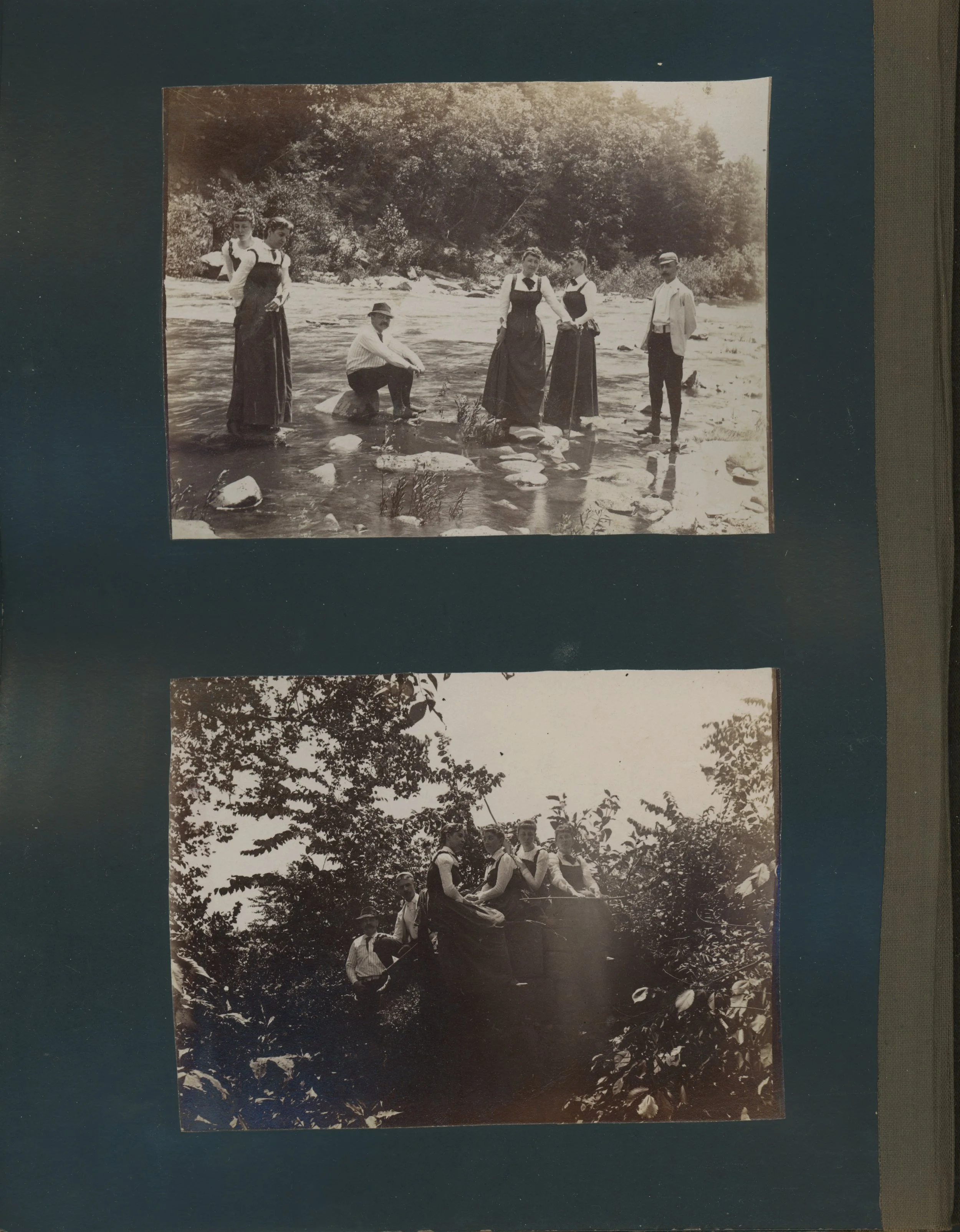
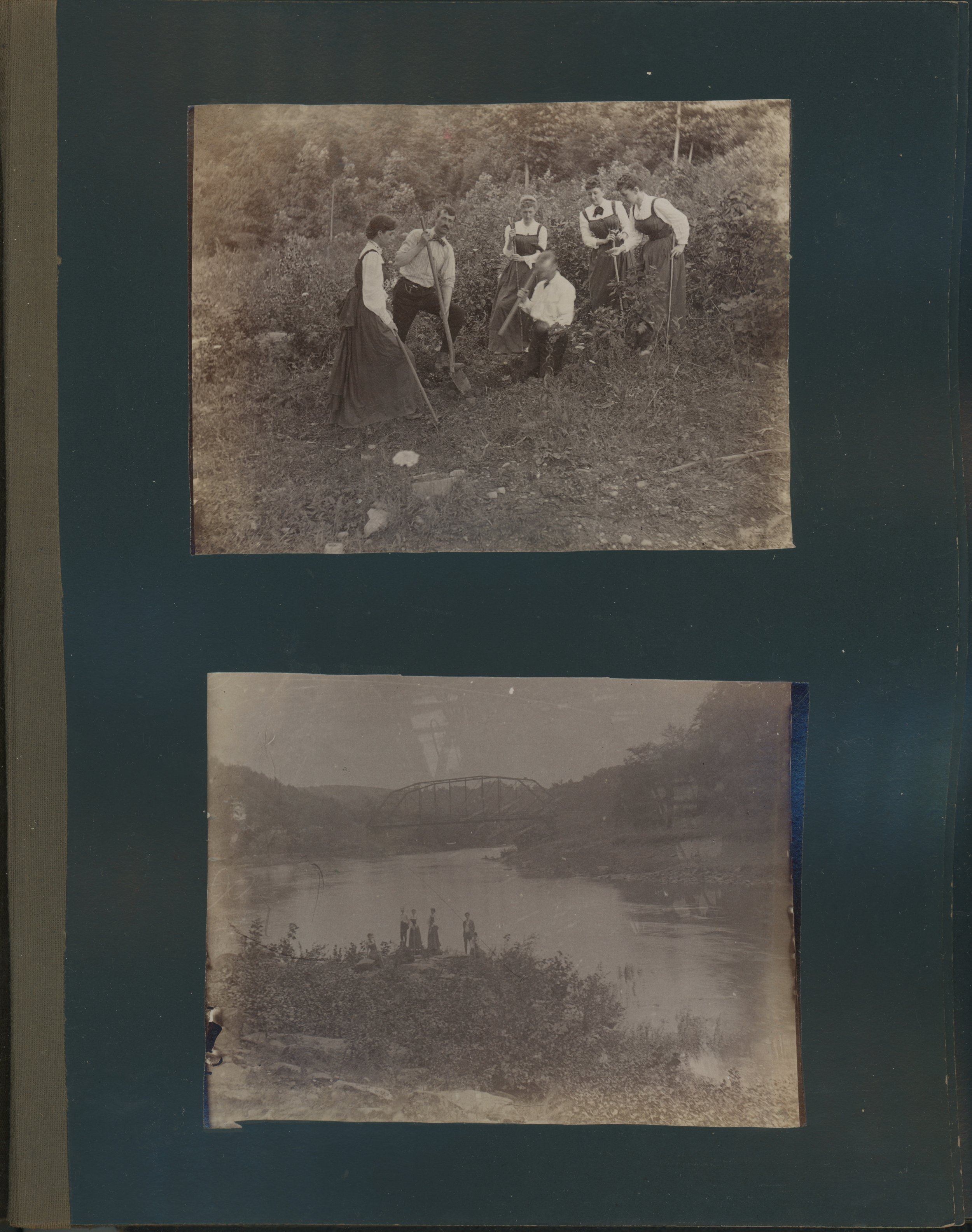
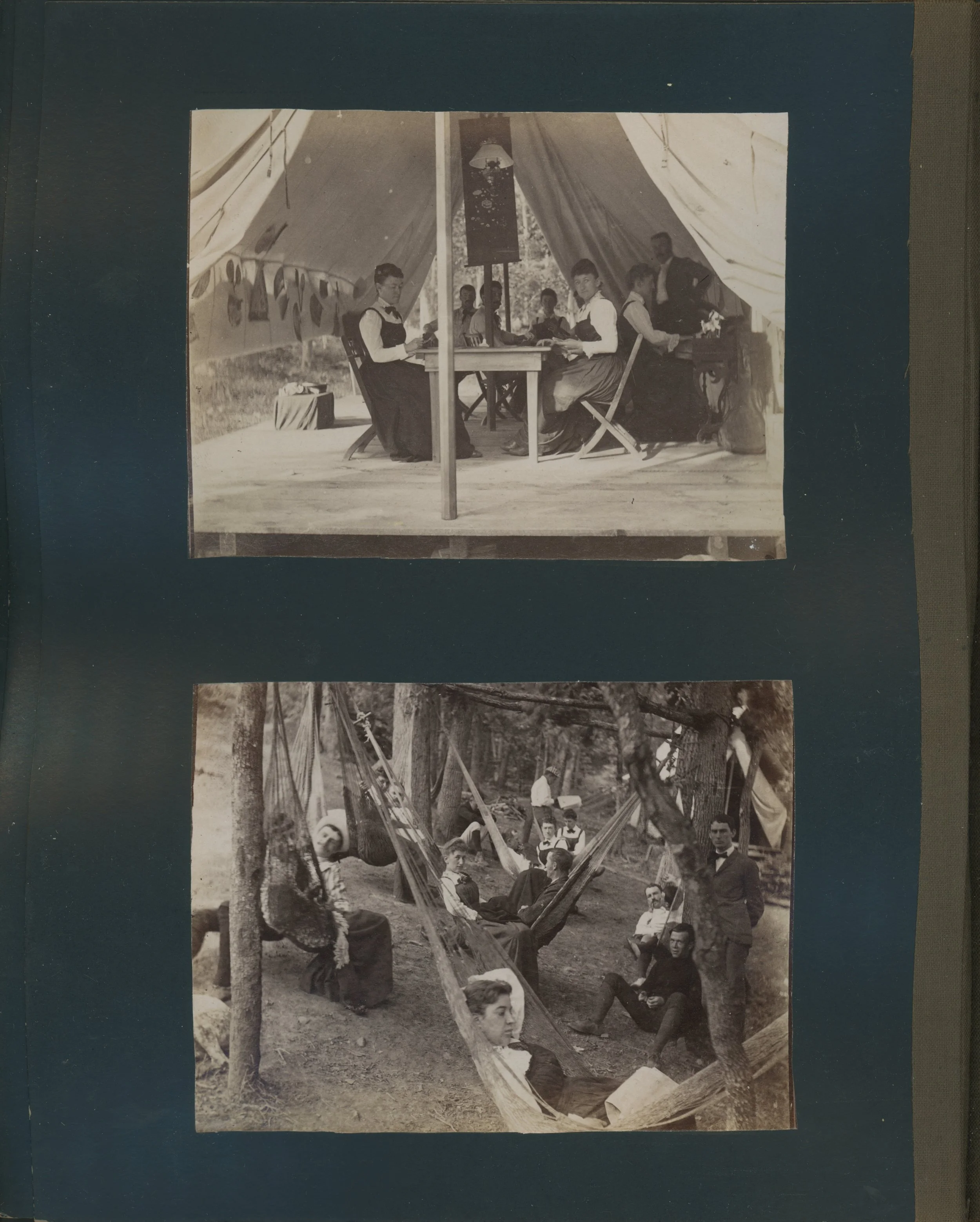
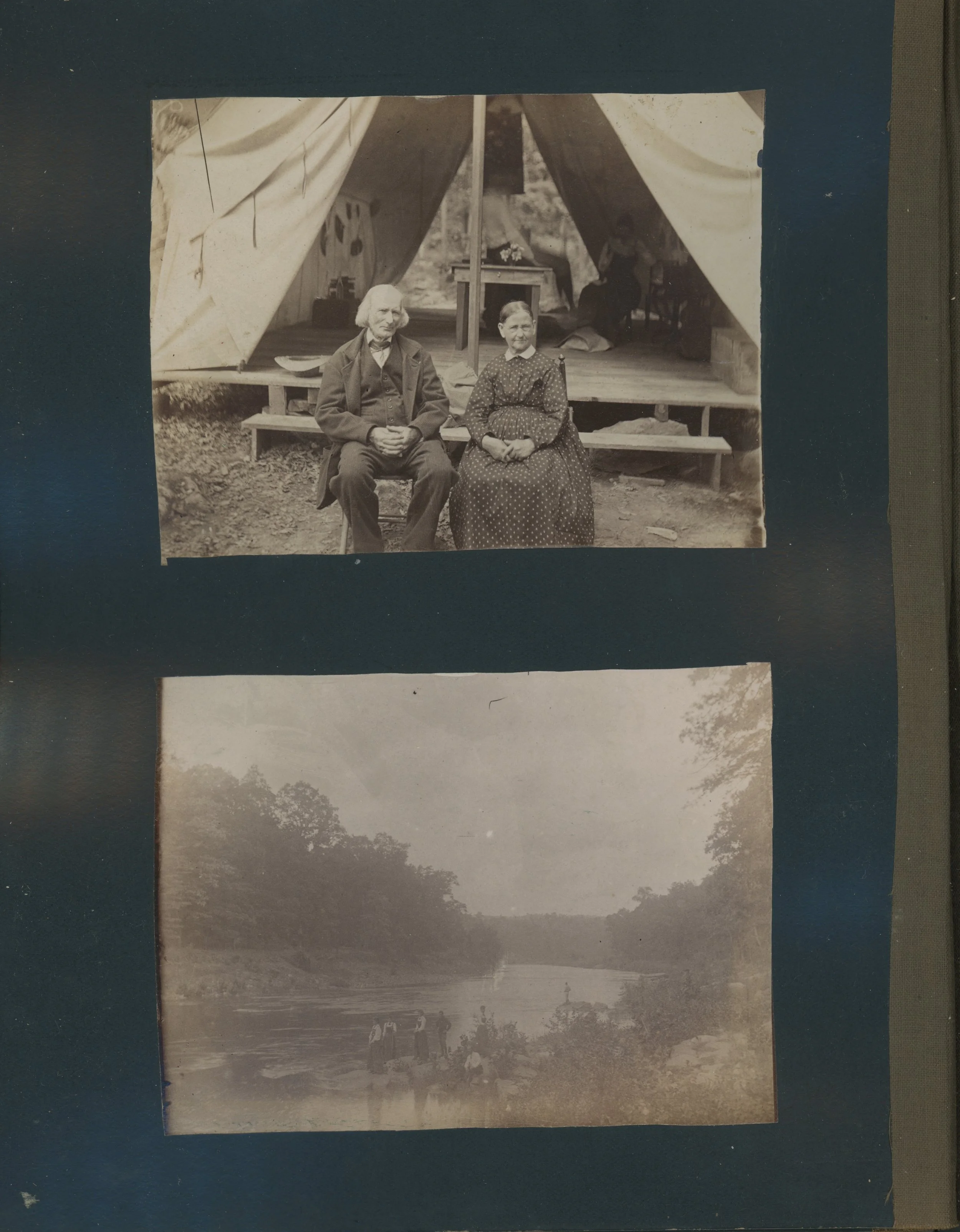
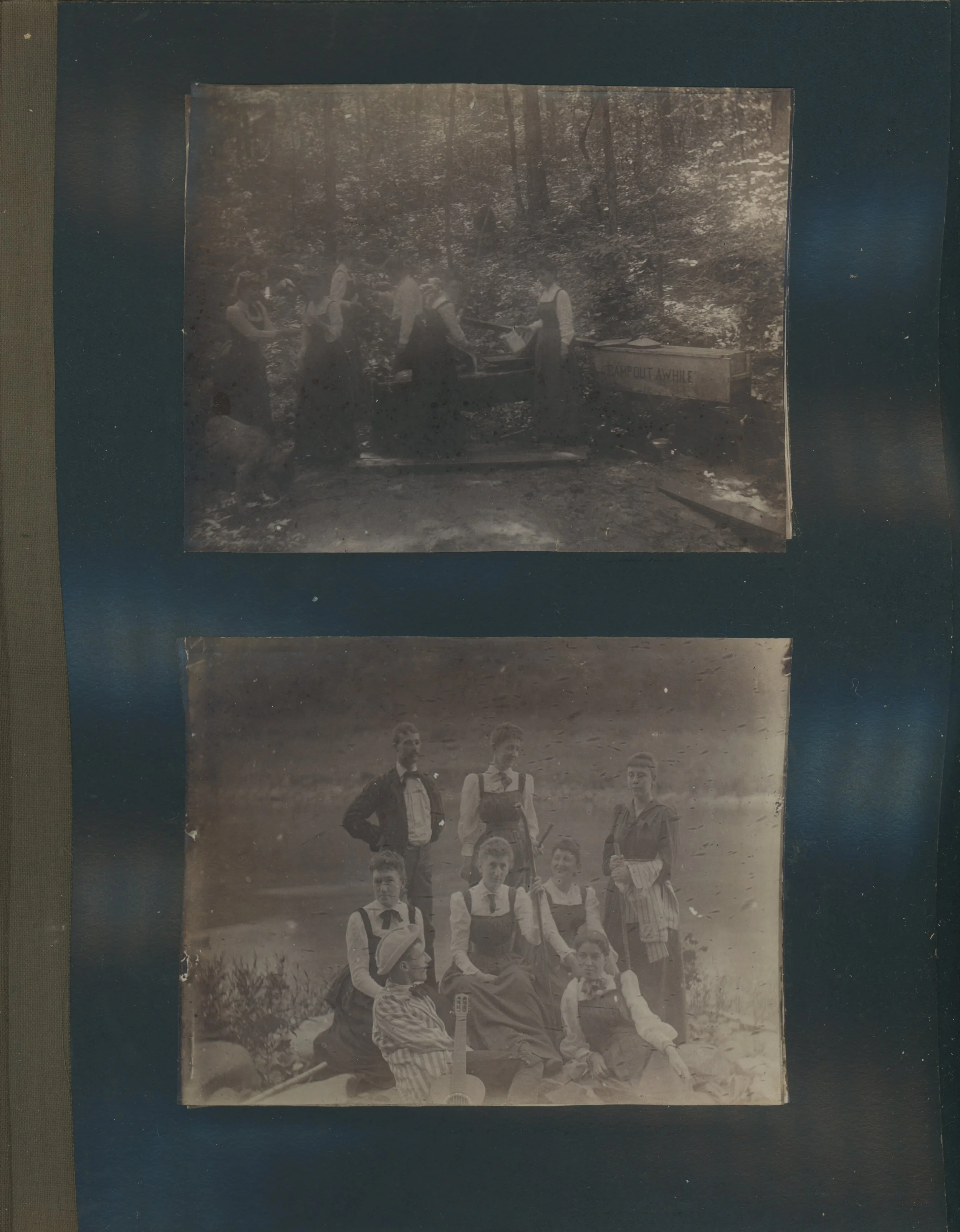
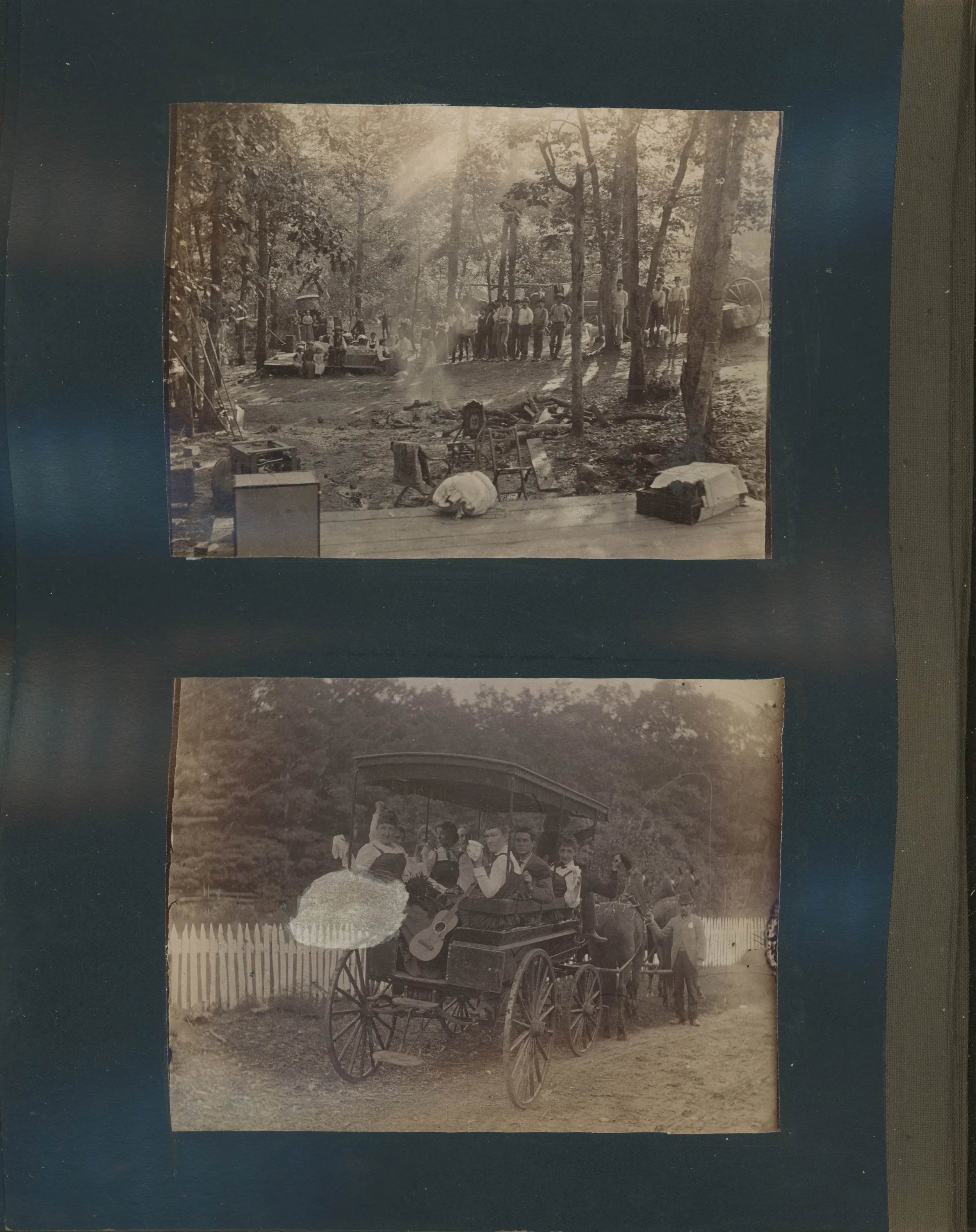
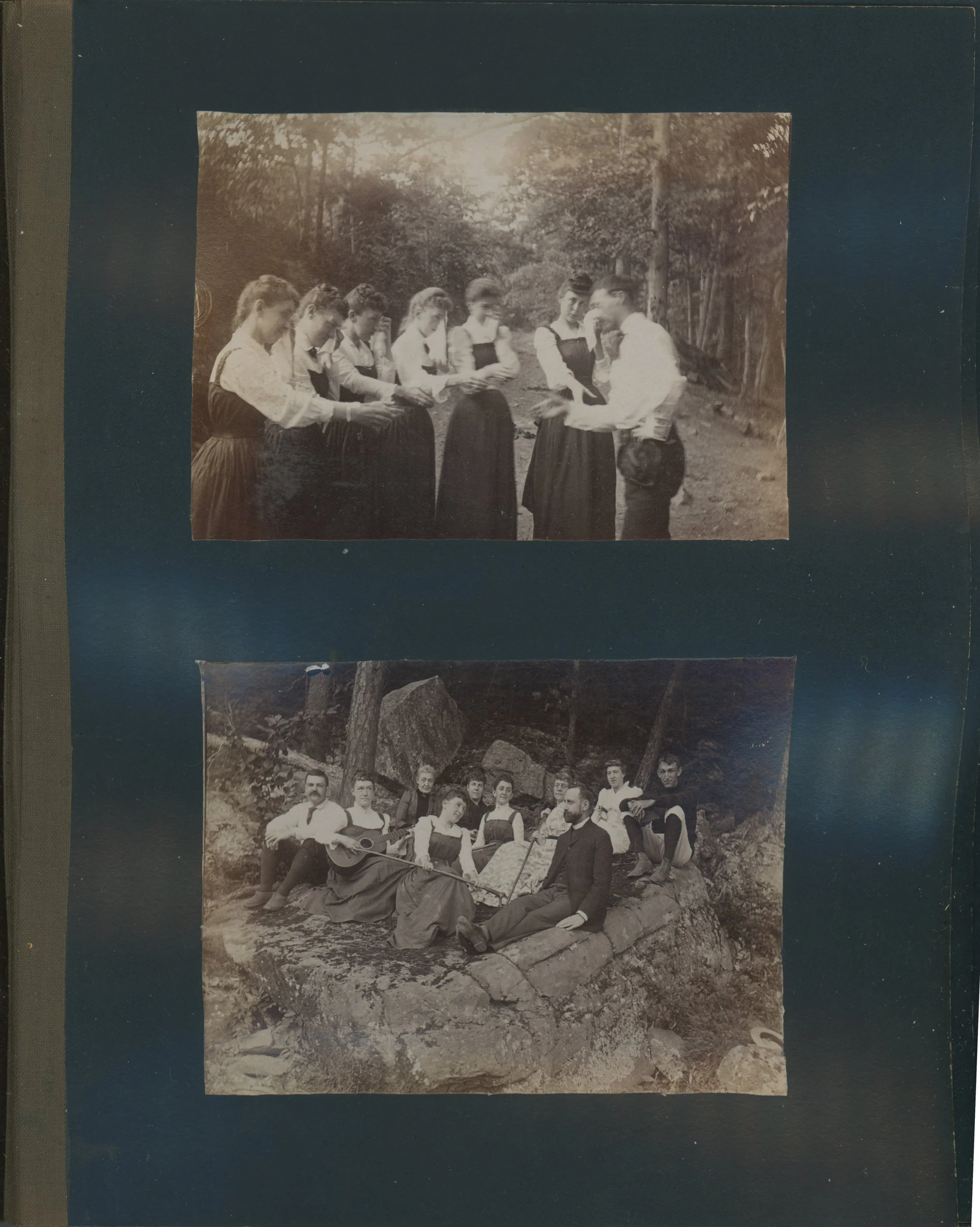
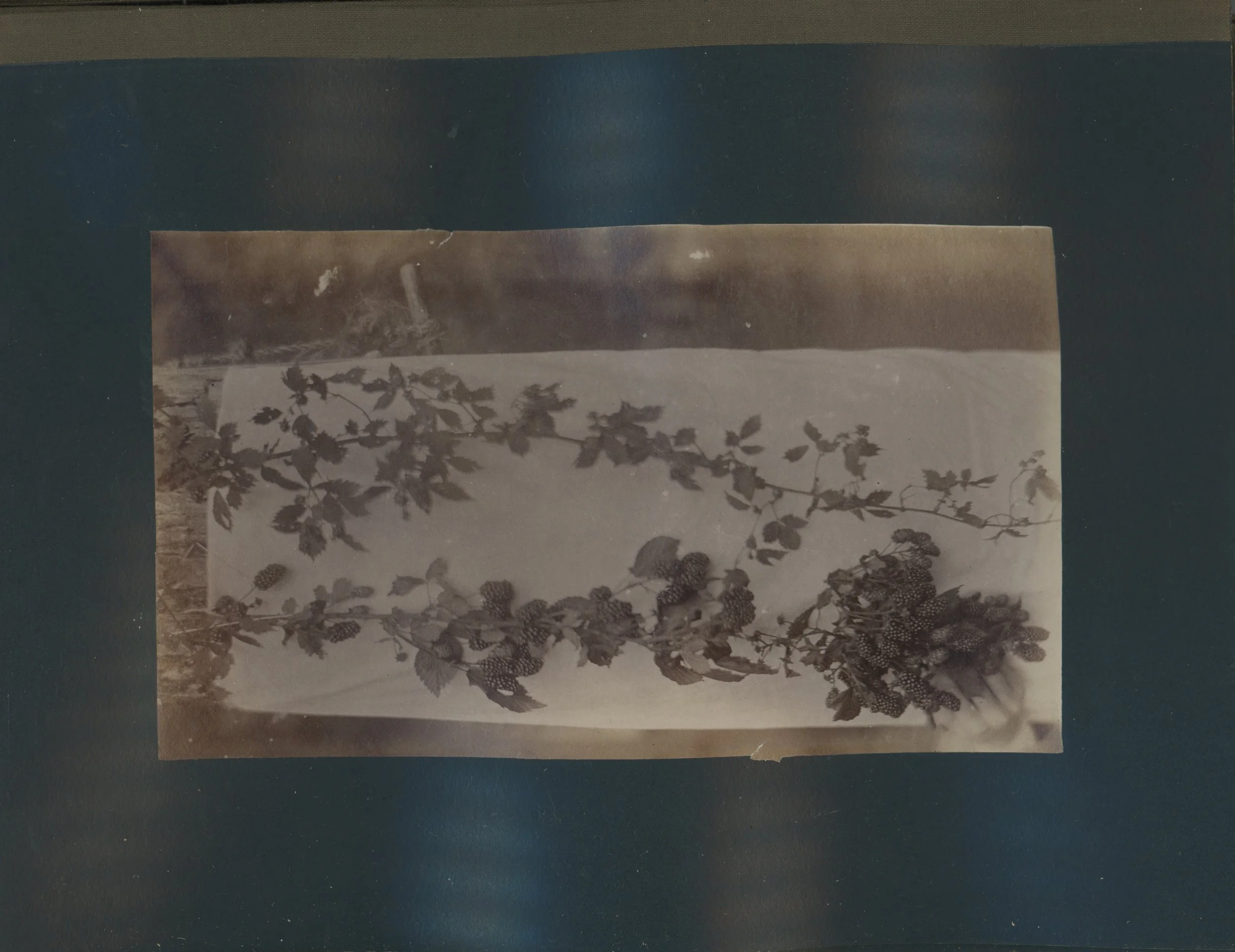
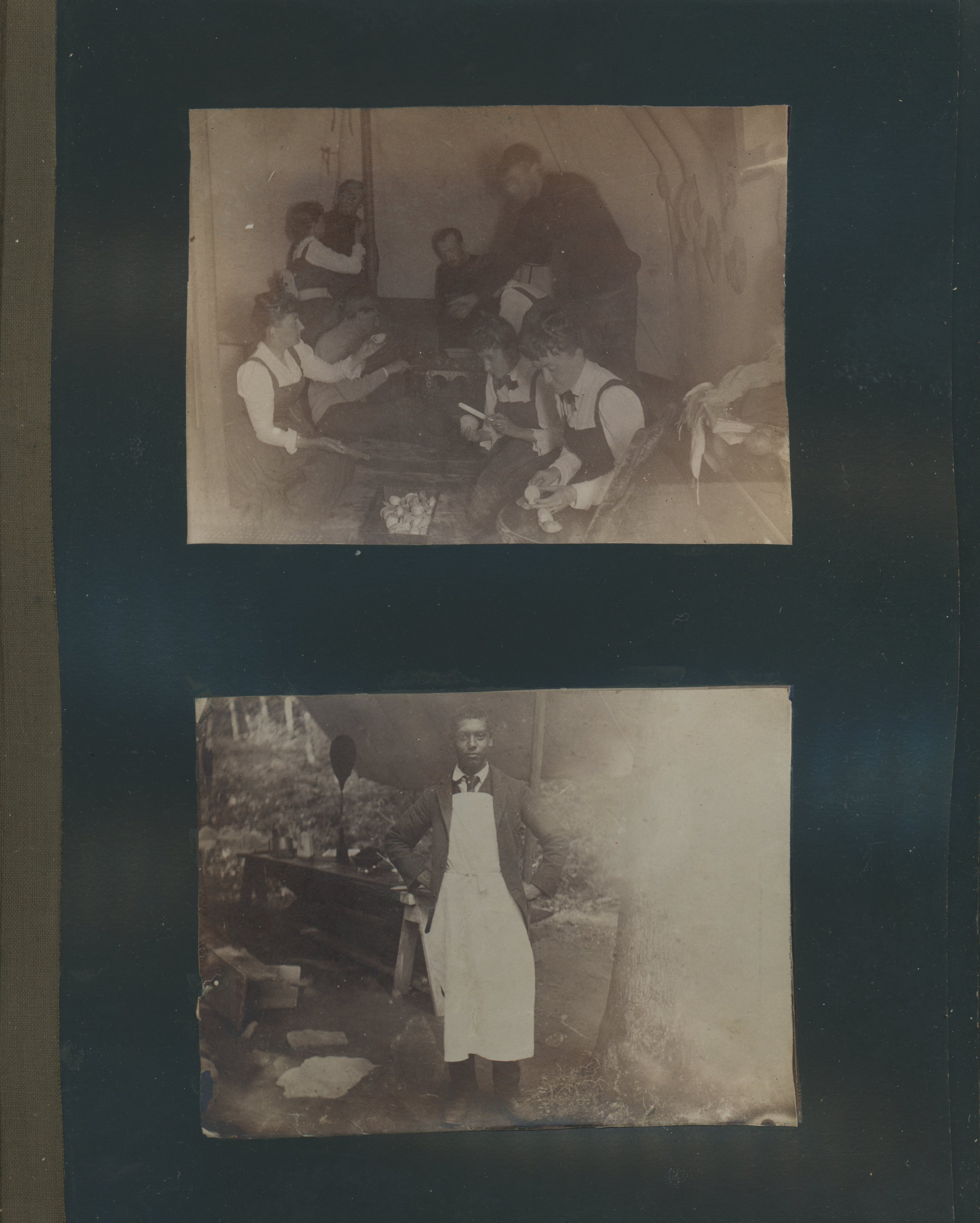
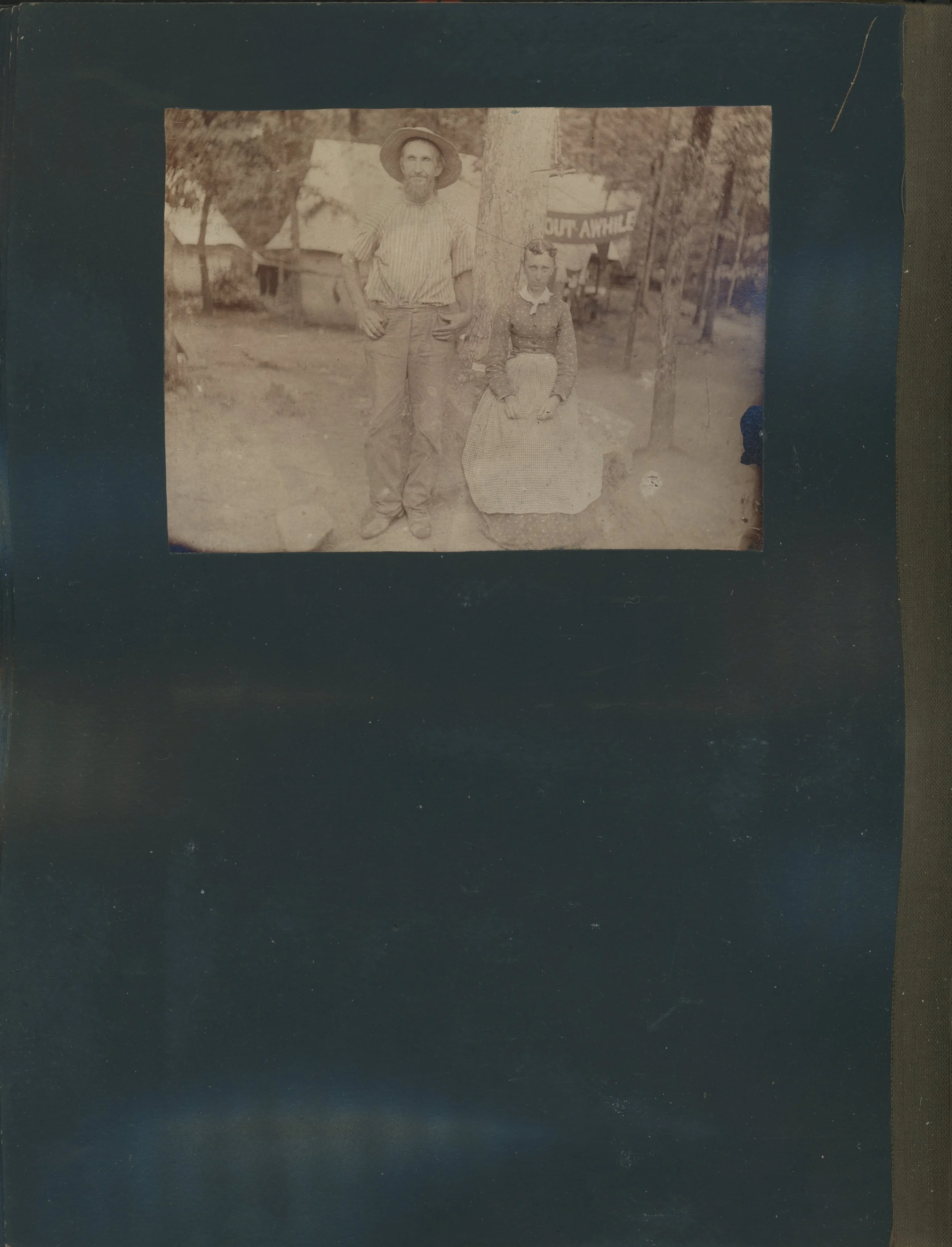

If you or someone in your family has a connection to Camp-Out-Awhile, the Conewago encampments, Robert Ault, or any of the people pictured in this album, I would love to hear from you. There are still plenty of names, places, and stories waiting to be recovered.
Enjoy stories like this?
Join The Psychogenealogist mailing list for occasional new stories about found photographs, genealogy, and the lives behind them.